

Antibiotics are one of the most important medical breakthroughs in history. Before they existed, a simple cut or sore throat could kill you. Today, they save millions of lives every year. But they’re not harmless. Even when used correctly, they can cause side effects - some mild, some serious. And using them the wrong way is making them less effective for everyone.
Let’s cut through the noise. You don’t need to memorize every drug name. You need to know which ones you’re likely to get, what they do, and what might go wrong. This isn’t a textbook. It’s a real-world guide to the antibiotics you’ll actually be prescribed - and what to watch out for.
What Antibiotics Actually Do
Antibiotics don’t treat viruses. That’s colds, flu, and most sore throats. They only work on bacteria. There are two ways they work: some kill bacteria outright (bactericidal), and others stop them from multiplying (bacteriostatic). That’s it. No magic. No boost to your immune system. Just targeted chemical warfare against bacterial invaders.
But here’s the catch: antibiotics don’t care if they hit good bacteria or bad bacteria. Your gut is full of helpful microbes. When antibiotics wipe them out, you pay the price - usually with diarrhea, bloating, or yeast infections. That’s why taking antibiotics is like using a sledgehammer to swat a fly. It works - but the damage is real.
The 7 Main Antibiotic Classes You’ll Actually Be Prescribed
In the U.S., doctors prescribe seven major classes of antibiotics. Not 50. Not 100. Seven. And four of them - amoxicillin, azithromycin, cephalexin, and amoxicillin/clavulanate - make up nearly 41% of all outpatient prescriptions. Let’s break them down.
Penicillins: The Original
Penicillin was discovered in 1928 by accident. Alexander Fleming noticed mold killing bacteria in a petri dish. That mold became the first antibiotic. Today, penicillins are still the most common. Amoxicillin alone is prescribed over 120 million times a year in the U.S.
It treats ear infections, sinus infections, strep throat, and pneumonia. Simple. Effective. Cheap.
Side effects? Nausea in 15-20% of people. Diarrhea in 5-10%. Headaches in 3-5%. And yeast infections - especially in women - in 2-8%. About 10% of Americans say they’re allergic to penicillin. But here’s the surprise: 90% of them aren’t. A simple skin test can prove it. Most people outgrow their allergy or were misdiagnosed as kids.
Cephalosporins: The Penicillin Alternative
If you think you’re allergic to penicillin, your doctor might switch you to a cephalosporin. Cephalexin (Keflex) is the most common - prescribed 4.97% of the time in outpatient settings.
They treat skin infections, urinary tract infections, and even some types of pneumonia. The big advantage? Cross-reactivity with penicillin is rare - only 1-3% of penicillin-allergic people react to cephalosporins.
Side effects are similar: diarrhea, nausea, and occasional rash. Severe reactions like Stevens-Johnson syndrome? Extremely rare - fewer than 1 in 10,000.
Tetracyclines: The Acne and Lyme Drug
Doxycycline is the star here. It’s prescribed around 35 million times a year. Why? It’s cheap, effective, and works on acne, Lyme disease, and some respiratory bugs.
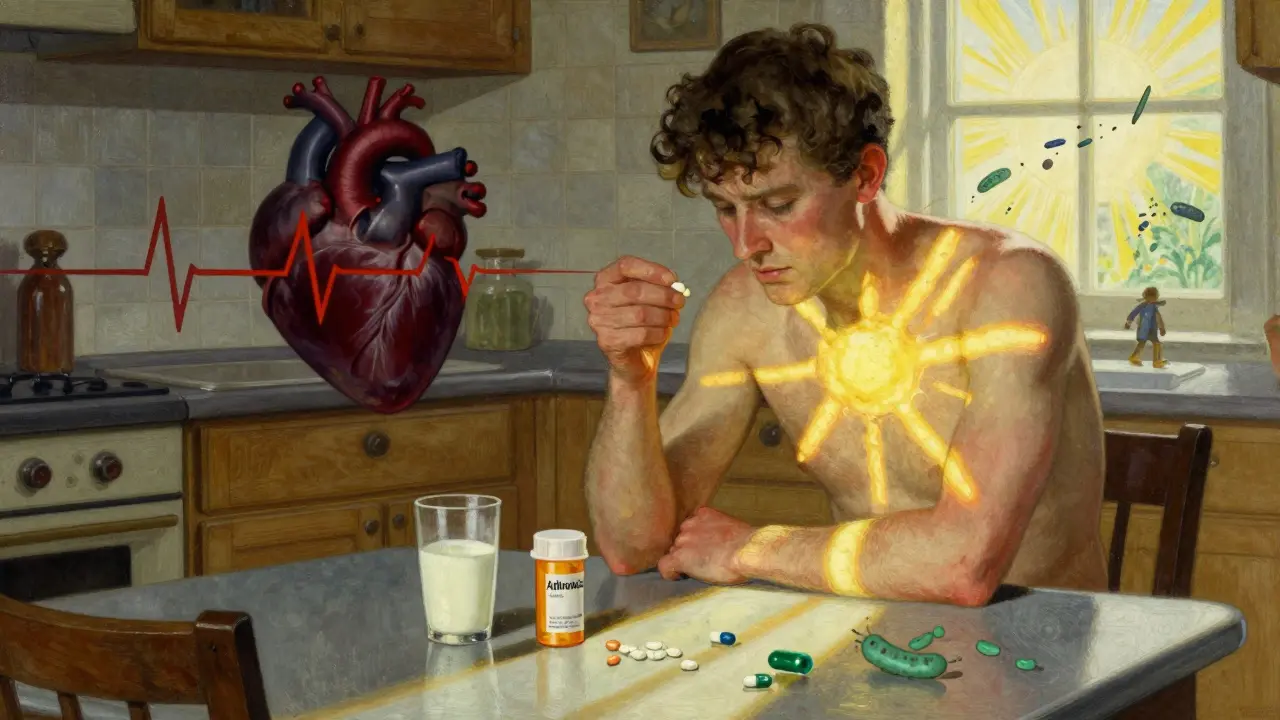
But it has two big warnings. First: don’t take it with dairy, antacids, or iron supplements. They block absorption. Second: it makes your skin super sensitive to sunlight. You can get a bad sunburn in minutes. Always use sunscreen.
And here’s the deal-breaker: kids under 8 shouldn’t take it. It permanently stains developing teeth. That’s not a rumor. It’s been proven in studies. If your child is under 8, your doctor won’t prescribe this - unless it’s a life-or-death situation.
Macrolides: The Azithromycin Phenomenon
Azithromycin (Zithromax) is the third most prescribed antibiotic in the U.S. It’s popular because you often only need to take it for 3-5 days. That’s convenient. But convenience comes with risk.
It’s used for pneumonia, strep throat, and chlamydia. But it can affect your heart. A 2022 study of 1 million patients found azithromycin nearly doubles the risk of dangerous heart rhythm changes (QT prolongation). If you have a history of heart problems, ask your doctor if it’s safe.
Also common: stomach upset. Up to 20% of people get nausea, vomiting, or diarrhea. It’s not fun, but it usually passes.
Fluoroquinolones: The Last Resort - But Not for Routine Use
Ciprofloxacin and levofloxacin are powerful. They’re used for serious infections like kidney infections, pneumonia, and anthrax. But they come with a black box warning from the FDA.
They can cause permanent nerve damage (peripheral neuropathy), tendon tears (especially in the Achilles), and even aortic aneurysms. A 2023 study of 1.2 million people found a 2.7-fold increase in aortic rupture risk.
Doctors are supposed to avoid these unless no other option works. Yet they’re still overprescribed for sinus infections and bronchitis - conditions they don’t help. If your doctor gives you a fluoroquinolone for a simple infection, ask why.
Sulfonamides: The UTI and Prophylaxis Go-To
Trimethoprim-sulfamethoxazole (Bactrim, Septra) is used for urinary tract infections and to prevent pneumonia in people with weak immune systems - like those with HIV or on chemo.
It’s cheap and effective. But it’s also a trigger for severe skin reactions. Stevens-Johnson syndrome happens in 1-6 cases per million users. That’s rare - but deadly. If you get a rash, fever, or blisters after starting this drug, go to the ER immediately.
Glycopeptides: The MRSA Lifeline
Vancomycin is the drug of last resort for MRSA - a deadly antibiotic-resistant staph infection. It’s mostly given in hospitals, often through IV.
It’s not without risks. If you get it too fast, you can turn red, itchy, and flushed - called “red man syndrome.” Slowing the infusion fixes it.
Long-term use can hurt your kidneys (nephrotoxicity) or ears (ototoxicity). That’s why doctors monitor blood levels closely. It’s not a drug you take at home.
How Side Effects Compare Across Classes
| Class | Common Side Effects | Severe Risks | Special Warnings |
|---|---|---|---|
| Penicillins | Nausea, diarrhea, headache, yeast infection | Allergic reaction (rare) | 90% of "allergic" people aren’t really allergic |
| Cephalosporins | Diarrhea, nausea, rash | Stevens-Johnson syndrome (very rare) | Low cross-reactivity with penicillin |
| Tetracyclines | Photosensitivity, upset stomach | Tooth discoloration in children | Avoid dairy, antacids, iron |
| Macrolides | Diarrhea, nausea, abdominal pain | QT prolongation (heart rhythm) | Higher risk if you have heart disease |
| Fluoroquinolones | Nausea, dizziness | Tendon rupture, nerve damage, aortic aneurysm | Only for serious infections |
| Sulfonamides | Upset stomach | Severe skin reactions (Stevens-Johnson) | Stop immediately if rash appears |
| Glycopeptides | Red man syndrome, nausea | Kidney damage, hearing loss | IV only; requires monitoring |
What You Should Do - And Not Do
Here’s what actually works:
- Take antibiotics exactly as prescribed - no more, no less.
- Finish the full course, even if you feel better. Stopping early lets tough bacteria survive and multiply.
- Don’t share antibiotics. What works for your friend might be dangerous for you.
- Ask: "Is this really needed?" Many sinus and ear infections clear on their own.
- Report side effects. The FDA gets thousands of reports every year - your input helps.
Here’s what doesn’t:
- Using leftover antibiotics. They expire. They might not match your current infection.
- Taking them for viral infections. Colds, flu, and most sore throats won’t improve.
- Ignoring diarrhea. If it’s watery, bloody, or lasts more than 2 days, call your doctor. It could be C. diff - a dangerous gut infection caused by antibiotics.
- Assuming you’re allergic without testing. Many people avoid penicillin for no reason.
Why This Matters More Than You Think
Every time you take an antibiotic, you’re contributing to a global crisis. Bacteria evolve. Overuse makes them resistant. MRSA used to be rare. Now it’s common. Vancomycin resistance is rising. If we keep this up, we could go back to a time when a scraped knee kills you.
The WHO calls this antimicrobial resistance the biggest health threat of our time. It already causes 1.27 million deaths a year. That’s more than HIV or malaria.
But there’s hope. Hospitals that use antibiotic stewardship programs - where doctors track and limit use - have cut inappropriate prescriptions by 35%. Countries using the WHO’s ACCESS-WATCH-RESERVE system have reduced misuse by 27%.
It’s not just doctors’ job. It’s yours too.

What to Do If You Have Side Effects
Most side effects are mild. Diarrhea? Try probiotics. Nausea? Eat small meals. But if you have:
- Severe rash, blisters, or peeling skin - go to the ER.
- Difficulty breathing or swelling of the face - call 911.
- Sharp pain in your tendons (especially heel) - stop the drug and see a doctor.
- Diarrhea that lasts more than 2 days or has blood - it could be C. diff.
- New heart palpitations or dizziness - especially on azithromycin - get checked.
Don’t wait. These aren’t "just side effects." They’re red flags.
Can I take antibiotics for a cold or the flu?
No. Colds and flu are caused by viruses. Antibiotics don’t work on viruses. Taking them anyway doesn’t help you get better faster - it just increases your risk of side effects and contributes to antibiotic resistance. If your doctor prescribes antibiotics for a cold, ask why.
Is penicillin allergy real for most people?
Most people who think they’re allergic to penicillin aren’t. Studies show 90% of those who report an allergy can safely take penicillin after proper testing. Many were misdiagnosed as children, or had a rash from the infection itself - not the drug. A simple skin test can confirm whether you’re truly allergic.
Why do antibiotics cause diarrhea?
Antibiotics kill bacteria - including the good ones in your gut. This disrupts your microbiome, letting harmful bacteria like C. difficile overgrow. That causes diarrhea, cramping, and sometimes severe colitis. Probiotics may help, but if diarrhea lasts more than 2 days or has blood, you need medical care.
Are newer antibiotics safer than older ones?
Not necessarily. Newer antibiotics are often reserved for resistant infections and come with their own risks. For example, cefiderocol is powerful against superbugs but has limited long-term safety data. Older drugs like amoxicillin are still first-line because they’re effective, well-studied, and have predictable side effects. New doesn’t mean better - it often means "last resort."
Can I drink alcohol while on antibiotics?
For most antibiotics, alcohol won’t cancel the effect. But it can worsen side effects like nausea, dizziness, or liver stress. With metronidazole or tinidazole, alcohol causes severe reactions - flushing, vomiting, rapid heartbeat. Always check the label. When in doubt, skip the alcohol.
What’s the difference between broad-spectrum and narrow-spectrum antibiotics?
Narrow-spectrum antibiotics target specific types of bacteria - like penicillin for strep. Broad-spectrum ones, like fluoroquinolones, kill a wide range - good and bad. Doctors prefer narrow-spectrum when possible because they’re less disruptive to your body. Broad-spectrum drugs are reserved for serious infections or when the exact bacteria aren’t known.
How do I know if I need an antibiotic?
Your doctor looks at symptoms, duration, and signs of bacterial infection. For example: a sore throat with white patches, fever, and no cough? Likely strep - needs antibiotics. A runny nose, cough, and mild fever? Probably viral - antibiotics won’t help. If you’re unsure, ask: "What’s the evidence this is bacterial?"
Final Thought: Antibiotics Are Tools - Not Cures
They’re powerful. But they’re not magic. They’re not for every infection. They’re not harmless. And they’re not infinite. Every pill you take shapes the future of medicine. Use them wisely - or we’ll all pay the price.



Comments(13)