
Bempedoic Acid Side Effect Risk Checker
Personal Risk Assessment
This tool helps you understand your personal risk for gout and tendon rupture when taking bempedoic acid (Nexletol). Based on your medical history, it will provide a risk assessment for these important side effects.
Your Results
Gout Risk Level
Low RiskThe risk of gout flares is increased by bempedoic acid due to elevated uric acid levels.
Tendon Rupture Risk Level
Low RiskTendon rupture risk is elevated, especially when combined with certain medications or conditions.
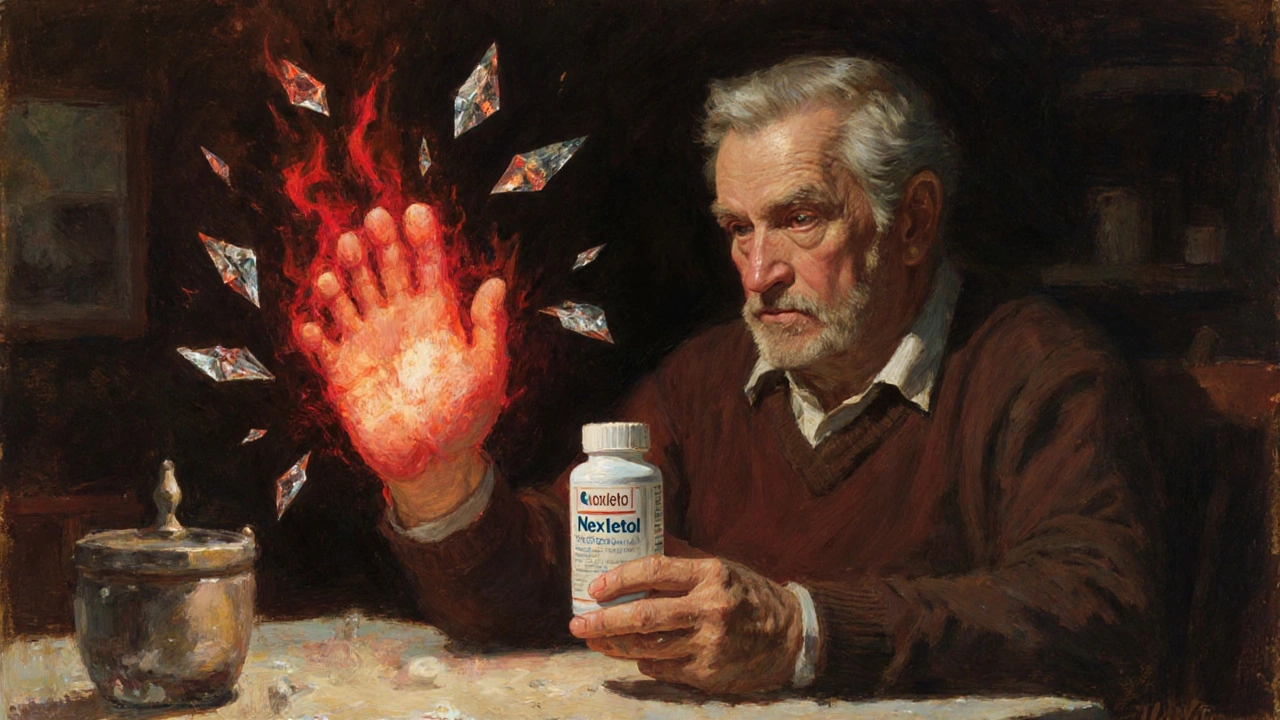
When you can’t take statins because of muscle pain or weakness, bempedoic acid (sold as Nexletol) might seem like a lifesaver. It lowers LDL cholesterol without hitting your muscles the way statins do. But here’s the catch: it trades one set of problems for another. While it helps your heart, it can trigger gout flares, increase tendon rupture risk, and cause other side effects you won’t find on most statin labels.
What Is Bempedoic Acid and Who Takes It?
Bempedoic acid is a prescription pill approved by the FDA in 2020 for people with high cholesterol who can’t tolerate statins. It works differently - instead of blocking HMG-CoA reductase like statins, it inhibits ATP-citrate lyase, a liver enzyme that helps make cholesterol. This means it doesn’t enter muscle tissue the same way, which is why muscle pain is far less common.
It’s typically prescribed as a 180 mg tablet once daily, with or without food. Most people take it alone, but it’s also combined with ezetimibe in a pill called Nexlizet for those needing stronger LDL lowering. About 5-10% of statin users can’t stick with them due to muscle side effects, and for them, bempedoic acid is one of the few viable alternatives.
Common Side Effects: More Than Just Muscle Pain
Unlike statins, bempedoic acid rarely causes muscle aches. But that doesn’t mean it’s side effect-free. In clinical trials, the most common issues weren’t scary - just annoying. About 5.8% of users had muscle spasms, compared to 2.5% on placebo. Back pain showed up in nearly 5% of people. Pain in hands or feet affected 3.4%.
Other frequent complaints include:
- Upper respiratory infections (7.7%)
- Bronchitis (3.5%)
- Stomach pain (2.8%)
- Diarrhea and fatigue
- Anemia (1.8%) - usually mild, with hemoglobin dropping less than 1 g/dL
Most of these symptoms are mild and tend to fade after a few weeks. Only about 1.2% of people quit the drug because of them. But two side effects stand out - not because they’re common, but because they’re serious and often overlooked.
Gout: The Hidden Risk
Bempedoic acid raises uric acid levels. That’s not just a lab number - it’s a trigger for gout. In trials, 2.1% of users developed high uric acid, compared to 0.4% on placebo. Gout attacks happened in 1.5% of people taking bempedoic acid versus 0.5% on placebo.
Here’s what that means in real life: you might wake up with a swollen, red, burning big toe. Or your knee might lock up with pain. These are classic gout flares. And they often hit within the first four weeks of starting the drug.
The risk is even higher if you’ve had gout before. People with a history of gout saw flare rates of 2.3%, compared to 1.2% in those without. That’s nearly double. The FDA and experts like Dr. Christopher Cannon at Harvard warn that this isn’t a minor issue - it’s a reason to monitor uric acid levels closely.
Doctors now recommend checking uric acid at baseline and again at 4 weeks after starting bempedoic acid. If levels climb, they may prescribe allopurinol - a gout-prevention drug. Studies show this cuts gout risk by about 65% in bempedoic acid users.
Tendon Rupture: A Silent Danger
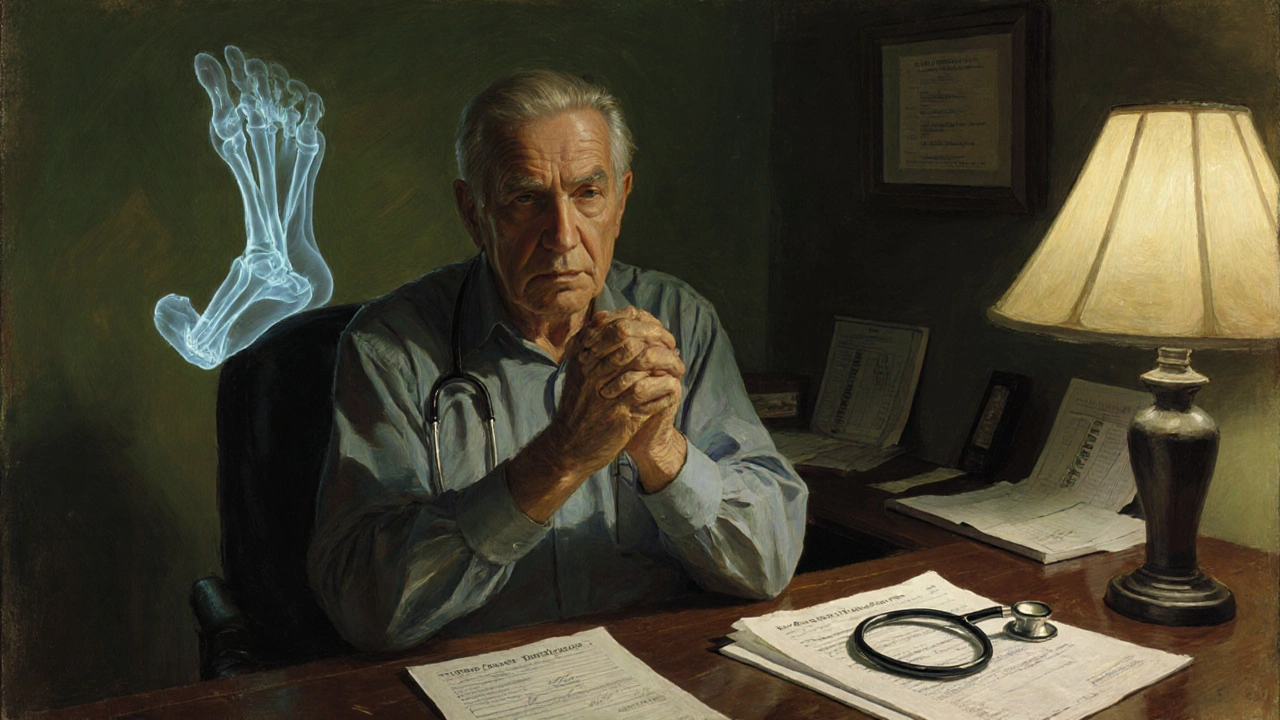
This is the side effect most patients and even some doctors don’t know about. Tendon rupture - a sudden tear in the Achilles, shoulder, or other tendons - happened in 0.7% of people taking bempedoic acid, versus 0.1% on placebo. That’s a sevenfold increase.
And it gets worse when combined with statins. When bempedoic acid is added to a statin, tendon rupture risk jumps to 3.5 times higher than placebo. In one trial, the rate jumped to 1.8% with combination therapy, compared to just 0.3% with statins alone.
What does a tendon rupture feel like? People describe hearing a loud snap or pop. Then comes sharp pain, bruising, and the inability to stand on your toes or lift your arm. It’s not a strain - it’s a full tear. Emergency care is needed.
Experts from the American College of Rheumatology and the European Atherosclerosis Society now warn: avoid bempedoic acid if you’ve had prior tendon injuries, are on fluoroquinolone antibiotics (like ciprofloxacin), or are older than 60. These factors stack the risk.
Liver and Blood Risks: What to Watch For
Bempedoic acid can raise liver enzymes. In trials, ALT or AST levels exceeded three times the normal limit in 1.6% of users - double the placebo rate. That’s why doctors check liver function tests at the start and again after a few months.
Anemia is another concern. Hemoglobin drops slightly in about 1.8% of users, but it rarely causes symptoms or requires stopping the drug. Still, if you feel unusually tired, dizzy, or short of breath, get your blood checked.
How Does It Compare to Other Cholesterol Drugs?
Compared to statins, bempedoic acid is much gentler on muscles - muscle side effects drop from 10-15% to under 6%. But it’s worse for gout and tendons. Ezetimibe, another non-statin option, lowers LDL just as well but has far lower gout and tendon risks.
Here’s a quick comparison:
| Side Effect | Bempedoic Acid | Statins | Ezetimibe |
|---|---|---|---|
| Muscle pain | 5.8% | 10-15% | 3-5% |
| Gout attacks | 1.5% | 0.5-1.0% | 0.7% |
| Tendon rupture | 0.7% | 0.1-0.3% | 0.2% |
| Liver enzyme rise | 2.2% | 1-2% | 1% |
| Anemia | 1.8% | 0.5% | 0.4% |
Bempedoic acid isn’t better than statins overall - it’s better for people who can’t tolerate them. The CLEAR Outcomes trial showed it reduces heart attacks and strokes by 13%, which is meaningful. But that benefit only matters if you’re willing to manage the trade-offs.

Who Should Avoid Bempedoic Acid?
Not everyone should take it. Avoid it if you:
- Have a history of gout or high uric acid levels
- Have had tendon injuries or tears before
- Are taking fluoroquinolone antibiotics (cipro, Levaquin, etc.)
- Have severe liver disease
- Are pregnant or breastfeeding
Even if you don’t fall into these groups, your doctor should test your uric acid and liver enzymes before and after starting the drug. And you should know the warning signs of tendon rupture: sudden pain, popping sound, bruising, or inability to move a joint normally.
What Should You Do If You’re Taking It?
If you’re already on bempedoic acid:
- Ask your doctor to check your uric acid level - if it’s high, ask about allopurinol.
- Report any joint pain, especially in your big toe or knee, right away.
- Stop the drug and seek emergency care if you hear a pop in a tendon, feel sudden pain, or can’t bear weight.
- Don’t start any new antibiotics without telling your doctor you’re on bempedoic acid.
- Keep moving, but avoid sudden, high-impact activities that stress tendons.
Most side effects are manageable. But ignoring them can lead to serious, irreversible damage. This isn’t a drug you take and forget about. It needs active monitoring.
The Bottom Line
Bempedoic acid is a useful tool for people who can’t take statins. It works. It saves lives. But it’s not a magic bullet. The trade-offs - gout, tendon tears, liver stress - are real and well-documented. If you’re considering it, make sure you understand the risks. If you’re already on it, don’t assume it’s safe just because it doesn’t hurt your muscles. Pay attention to your body. Get the right tests. Talk to your doctor about prevention, not just treatment.
The goal isn’t just to lower cholesterol. It’s to stay healthy - without trading one problem for another.






Comments(15)