

Chronic Fatigue Syndrome, now more accurately called Myalgic Encephalomyelitis/Chronic Fatigue Syndrome (ME/CFS), isn't just feeling tired. It's a debilitating, medically recognized illness that leaves people unable to do the things they once took for granted-like walking to the mailbox, working a full day, or even showering without needing hours to recover. This isn't in your head. It's in your nervous system, your immune system, and your cells.
What You Actually Experience With ME/CFS
People with ME/CFS don’t wake up tired. They wake up exhausted, like they ran a marathon while sick with the flu. The fatigue doesn’t go away with sleep. It’s constant, crushing, and often gets worse with any kind of effort-even thinking too hard or standing in line at the grocery store. The core symptom isn’t just fatigue. It’s post-exertional malaise (PEM). That’s the medical term for the crash you get after doing something, no matter how small. You might feel okay in the morning, do a little laundry, and then collapse for the next 24 to 72 hours. Your muscles ache, your head pounds, your thoughts turn to fog, and your body feels like it’s been drained of every ounce of energy. This isn’t normal tiredness. It’s a physiological collapse. Other common symptoms include:- Problems with memory and focus (often called "brain fog")
- Unrefreshing sleep-even after 10 hours
- Dizziness or lightheadedness when standing up
- Flu-like symptoms without an infection
- Widespread muscle and joint pain without swelling
- Sore throat or tender lymph nodes
These symptoms aren’t random. They cluster together. And they last. For at least six months, but often for years or decades. The CDC says about 836,000 to 2.5 million Americans have it. But up to 90% of them are never diagnosed. Why? Because many doctors still don’t recognize PEM as the hallmark sign.
Why Diagnosis Is So Hard
There’s no blood test. No X-ray. No MRI that says "yes, you have ME/CFS." That’s why it’s been dismissed for decades. But science is catching up. Three major diagnostic frameworks exist today:- CDC Criteria (1994): Requires six months of fatigue plus four of eight symptoms. It catches more people but also includes false positives.
- IOM Criteria (2015): Simpler. Requires severe fatigue, PEM, unrefreshing sleep, and one other: either cognitive issues or dizziness when standing. This is the one most primary care doctors use now.
- International Consensus Criteria (ICC): The strictest. It demands PEM as the absolute core symptom, plus problems in at least three systems-neurological, immune, gastrointestinal, etc. It’s harder to meet, but more accurate.
Here’s what the numbers show: The IOM criteria correctly identify 85% of true ME/CFS cases but miss 35% of them. The ICC catches 92% of true cases but misses 42%. The CDC criteria catch the most, but 32% of people diagnosed under it don’t actually have ME/CFS when tested more deeply.
So what’s the takeaway? If you’ve had unexplained fatigue for more than three months, and you crash after any activity-even mental tasks-you should be evaluated. You don’t need to wait six months. Many experts now say early intervention changes outcomes.
The Science Behind the Sickness
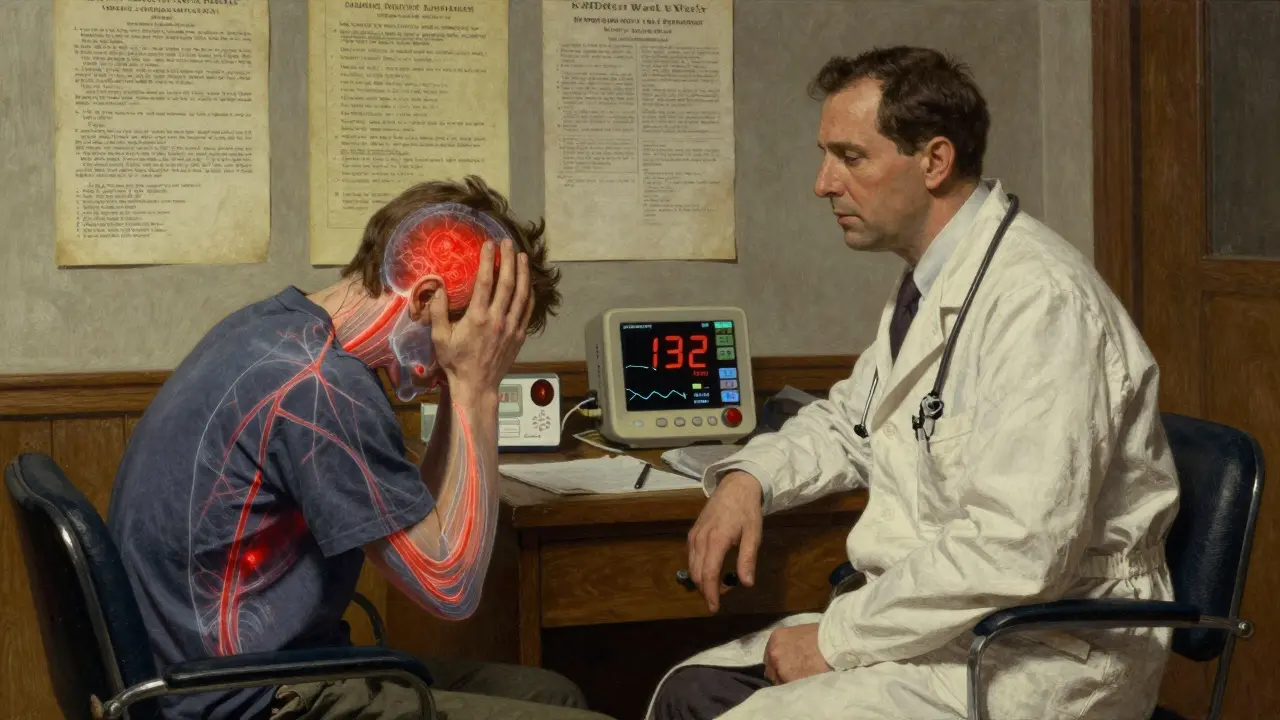
For years, ME/CFS was called a "psychological condition." That’s changed. Over the last five years, research has exploded. Advanced brain scans show clear differences in ME/CFS patients:- Reduced connectivity in the brainstem and hippocampus-areas that control energy, alertness, and memory.
- Lower activity in the reticular activating system, which keeps you awake and focused.
- These changes match the severity of symptoms. The worse the brain fog, the more the brain shows damage.
Immune system tests reveal inflammation:
- IL-1β and TNF-α (inflammatory markers) spike by 37-42% during PEM episodes.
- White blood cells behave abnormally, as if they’re stuck in fight mode.
Your autonomic nervous system is also broken:
- Heart rate variability drops 35% when standing-meaning your body can’t regulate blood pressure or heart rate properly.
- Many patients have orthostatic intolerance-feeling dizzy or faint when upright.
And your cells? They can’t make energy:
- ATP production (your body’s fuel) drops 28%.
- Lactate clears 50% slower after exercise, meaning your muscles get flooded with waste.
This isn’t depression. It’s not laziness. It’s a measurable, physiological illness with real biomarkers. In 2023, the Global Burden of Disease study officially reclassified ME/CFS from "idiopathic chronic fatigue" to "neuroimmune disease." That’s huge.
Pacing: The Only Proven Strategy
There’s no cure. But there’s a way to live better: pacing. Pacing isn’t about resting more. It’s about managing your energy like a budget. Think of it as having 12 spoons a day (a metaphor from the spoon theory). Every activity-brushing your teeth, talking to a friend, cooking dinner-costs a spoon. Once you’re out, you crash. Successful pacing means:- Staying at 70% of your perceived energy limit. Pushing to 100% triggers PEM.
- Breaking tasks into tiny pieces. Instead of cleaning the whole house, clean one room. Rest. Then do another.
- Using a heart rate monitor. Most ME/CFS patients should stay below 120-130 beats per minute to avoid crossing into anaerobic stress.
- Tracking symptoms daily. Apps like Fatigue Tracker or ME/CFS Manager help spot patterns.
One study found that using real-time heart rate feedback reduced PEM episodes by 45%. Another showed that patients who used spoon theory improved their daily function by 30% in six months.
But here’s the catch: most people fail at first. They go too hard. They think, "I feel okay today, I’ll do everything." Then they crash for days. This "boom-bust" cycle happens to 89% of newly diagnosed patients. It takes 3 to 4 months of consistent pacing to learn your true limits.
And avoid graded exercise therapy (GET). Multiple studies, including the 2021 STOP ME/CFS trial, show that GET makes symptoms worse in 37% of patients. It’s not just ineffective-it’s harmful. Pacing, not pushing, is the way forward.

Why Most Doctors Get It Wrong
In 2023, a survey of 1,245 patients on Reddit’s r/ME_CFS found:- Average time to diagnosis: 5.2 years
- 63% saw five or more doctors before being believed
- 82% were told their symptoms were "in their head"
- 76% said their doctors didn’t know what PEM was
That’s the reality. Many doctors still think ME/CFS is psychological. But the science doesn’t lie. The NIH spent $15.2 million on ME/CFS research in 2023-a 27% jump from 2020. Five major research centers across the U.S. are now working on biomarkers and treatments. The FDA now requires objective PEM testing via two-day cardiopulmonary exercise tests (CPET) for any new drug trial.
Specialized clinics like the Bateman Horne Center report 65% of patients improve within six months of proper pacing. General practitioners? Only 42% satisfaction rate. The gap is real.
What’s Next?
Research is accelerating. In 2024, a $5.2 million NIH study will test gut microbiome interventions. A European team is exploring metabolic reprogramming. The first FDA-approved treatment for ME/CFS could be on the market by 2027. For now, the best thing you can do is:- Trust your body. If it crashes, it’s not weakness-it’s a signal.
- Learn pacing. Start slow. Stay below your threshold.
- Find a specialist. Look for clinics that understand PEM.
- Connect with others. The ME Association and MEAction offer free pacing guides and peer support.
ME/CFS isn’t a death sentence. It’s a chronic condition that requires a new way of living. And with the right approach, many people learn to live well-even if they can’t live the way they used to.
Is ME/CFS the same as just being tired?
No. Normal fatigue goes away with rest. ME/CFS fatigue doesn’t. It’s accompanied by post-exertional malaise (PEM)-a severe crash after minimal activity that lasts for hours or days. It also includes brain fog, unrefreshing sleep, dizziness, and widespread pain. It’s a multi-system illness, not just low energy.
Can exercise help ME/CFS?
No-not the way most people think. Graded Exercise Therapy (GET) has been shown to worsen symptoms in over one-third of patients. Pushing through fatigue triggers PEM and can cause long-term damage. The only safe approach is pacing: staying within your energy limits, not trying to build endurance. Gentle movement like short walks may help if done carefully, but never to the point of exhaustion.
Why is ME/CFS often misdiagnosed?
Because there’s no single lab test, and many doctors aren’t trained to recognize post-exertional malaise (PEM) as the core symptom. Symptoms overlap with depression, anxiety, fibromyalgia, or Lyme disease. Many patients are told they’re "just stressed" or need to "get more sleep." This delays diagnosis by years. The CDC’s 2023 toolkit now trains providers to look for PEM specifically.
How do I start pacing?
Start by tracking your daily energy levels and symptoms. Use the "spoon theory"-assign each activity a number of "spoons" (e.g., shower = 3 spoons, work = 5). Limit yourself to 70% of your perceived daily capacity. Use a heart rate monitor to stay below 120-130 bpm. Avoid pushing through crashes. Rest before you’re exhausted. It takes 3-6 months to learn your true limits.
Are there any treatments for ME/CFS?
There’s no approved drug yet, but pacing is the most effective intervention. Some patients benefit from managing orthostatic intolerance with increased fluids and compression garments. Clinical trials are testing drugs like Ampligen and immune modulators, but none are widely available. The focus now is on identifying biomarkers and targeting metabolic and immune dysfunction. For now, pacing, rest, and avoiding triggers are your best tools.
Is ME/CFS genetic?
It’s not directly inherited, but genetics may play a role in susceptibility. Studies show people with ME/CFS are more likely to have family members with autoimmune or neurological conditions. Some gene variants linked to immune regulation and energy metabolism are more common in patients. But environmental triggers-infections, stress, toxins-often start the illness. It’s a mix of biology and trigger.
Can ME/CFS get better?
Some people improve, especially if they’re diagnosed early and learn pacing quickly. A 2021 study found that patients who started pacing within three months of onset had 40% better long-term outcomes. Full recovery is rare, but many learn to manage symptoms well enough to return to part-time work, hobbies, or family life. The key is avoiding crashes. The longer you push through fatigue, the harder it is to recover.
Why is funding for ME/CFS so low?
Despite affecting millions, ME/CFS receives far less funding than diseases with similar impact. In 2023, the U.S. spent $25 million on ME/CFS research-compared to $1.5 billion for multiple sclerosis, which affects half as many people. This gap exists because of historical stigma, lack of awareness, and underfunded advocacy. But funding has doubled since 2020, and with new NIH research centers and FDA guidelines, it’s finally moving in the right direction.







Comments(8)