

Immunosuppressant-Echinacea Interaction Checker
Check Your Medication Safety
Select your immunosuppressant medication to see if echinacea is safe to take with it. This tool is designed for patients on immunosuppressants or those caring for them.
Imagine you’re recovering from a kidney transplant. Your doctor gave you a strict schedule: take cyclosporine every morning, no grapefruit, no alcohol, and avoid anything that might wake up your immune system. You feel good. You’re careful. Then you see a bottle of echinacea at the grocery store. "Boosts immunity," it says. "Natural defense against colds." You think, Why not? I just want to stay healthy. That one decision could put your new organ at risk.
What Echinacea Actually Does to Your Immune System
Echinacea isn’t just another herb. It’s a powerful plant with complex chemistry. The main species used in supplements-Echinacea purpurea, angustifolia, and pallida-contain alkamides, polysaccharides, and caffeic acid derivatives. These compounds don’t just gently nudge your immune system. They actively turn it up.
Studies show echinacea increases the movement of white blood cells like neutrophils and macrophages. It triggers phagocytosis-the process where immune cells swallow up invaders. It even activates natural killer cells, which hunt down infected or cancerous cells. In the short term, this looks like a good thing. That’s why people take it at the first sign of a cold.
But here’s the twist: if you take echinacea for more than eight weeks, your immune system may start to tire out. The American Academy of Family Physicians warned back in 2003 that long-term use can lead to immunosuppression. That’s right-something meant to boost immunity might eventually dull it. This dual effect makes echinacea unpredictable. And that’s exactly why it’s dangerous when you’re on immunosuppressants.
What Are Immunosuppressants and Why Do People Take Them?
Immunosuppressants aren’t for people who get colds often. They’re life-saving drugs for those whose immune systems have gone rogue. You’ll find them prescribed after organ transplants-kidney, liver, heart-to stop the body from attacking the new organ. They’re also used for autoimmune diseases like lupus, rheumatoid arthritis, and multiple sclerosis, where the immune system mistakenly targets healthy tissue.
Common immunosuppressants include:
- Cyclosporine
- Tacrolimus
- Azathioprine
- Mycophenolate mofetil
- Methotrexate
- Corticosteroids like prednisone
These drugs work by suppressing specific parts of the immune response. They’re finely tuned. Too little, and your body rejects the transplant. Too much, and you’re vulnerable to infections or cancer. There’s no room for interference.
The Dangerous Conflict: Boosting vs. Blocking
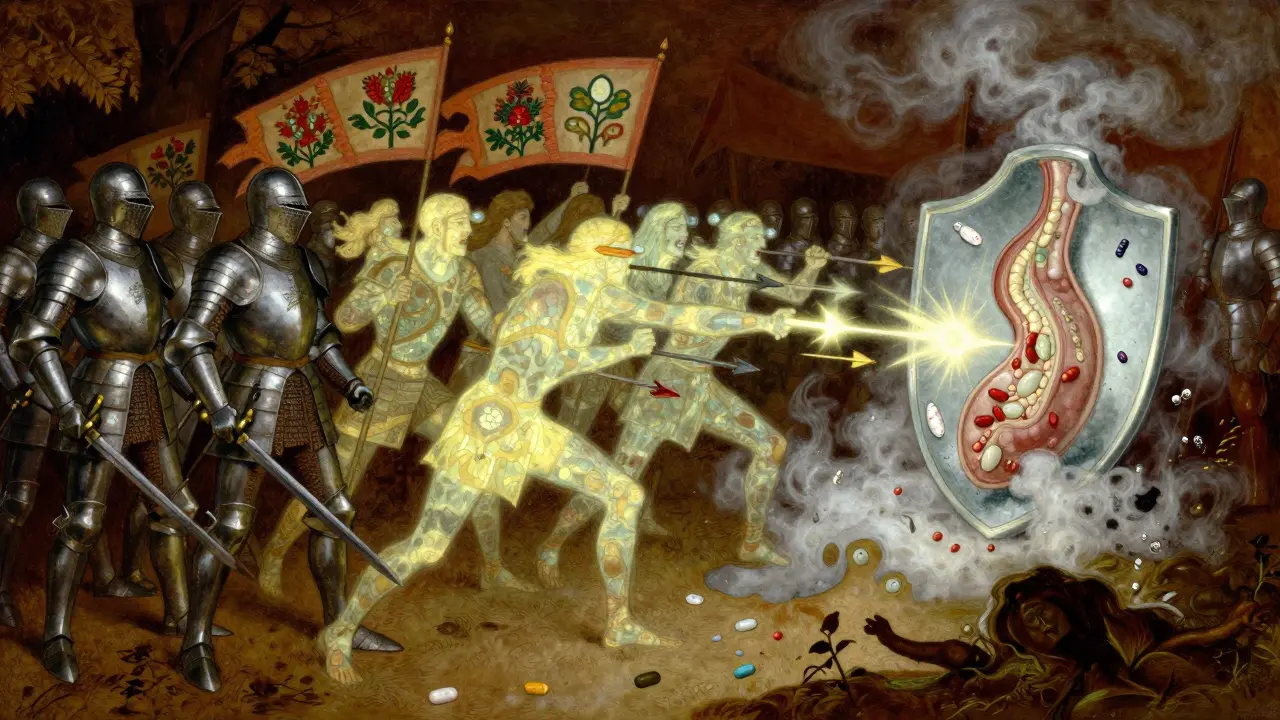
When you take echinacea while on immunosuppressants, you’re essentially sending mixed signals to your immune system. One side of your body is being told: Stay calm. Don’t attack. The other side is being told: Wake up. Fight.
The result? Your immunosuppressants may not work as well. Your immune system might start waking up-just enough to attack your transplanted organ. That’s called rejection. And it doesn’t always come with warning signs.
Case reports from Memorial Sloan Kettering tell the story:
- A 55-year-old man with pemphigus vulgaris (a rare autoimmune skin disease) relapsed after starting echinacea. His immune system, previously controlled by medication, became active again. He needed stronger drugs just to get partial relief.
- A 61-year-old lung cancer patient developed severe low platelets-thrombocytopenia-after combining echinacea with chemotherapy. His immune system was already under pressure. Echinacea pushed it over the edge.
- A 32-year-old man developed thrombotic thrombocytopenic purpura (TTP), a rare and deadly blood disorder, after taking echinacea for a cold. He was on immunosuppressants for an underlying condition.
These aren’t rare anomalies. They’re red flags.
What the Experts Say
Major medical organizations don’t mince words:
- The American Society of Transplantation says: Avoid echinacea completely if you’ve had a transplant.
- The American College of Rheumatology advises: Patients on immunosuppressants for autoimmune diseases should not use echinacea.
- The European Medicines Agency states: The risk of interaction cannot be excluded.
- The U.S. National Center for Complementary and Integrative Health (NCCIH) lists echinacea-immunosuppressant interactions as a primary safety concern.
The American Society of Health-System Pharmacists (AHFS) classifies the interaction as “moderate”-meaning it’s not just theoretical. It’s real enough to warrant a warning label. And in transplant centers across the U.S., 87% now follow strict no-echinacea policies.
Even the FDA got involved. In 2023, they sent warning letters to three supplement makers for selling echinacea products that claimed immune-boosting benefits without disclosing the risk of interfering with transplant medications.
Why Other Herbs Are Safer (and Why Echinacea Isn’t)
Not all herbal supplements are created equal. Ginger, for example, has mild anti-inflammatory effects but doesn’t directly stimulate immune cells. Turmeric’s curcumin modulates inflammation without triggering white blood cell surges. Milk thistle supports liver function but doesn’t interfere with immune signaling.
Echinacea is different. Its alkamides bind to CB2 receptors-the same ones targeted by cannabinoids in cannabis. This is why it can directly activate immune pathways. That’s why it’s not just “a little risky.” It’s uniquely dangerous in this context.
What Patients Are Actually Doing
Despite the warnings, people keep taking it.
A 2021 survey of 512 transplant recipients found that 34% had used echinacea after their transplant. Twelve percent reported complications they believed were linked to the supplement. Only a few had discussed it with their doctor.
Online patient forums like Inspire and HealthUnlocked show similar patterns. A 2022 analysis of 147 posts found 23 reports of suspected interactions. Seventeen patients said they had to increase their immunosuppressant dose. Six had acute rejection episodes. None were officially diagnosed as echinacea-related-because most doctors never asked.
That’s the real problem. Patients assume supplements are safe because they’re “natural.” They don’t realize that “natural” doesn’t mean “harmless.”
What You Should Do
If you’re on immunosuppressants:
- Stop taking echinacea. No exceptions. Not even for a week. Not even if you feel fine.
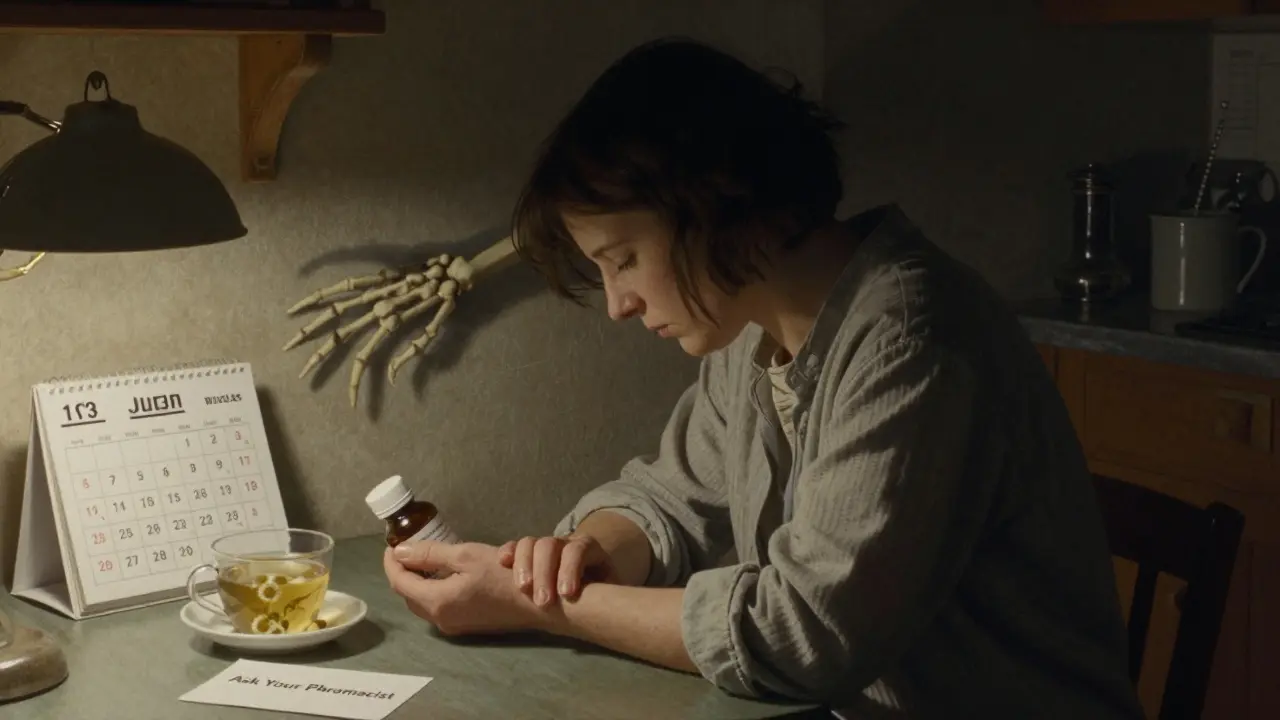
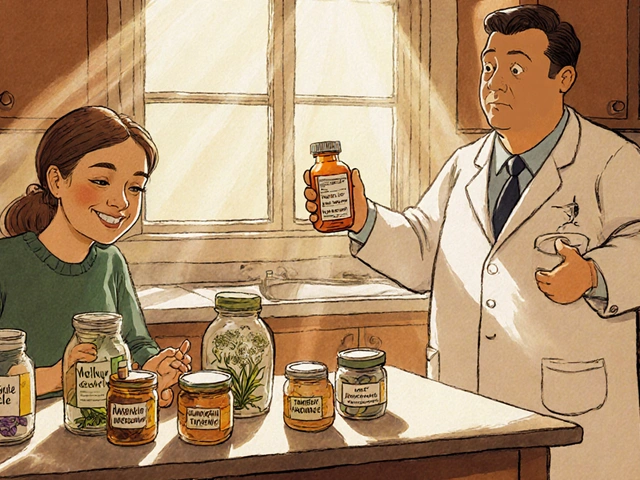
- Tell your doctor about every supplement you take. Vitamins, teas, tinctures, powders-even if you think they’re harmless. Write them down and bring the bottle to your appointment.
- Ask your pharmacist to review all your medications and supplements. Pharmacists are trained to spot interactions. They’ll catch things your doctor might miss.
- Look for alternatives. If you want to support your immune system, focus on sleep, stress management, and balanced nutrition. Those work without risking your transplant or autoimmune treatment.
If you’ve already taken echinacea while on immunosuppressants, don’t panic. But do contact your healthcare provider. Let them know. They may need to check your drug levels or run tests to make sure your organ is still stable.
The Bigger Picture
The global echinacea market made $142 million in 2022. Nearly half of users take it for “immune support.” Meanwhile, half a million Americans are on immunosuppressants after transplants. Millions more use them for autoimmune conditions.
That’s a dangerous overlap. And it’s not getting better. The NIH is funding a $2.4 million study right now to see exactly how echinacea affects tacrolimus levels in kidney transplant patients. Results won’t come until 2025.
But we don’t need a study to know this: When your immune system is being carefully held in check, don’t let a bottle of herb juice try to wake it up.
Can I take echinacea if I’m not on immunosuppressants?
Yes, for short-term use-like a few days at the start of a cold-echinacea is generally safe for healthy people. But even then, it’s not proven to prevent illness. It might slightly reduce the length of a cold by about half a day, according to some studies. But it’s not a magic shield. And if you have an autoimmune condition, even without medication, it’s still risky.
Is there a type of echinacea that’s safer?
No. All major species-Echinacea purpurea, angustifolia, and pallida-contain similar active compounds. Whether it’s a tea, capsule, or tincture, the immune-stimulating effects are the same. There’s no “safe” version if you’re on immunosuppressants.
What if I only took echinacea once?
One dose is unlikely to cause immediate rejection. But immune responses don’t always show up right away. The interaction could still affect your drug levels over days or weeks. If you’re on a transplant medication like tacrolimus or cyclosporine, even a single exposure isn’t worth the risk. Tell your doctor anyway.
Do herbal teas with echinacea count?
Yes. Herbal teas, tinctures, and extracts all contain active compounds. Even a cup of echinacea tea can trigger immune changes. If you’re on immunosuppressants, skip all forms. Look for chamomile, peppermint, or ginger tea instead-those don’t interfere.
Why don’t more doctors warn patients about this?
Many don’t ask. Patients don’t always volunteer supplement use-they assume it’s not important. But doctors need to know. That’s why it’s critical to bring your pill bottles to every appointment. If your doctor doesn’t ask about supplements, ask them: “Could anything I’m taking interfere with my immunosuppressants?”
Final Thought
Your body is a delicate balance. Immunosuppressants keep that balance from tipping into rejection or autoimmune flare-ups. Echinacea doesn’t just add noise-it throws a wrench into the machine. No supplement is worth your transplant. No cold is worth your life.




Comments(11)