
Why Drug Interactions Are a Silent Threat for Older Adults
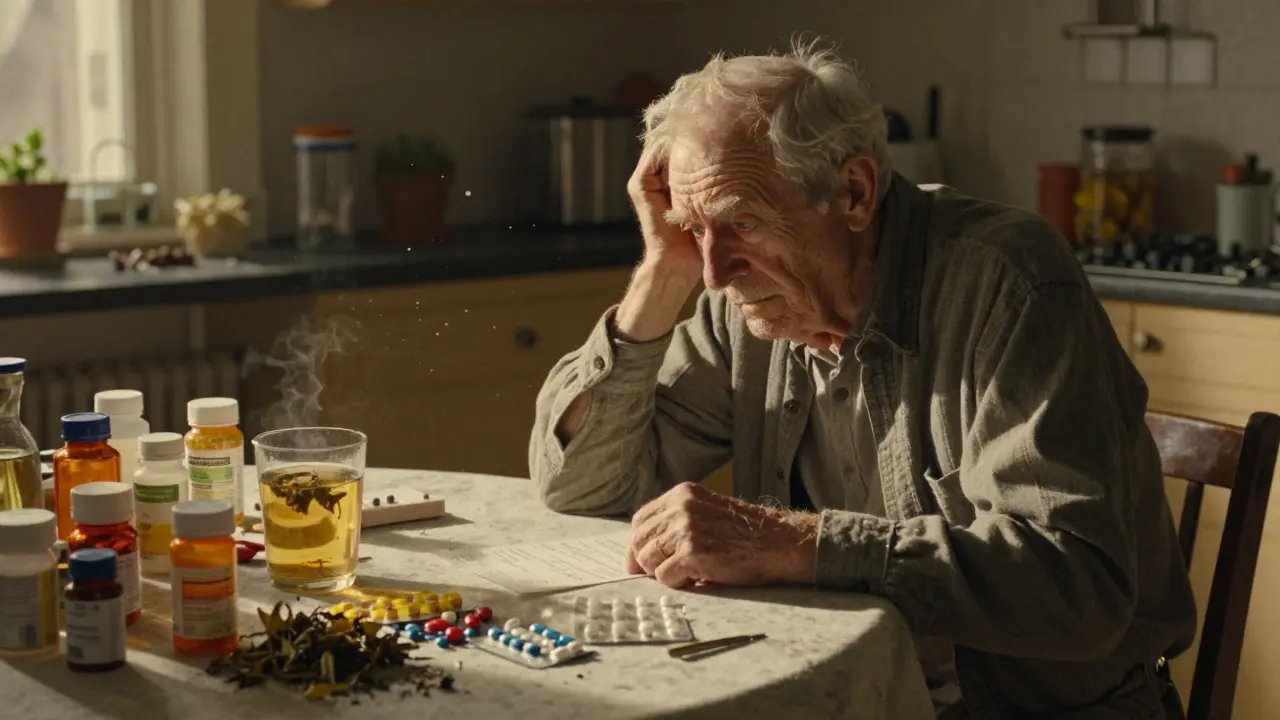
Imagine taking five pills every morning-blood pressure medicine, cholesterol pills, a joint pain reliever, a sleep aid, and a daily vitamin. Sounds routine, right? But what if one of those pills makes another one stronger? Or cancels it out? Or causes dizziness so bad you fall? That’s not rare. It’s happening to millions of seniors every day.
People over 65 are the most likely group to suffer from drug-drug interactions. Why? Because their bodies change. Their liver and kidneys don’t clear drugs as fast. Their muscles shrink, fat increases, and brain sensitivity to meds goes up. Add to that seeing three or more doctors, filling prescriptions at different pharmacies, and forgetting to mention that herbal tea or CBD oil they’re taking-and you’ve got a perfect storm.
One in three hospital stays for seniors is linked to a medication problem. And nearly half of those could have been avoided.
The Real Numbers Behind Polypharmacy
Forty percent of older adults in the U.S. are taking five or more prescription drugs daily. That’s called polypharmacy. It’s not always wrong-many need them. But the more pills you take, the higher the risk. A 78-year-old with heart disease, diabetes, arthritis, and depression might be on eight different meds. Each one has its own side effects. Each one can react with the others.
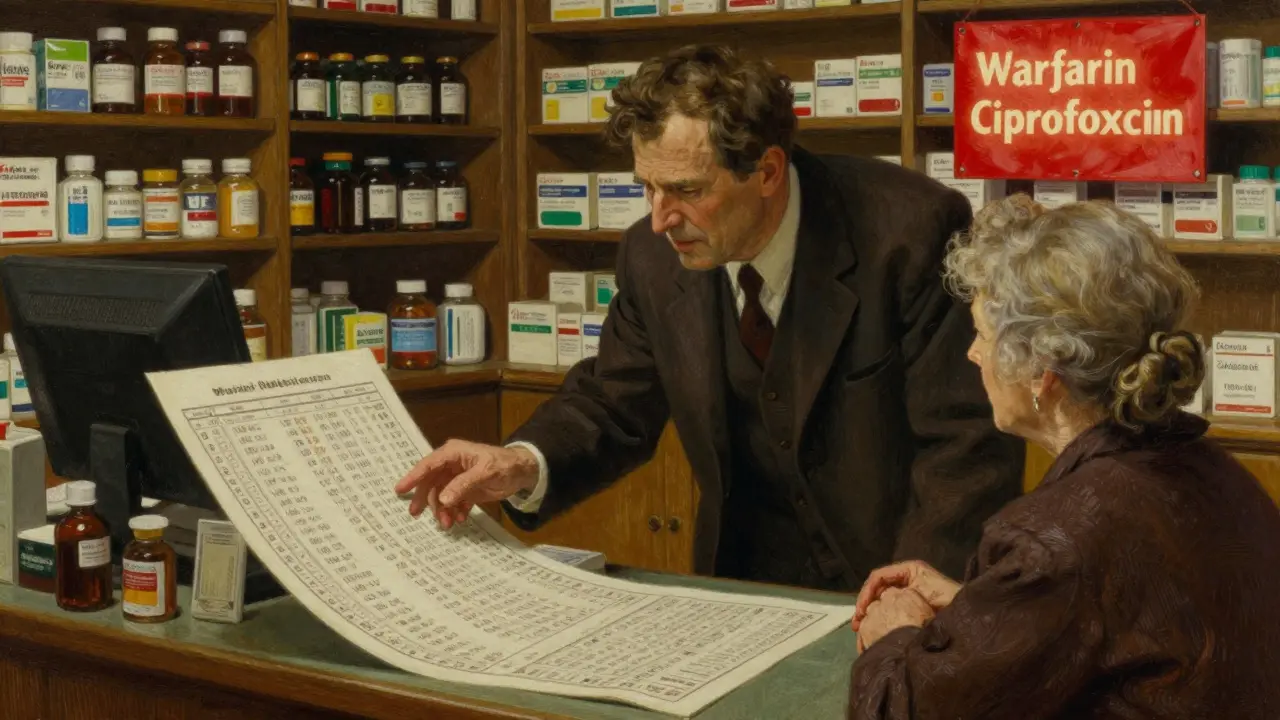
Some interactions are deadly. Combine a blood thinner like warfarin with an antibiotic like ciprofloxacin? Risk of dangerous bleeding jumps. Mix a painkiller like tramadol with an antidepressant like sertraline? Could trigger serotonin syndrome-a life-threatening surge in brain chemicals. And it’s not just prescriptions. Over-the-counter painkillers, sleep aids, and even herbal supplements like St. John’s wort or garlic pills can trigger reactions.
Here’s the kicker: 68% of seniors don’t tell their doctors about their OTC or herbal meds. They think it’s not "real medicine." But it all interacts.
What Makes Older Bodies So Sensitive?
It’s not just about taking too many pills. It’s how the body handles them.
As we age, the liver slows down. It’s responsible for breaking down about 75% of all medications. The enzymes that do this-called CYP450-become less active. So drugs stick around longer. Higher levels build up. Toxicity happens faster.
Kidneys also decline. They filter out waste, including leftover drug parts. If they’re not working well, drugs like digoxin or metformin can pile up. That’s why dosing isn’t one-size-fits-all. A 40-year-old might take 5 mg of a drug. A 75-year-old might need 1.5 mg.
Body composition changes too. Less water, more fat. That affects how drugs spread through the body. Some meds get trapped in fat tissue. Others float in blood and hit the brain harder. That’s why older adults feel dizzy, confused, or fall after taking meds that younger people handle fine.
The Two Gold-Standard Tools: Beers Criteria and STOPP
Doctors don’t guess which drugs are risky. They use tools. Two of the most trusted are the Beers Criteria and STOPP.
The Beers Criteria, updated every two years by the American Geriatrics Society, lists 30 types of medications that should be avoided in seniors-and 40 others that need lower doses because of kidney issues. For example, diphenhydramine (Benadryl) is on the list. It’s in many sleep aids and allergy pills. But it causes confusion, dry mouth, and urinary retention in older adults. There are safer alternatives.
STOPP (Screening Tool of Older Persons’ Potentially Inappropriate Prescriptions) is even more detailed. It’s got 114 red flags. Like prescribing a benzodiazepine (like lorazepam) for sleep in someone with a history of falls. Or giving an NSAID (like ibuprofen) to someone with heart failure or kidney disease. A 2021 study showed hospitals using STOPP during discharge cut readmissions by over 22%.
These aren’t just checklists. They’re lifesavers. When used properly, they reduce hospitalizations by up to 17%.
How to Use the NO TEARS Framework
There’s a simple, practical way to review every medication-not just check off a list, but ask real questions. It’s called NO TEARS.
- Need: Is this drug still necessary? Maybe the pain improved. Maybe the infection cleared. Keep only what’s needed.
- Optimization: Is the dose right? Seniors often need less. A 5 mg dose might be enough, not 10.
- Trade-offs: Do the benefits outweigh the risks? If a statin lowers cholesterol but causes muscle pain so bad the patient can’t walk, is it worth it?
- Economics: Can the patient afford it? Skipping doses because of cost is common-and dangerous.
- Administration: Can they actually take it? Big pills? Multiple times a day? Complex schedules? These lead to mistakes.
- Reduction: Can we stop one? Every time you add a new drug, ask: What can we stop?
- Self-management: Does the patient understand why they’re taking it? If they can’t explain it, they won’t take it right.
This isn’t a one-time thing. It’s a conversation. Every visit. Every refill. Every change.
What Doctors Should Do-And What They Often Don’t
Doctors know the risks. But busy clinics, fragmented care, and lack of training get in the way.
Experts recommend spending at least 15 minutes per visit just reviewing meds for seniors on five or more drugs. That’s not happening. Most visits are 10 minutes or less.
And here’s a hidden problem: when a new doctor starts treating a senior, they often don’t see the full list. One doctor prescribes a sleep aid. Another prescribes a sedative. No one talks. The patient gets both. Result? Extreme drowsiness. A fall. A broken hip.
Only 38% of U.S. medical schools teach geriatric pharmacology. That’s changing-by 2026, it’s expected to hit 65%. But right now, many doctors aren’t trained to spot these interactions.
Also, seniors are rarely included in drug trials. Less than 5% of participants in phase 3 trials are over 65. Yet they make up 40% of the people who actually use these drugs. That means we’re guessing how they’ll react.
Technology Is Helping-But Not Enough
Some hospitals are using AI tools that scan every prescription against a database of known interactions. These systems flag risks in real time. Adoption jumped from 22% of U.S. hospitals in 2020 to 47% in 2023. That’s progress.
But here’s the catch: many systems don’t account for how aging changes drug effects. They use data from young, healthy people. So they miss the real danger for seniors.
Pharmacists are stepping in. Medicare’s Medication Therapy Management program now helps 11.2 million seniors. Pharmacists sit down with patients, review all meds-including vitamins-and call doctors with suggestions. Participants saw a 15.3% drop in hospital visits.
Still, only a fraction of seniors get this service. And many community pharmacies still don’t have the time or resources to do deep reviews.
What Families and Caregivers Can Do
You don’t need a medical degree to help prevent a drug interaction. Here’s how:
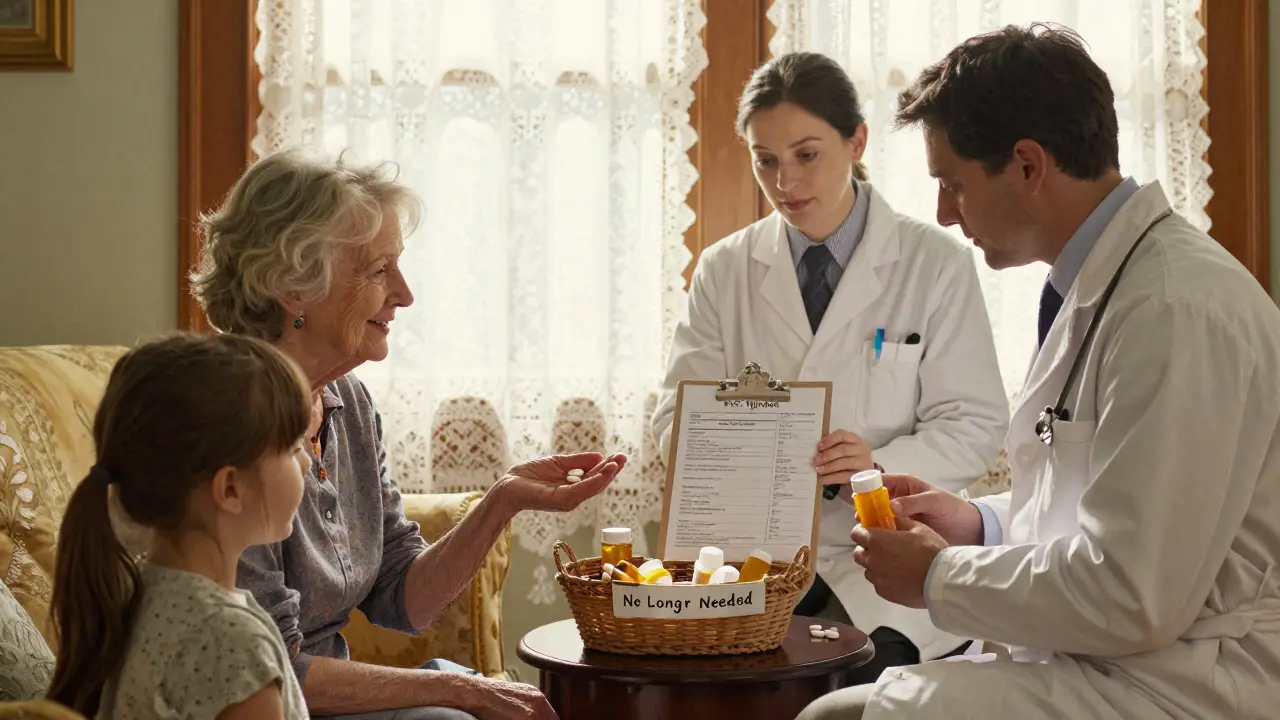
- Keep a written, updated list of every medication-prescription, OTC, supplement, and herbal. Include the dose and why it’s taken.
- Bring this list to every doctor’s visit-even the dermatologist or eye doctor.
- Ask: "Can we stop any of these?" and "Is there a safer alternative?"
- Use one pharmacy. If they see all the meds, they can flag interactions.
- Watch for new symptoms: confusion, dizziness, falls, nausea, extreme fatigue. These aren’t "just aging." They might be a drug reaction.
- Don’t assume natural = safe. Turmeric, ginkgo, ginseng, fish oil-they all interact.
One family noticed their 82-year-old mom was confused and falling. She was on six meds. One was a common sleep aid. The pharmacist flagged it as high-risk. Switched to a non-sedating option. Within two weeks, she was alert, stable, and no longer falling.
The Future: Better Data, Better Care
The FDA is pushing for better data. New drug applications now need to include testing in older adults. By 2027, they expect to see three times more geriatric pharmacokinetic data than before.
The 2025 update to the Beers Criteria will add more drug-disease interactions and refine dosing for 15 more medications based on kidney function.
But the biggest change won’t come from a new guideline. It’ll come from communication. When doctors, pharmacists, patients, and families talk-really talk-about every pill, every side effect, every concern-interactions drop.
Bottom Line: Less Is Often More
Preventing drug interactions in older adults isn’t about adding more checks or apps. It’s about asking the right questions: Do we still need this? Is this the right dose? Can we stop something else? Is this safe with the others?
Seniors don’t need more pills. They need better ones. Fewer, safer, and smarter.
Every medication has a reason. But not every reason lasts forever. Reviewing meds isn’t a one-time task. It’s part of caring for someone as they age.



Comments(15)