

When you're over 65 and your kidneys aren't working like they used to, even a normal dose of a common pill can turn dangerous. It's not about being old-it's about how your body changes. Your kidneys filter out drugs. When they slow down, those drugs build up. And that buildup? It can cause falls, confusion, hospital stays, or worse. This isn't rare. Nearly 4 in 10 older adults have kidney function low enough to need dose changes. Yet, most doctors still give the same pills they'd give to a 30-year-old.
Why Kidney Function Matters More After 65
Your kidneys don't just make urine. They're your body’s main drug cleanup crew. As you age, kidney function naturally drops. Glomerular filtration rate (GFR)-the gold standard measure-declines by about 1% per year after age 40. By 70, many people have a GFR below 60 mL/min/1.73 m². That’s not just aging. That’s chronic kidney disease (CKD) stage 3 or higher. And when your GFR drops, drugs that leave the body through the kidneys stick around longer. That’s called accumulation. And accumulation = toxicity.Take gabapentin, a common nerve pain drug. A healthy 30-year-old might take 300 mg three times a day. An 80-year-old with a GFR of 35? That same dose can cause dizziness, falls, and broken hips. The same goes for antibiotics like cefepime, painkillers like morphine, and even diabetes drugs like metformin. In one study, nearly 7 out of 10 elderly patients on gabapentin got the wrong dose. That’s not a mistake. It’s a system failure.
How to Measure Kidney Function-Correctly
You can’t just look at a serum creatinine number. That’s outdated. Creatinine is muscle waste. Older people have less muscle. So their creatinine looks normal-even when their kidneys are failing. That’s why you need to calculate creatinine clearance (CrCl) or estimate GFR using the right formula.The Cockcroft-Gault equation is still the go-to for dosing in older adults. It uses age, weight, sex, and serum creatinine:
For men: (140 - age) × weight (kg) ÷ (72 × serum creatinine)
For women: (140 - age) × weight (kg) ÷ (72 × serum creatinine) × 0.85
Don’t use the MDRD or eGFR equations alone for dosing. They often overestimate kidney function in older people by 15-20%. That means you’ll think their kidneys are working better than they are-and give too much drug. The KDIGO guidelines say: if you’re unsure, use Cockcroft-Gault. It’s conservative. And in elderly patients, conservative is safer.
There’s a better option coming: cystatin C. It’s not affected by muscle mass. But it’s not yet routine in most clinics. If your lab offers it, ask for it. Especially if creatinine looks normal but the patient is frail or has unexplained confusion.
Which Drugs Are Most Dangerous?
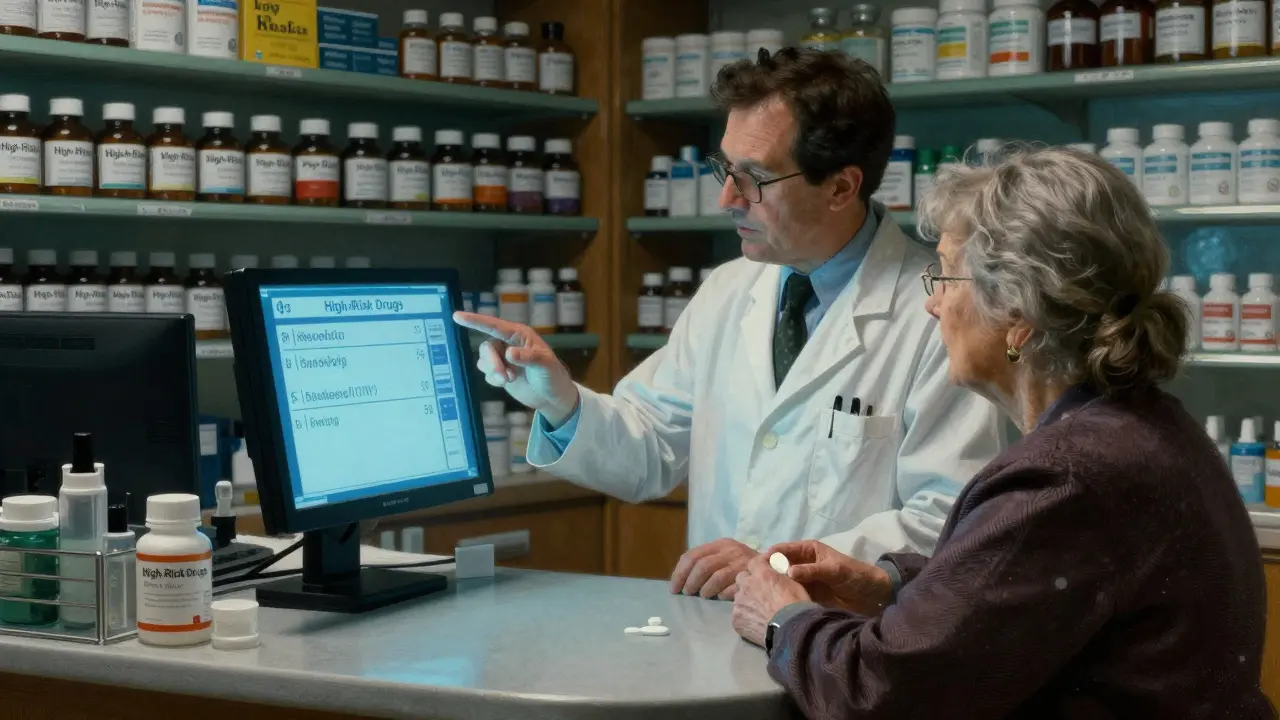
Not all drugs are equal. Some are forgiving. Others? They’re landmines.High-risk drugs (narrow therapeutic index):
- Digoxin: Therapeutic range is 0.8-2.0 ng/mL. Too high? Irregular heartbeat. Too low? No effect. In elderly patients, reduce dose by 50% if CrCl < 50 mL/min.
- Lithium: Used for bipolar disorder. Toxicity can cause tremors, confusion, seizures. Dose must be cut in half if CrCl < 60 mL/min. Monitor levels every 3-6 months.
- Metformin: Avoid if serum creatinine >1.5 mg/dL in men or >1.4 mg/dL in women. Even if GFR is borderline, check kidney function every 3 months.
- Glyburide: A diabetes pill. Its metabolites build up and cause dangerous low blood sugar. Don’t use if CrCl < 50 mL/min. Switch to glipizide-no dose adjustment needed.
- Allopurinol: For gout. Standard dose is 100 mg/day. If CrCl < 10 mL/min, start with 100 mg every other day. Too much? Skin rash that can turn deadly.
Antibiotics need special care too:
- Cefepime: 1g every 6 hours for normal kidney function. At CrCl 30-50 mL/min → every 8 hours. CrCl 10-29 → every 12 hours. CrCl <10 → every 24 hours.
- Cefdinir: Drop from 300 mg twice daily to once daily if CrCl < 30 mL/min.
- Vancomycin: Don’t just reduce the dose. Extend the interval. From every 12 hours to every 48 hours. And always check blood levels.
The 50% Rule-Use It Wisely
Many clinicians use the “50% rule”: if a drug is 50% or more cleared by the kidneys, cut the dose in half when CrCl drops below 50 mL/min. It’s simple. And it works-for some drugs.But it fails for others. Vancomycin doesn’t follow linear rules. Gabapentin has nonlinear absorption. Some drugs have active metabolites that are cleared by kidneys-even if the parent drug is liver-metabolized. That’s why the KDIGO guidelines warn against blanket rules. You need to know the drug’s pharmacokinetics.
Ask yourself: Is this drug excreted mostly by the kidneys? Does it have active metabolites? Is it narrow-therapeutic-index? If yes to all three, don’t guess. Check the guidelines. Use a reliable source like the University of Nebraska Medical Center’s antimicrobial dosing tables or the RACGP prescribing guide for older adults.
What Works in Real Clinics
Knowing what to do isn’t enough. Doing it consistently is the real challenge.A 2015 study found only 44% of prescribers adjusted doses properly in elderly patients. The biggest errors? Gabapentin, rivaroxaban, and allopurinol. Why? No reminders. No alerts. No pharmacist involvement.
Here’s what fixes it:
- Electronic alerts: The University of Nebraska added pop-up warnings in their EHR when a high-risk drug was ordered for a patient with low CrCl. Within a year, dosing errors dropped by 37%.
- Pharmacist-led reviews: At Mayo Clinic, pharmacists reviewed all medications for patients over 65 with CKD. Adverse events fell by 58%.
- Mobile apps: Epocrates Renal Dosing is used over 1.2 million times a year. It gives instant, evidence-based dosing for 200+ drugs.
- AI tools: The new DoseOptima platform, approved by the FDA in 2023, pulls real-time lab values, calculates CrCl, and recommends doses. In trials, it was 92.4% accurate.
Community hospitals? Only 53% have formal protocols. Long-term care homes? Just 28%. That’s unacceptable. If you’re managing care for older adults, you need a system-not just a memory.

What’s Changing in 2026
The field is evolving fast. The KDIGO guidelines are updating this year to recommend cystatin C over creatinine for elderly patients. The American Society of Health-System Pharmacists is finalizing a national standard for dosing 150 high-risk drugs. The FDA now requires renal dosing info on all new drug labels for patients over 65. And Medicare penalizes hospitals with high rates of drug-related falls and hospitalizations.There’s also a quiet revolution in pharmacogenomics. The NIH is studying how genes affect how elderly patients clear drugs. In five years, we may be tailoring doses based on DNA-not just creatinine.
But right now? The tools are here. The data is clear. The risk is real.
What You Can Do Today
If you’re a clinician:- Always calculate CrCl using Cockcroft-Gault for patients over 65-even if creatinine looks normal.
- Know the top 10 high-risk drugs for elderly patients. Keep a printed list in your clinic.
- Use an app or EHR alert. Don’t rely on memory.
- Consult a pharmacist. Every time. Especially for anticoagulants, antibiotics, and CNS drugs.
- Check drug levels when possible: digoxin, lithium, phenytoin.
If you’re a caregiver or patient:
- Ask: “Is this dose right for my kidneys?”
- Bring a full list of all meds-including over-the-counter and supplements-to every appointment.
- Watch for signs of toxicity: confusion, dizziness, nausea, swelling, fatigue.
- Don’t assume “it’s just aging.” A new symptom could be a drug reaction.
Renal impairment isn’t a death sentence. But unadjusted dosing? That’s preventable harm. We know how to fix it. The question is: will we do it?
How do I know if my elderly parent’s medication dose is too high?
Look for new symptoms after a dose change or new prescription: confusion, dizziness, falls, nausea, swelling in legs, or extreme fatigue. These aren’t normal aging. They’re signs of drug buildup. Check kidney function with a CrCl calculation. If the patient is on digoxin, lithium, or certain antibiotics, ask for a blood level test. Always review all medications with a pharmacist.
Is creatinine enough to check kidney function in older adults?
No. Creatinine alone is misleading in older adults because muscle mass declines with age. A normal creatinine level can hide severe kidney impairment. Always calculate creatinine clearance (CrCl) using the Cockcroft-Gault formula. If available, request a cystatin C test-it’s more accurate for elderly patients.
Can I still use metformin if I have kidney problems?
Metformin is generally avoided if serum creatinine is above 1.5 mg/dL in men or 1.4 mg/dL in women. Some European guidelines allow it with strict monitoring, but U.S. guidelines are stricter. If kidney function is borderline, switch to glipizide or another non-renally cleared diabetes drug. Never start or continue metformin without checking kidney function every 3 months.
What’s the safest painkiller for elderly patients with kidney issues?
Acetaminophen (Tylenol) is usually safest when used at normal doses (up to 3,000 mg/day). Avoid NSAIDs like ibuprofen or naproxen-they reduce kidney blood flow and can cause acute injury. Opioids like morphine need dose reduction. Always check with a pharmacist before giving any painkiller to someone over 65 with reduced kidney function.
Do over-the-counter supplements affect kidney function?
Yes. Herbal supplements like licorice root, creatine, and high-dose vitamin C can stress kidneys. Some weight-loss supplements contain hidden NSAIDs or stimulants. Always disclose all supplements to your doctor. Many elderly patients don’t realize these are “medications” too. A 2022 study found 32% of older adults with CKD were taking at least one risky supplement.
How often should kidney function be checked in elderly patients on chronic meds?
Every 3 to 6 months for patients with known kidney impairment or on high-risk drugs like metformin, digoxin, or antibiotics. If kidney function is stable and no new drugs are added, annual checks may be enough. But if a new medication is started, check kidney function before and 1-2 weeks after. Don’t wait for symptoms.
Preventing drug toxicity in older adults isn’t complicated. It’s about using the right tools, asking the right questions, and never assuming that what works for a young person is safe for an older one. The data is clear. The guidelines exist. The technology is available. What’s missing is consistent action. Start today. One dose adjustment could save a life.




Comments(9)