
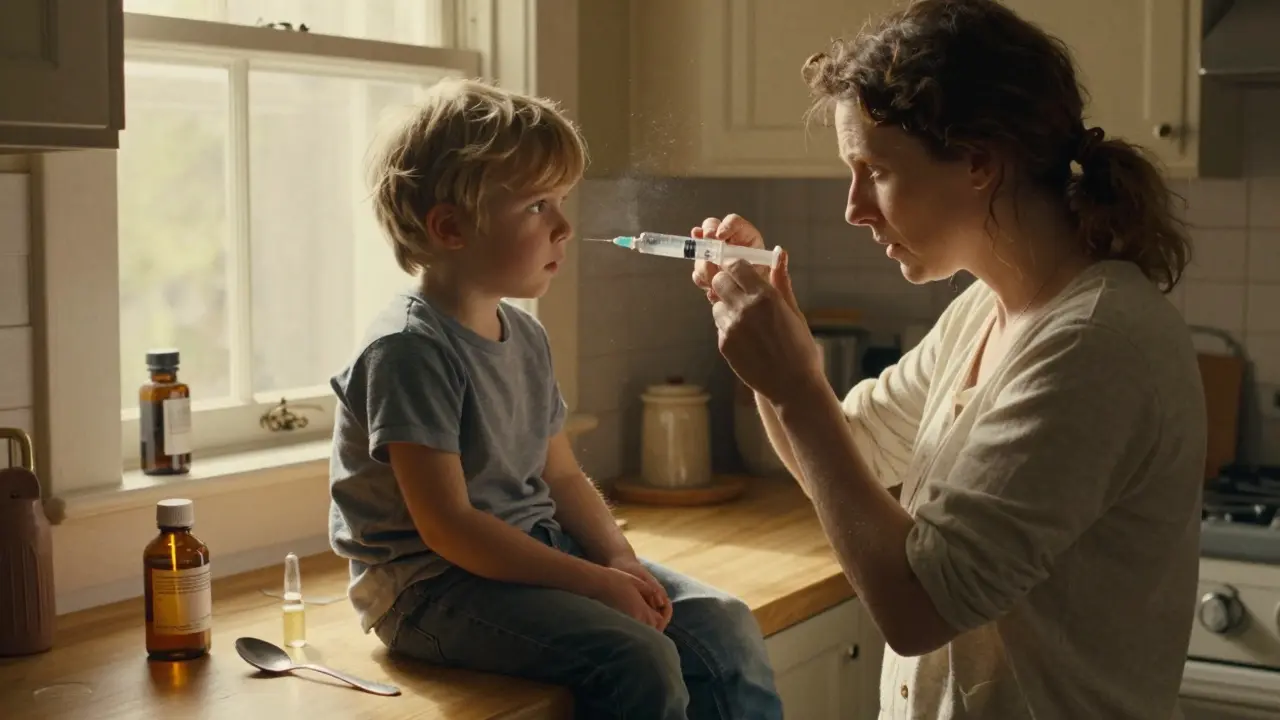
Getting the right dose of medicine for your child isn’t just important-it can be life-saving. A tiny mistake, like confusing 0.5 mL with 5 mL, can mean the difference between healing and hospitalization. And it’s more common than you think. Studies show that 7 in 10 parents mismeasure liquid medications at home, often because they’re using the wrong tools or trusting kitchen spoons that aren’t accurate at all.
Why Measuring Correctly Matters More for Kids
Children aren’t small adults. Their bodies process medicine differently. A dose that’s safe for a 150-pound teen could be deadly for a 20-pound toddler. That’s why pediatric dosing is always based on weight, not age. Medications like amoxicillin, acetaminophen, or ibuprofen are calculated in milligrams per kilogram (mg/kg). If you guess, wing it, or use a random spoon, you’re playing Russian roulette with your child’s health.
Under-dosing means the medicine won’t work. Your child’s ear infection won’t clear up, the fever won’t break, and the illness lingers. Over-dosing? That’s worse. Too much acetaminophen can cause liver failure. Too much ibuprofen can damage kidneys. Even a small error with certain drugs-like digoxin or seizure medications-can trigger seizures, heart problems, or worse.
Forget Teaspoons and Tablespoons
Stop using kitchen spoons. Ever. A teaspoon from your drawer might hold 3.9 mL one day and 7.3 mL the next. That’s a 20% to 200% variation. The CDC says it plainly: never use kitchen utensils to measure children’s medicine.
And don’t rely on labels that say “1 teaspoon.” Even if the bottle says it, that’s not enough. The gold standard now is milliliters (mL) only. The American Academy of Pediatrics and the CDC have been pushing for this since 2015. Why? Because “tsp” and “tbsp” are confusing. Parents mix them up with “mg” (milligrams), and that’s led to thousands of ER visits. One study found that 36% of all pediatric liquid medication errors come from confusing milligrams with milliliters.
Look at your child’s prescription. If it says “5 tsp,” ask the pharmacist to rewrite it as “25 mL.” If the bottle label still says “teaspoon,” call the pharmacy and insist on a corrected label. You have the right to clear, safe instructions.
Use the Right Tool-Oral Syringes Are Best
Not all measuring tools are created equal. Here’s what works-and what doesn’t:
- Oral syringes (1-10 mL): These are the most accurate. Studies show they’re 94% accurate for measuring doses under 5 mL. That’s the tool doctors and hospitals use. Buy them at any pharmacy-they’re cheap, often free with the prescription.
- Dosing cups: Okay for doses over 5 mL, but error rates jump to 68% for small amounts like 2.5 mL. They’re harder to control, and kids often spill or spit out the medicine.
- Dosing spoons: Better than kitchen spoons, but still not ideal. Accuracy is around 82%. Only use them if your child refuses the syringe and you’ve confirmed the dose is over 5 mL.
- Household spoons: Never use them. Not even once.
For doses under 5 mL-like antibiotics for a 1-year-old-oral syringes are non-negotiable. For older kids who can swallow from a cup, a dosing cup might work, but only if you’re sure the dose is accurate and you’re using the one that came with the medicine.
How to Measure with an Oral Syringe
It’s simple, but most people do it wrong. Here’s how to get it right every time:
- Shake the bottle first. Many liquid medicines are suspensions. If you don’t shake, the medicine settles at the bottom. One study found that 30-50% of under-dosing happens because parents forget this step.
- Draw the medicine slowly. Insert the syringe into the bottle, turn it upside down, and pull the plunger slowly until the top edge of the liquid (the meniscus) lines up with your dose mark. Don’t rush.
- Hold it at eye level. Looking down at the syringe from above makes the liquid look higher than it is. Hold it straight in front of your eyes to read the line accurately.
- Give it to your child properly. Don’t squirt it into the front of the mouth. Aim for the inside of the cheek. That reduces spitting. If your child refuses, mix the dose with a small spoonful of apple sauce or yogurt-just don’t mix it into a full bottle or bowl. You won’t know if they ate it all.
- Wash and dry the syringe. Rinse it with water after each use. Don’t let it sit with medicine inside. Mold grows fast.

Weight Matters: Convert Pounds to Kilograms
Most prescriptions are based on weight in kilograms. But most parents know their child’s weight in pounds. Here’s the quick math:
1 kg = 2.2 lb
So if your child weighs 22 pounds, divide by 2.2: 22 ÷ 2.2 = 10 kg.
Now, if the doctor says “40 mg/kg/day,” and the dose is split into two, that’s 40 × 10 = 400 mg total per day, or 200 mg per dose.
If the medicine is 400 mg per 5 mL, then 200 mg = 2.5 mL. That’s your dose.
Keep a simple chart taped to the fridge: child’s weight in kg, and the corresponding doses for common meds like acetaminophen and ibuprofen. Many hospitals, like Children’s Healthcare of Atlanta, offer free printable charts. Use them.
What to Do When the Medicine Doesn’t Come with a Syringe
Pharmacies aren’t perfect. Only 57% of prescriptions include a dosing syringe, even though the CDC recommends it. If yours doesn’t:
- Ask for one. Pharmacies usually have them behind the counter.
- Buy one. A basic oral syringe costs under $2. Look for ones labeled “pediatric” or “oral medication.” Avoid syringes with needles.
- Use the one that came with a previous prescription-if it’s clean and still accurate.
Some brands like NurtureShot and Medisana BabyDos offer color-coded syringes that change color when you’ve drawn the right dose. They’re not necessary, but they help-especially for tired parents or caregivers who aren’t fluent in English.
Special Cases: Narrow Therapeutic Index Medications
Some medicines have a very small window between “helpful” and “harmful.” These include:
- Digoxin (for heart conditions)
- Warfarin (blood thinner)
- Seizure medications like phenytoin or valproic acid
For these, only use an oral syringe. Never trust a cup or spoon. Double-check the dose with your pharmacist. Write it down. Have a second adult confirm it. These aren’t just recommendations-they’re safety protocols.
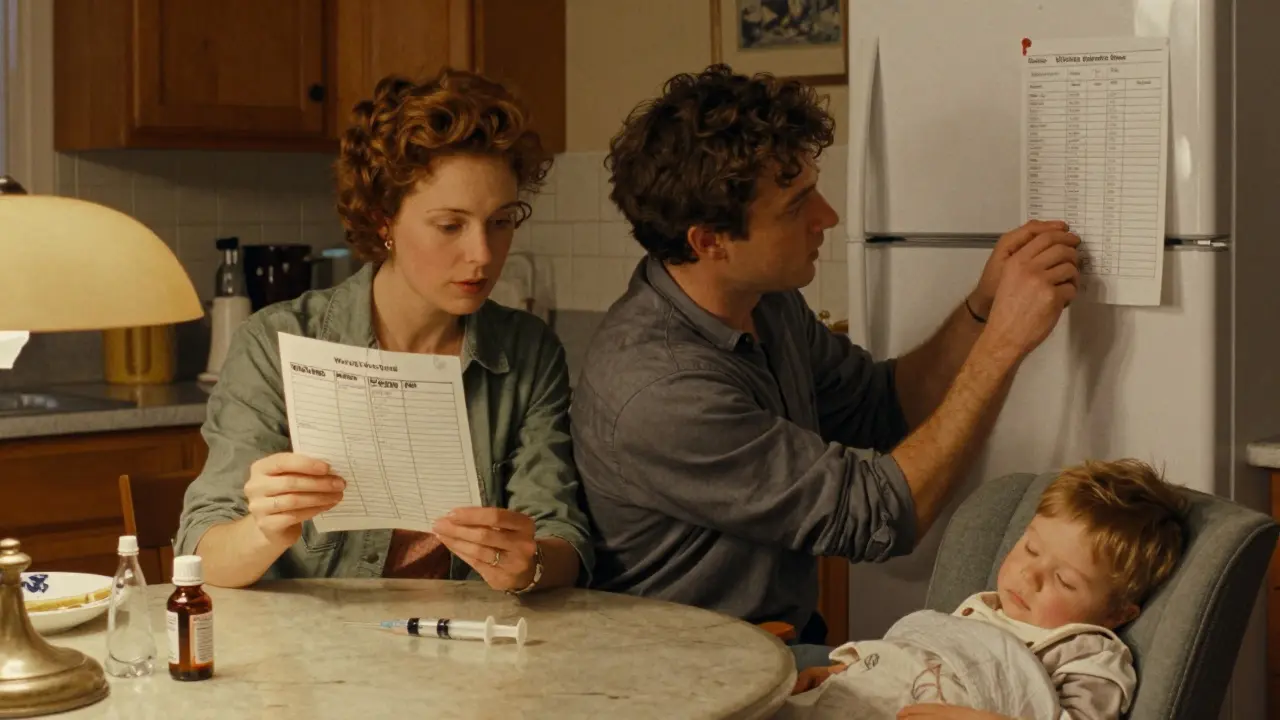
Common Mistakes Parents Make (And How to Avoid Them)
- Mixing medicine with a full bottle of juice or milk. Your child might not drink it all. You’ll never know if they got the full dose. Mix with a small spoonful instead.
- Using a syringe from another child’s medicine. Even if it looks clean, residue can change the dose or cause contamination.
- Forgetting to shake. As mentioned, this causes under-dosing. Always shake before drawing.
- Using expired medicine. Liquid antibiotics lose potency fast. If it’s been more than 14 days since you opened it, toss it.
- Not writing down the next dose time. Set phone alarms. One parent in a Cincinnati survey admitted to giving a second dose too early because they lost track.
What to Do If You Think You Made a Mistake
Did you give 5 mL instead of 0.5 mL? Did you use a kitchen spoon? Don’t panic-but don’t wait either.
Call your pediatrician or Poison Control immediately. In New Zealand, call 0800 764 766 (Poison Centre). In the U.S., call 1-800-222-1222. Have the medicine bottle ready. Tell them:
- What medicine was given
- How much you gave
- When you gave it
- Your child’s weight and age
Most errors are caught early and don’t cause harm-but only if you act fast.
Final Tips for Consistent Safety
- Keep all medicines out of reach-locked cabinets are best.
- Never refer to medicine as “candy.” Kids will try to find it.
- Use one primary caregiver for dosing, especially if multiple people look after your child. Consistency reduces errors.
- Take a photo of the prescription label and dose instructions on your phone. It’s easier than reading small print when you’re tired.
- Ask your pharmacist: “Is there a better tool for this dose?” They’re trained to help.
Measuring children’s medicine correctly isn’t about being perfect. It’s about being careful, consistent, and informed. The tools are simple. The rules are clear. And the stakes? They couldn’t be higher.
Can I use a kitchen teaspoon if I don’t have a syringe?
No. Kitchen teaspoons vary in size from 3.9 mL to 7.3 mL, while a proper teaspoon is exactly 5 mL. Using one can lead to dangerous under- or overdosing. Always use an oral syringe or dosing cup designed for medicine.
Why do some medicine labels still say ‘teaspoon’?
Some older labels haven’t been updated yet. But the FDA and CDC now require all pediatric liquid medications to use milliliters (mL) only. If your label says ‘tsp,’ ask the pharmacy to re-label it. You have the right to clear, metric-only instructions.
How do I convert my child’s weight from pounds to kilograms?
Divide the weight in pounds by 2.2. For example, a child weighing 22 pounds is 10 kg (22 ÷ 2.2 = 10). This is essential for calculating correct doses like 10 mg/kg.
Is it safe to mix medicine with juice or milk?
Only mix with a small amount-like one teaspoon of applesauce or yogurt. Never mix into a full bottle or cup. Your child may not finish it all, and you won’t know if they got the full dose.
What should I do if I give the wrong dose?
Call Poison Control immediately. In New Zealand, dial 0800 764 766. Have the medicine bottle ready. Don’t wait for symptoms. Most errors are fixable if caught early.
Do I need to clean the syringe after each use?
Yes. Rinse it with clean water after each use and let it air dry. Never leave medicine residue inside-it can grow mold or clog the syringe. A clean syringe is a safe syringe.
Every time you measure your child’s medicine, you’re not just giving them a dose-you’re protecting their health. Use the right tool. Read the label. Double-check the numbers. It’s not extra work. It’s essential care.





Comments(15)