
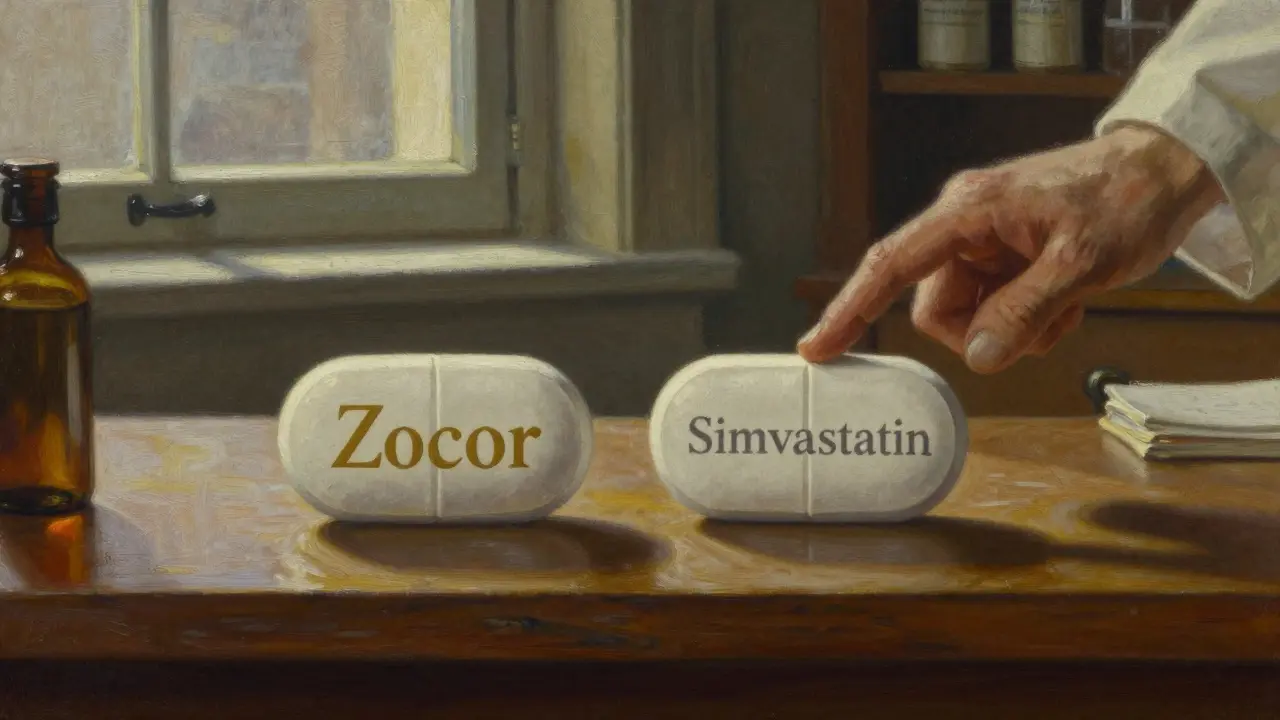
When you pick up a prescription, you might see two different bottles with the same active ingredient. One says Simvastatin - the other says Zocor. Both work the same way. But one is a brand, and the other? It’s not what you think.
Many people assume all generics are the same. They’re not. There’s a big difference between a traditional generic and an authorized generic. And if you’re trying to save money without risking your health, this matters.
What Exactly Is an Authorized Generic?
An authorized generic is the exact same drug as the brand-name version - same active ingredients, same inactive ingredients, same manufacturing process, same quality control. The only difference? It doesn’t have the brand name on the label.
The U.S. Food and Drug Administration (FDA) defines it clearly: an authorized generic is a brand-name drug sold under a different label, without the brand name, logo, or packaging. It’s not a copy. It’s the original product, just repackaged.
Here’s how it works: the company that made the brand-name drug - say, Pfizer with Zocor - decides to sell the exact same pill under a different name, like Simvastatin by Greenstone. They don’t need to retest it. They don’t need to submit a new application. Because it’s the same drug, made in the same factory, with the same formula, it’s already approved under the original New Drug Application (NDA).
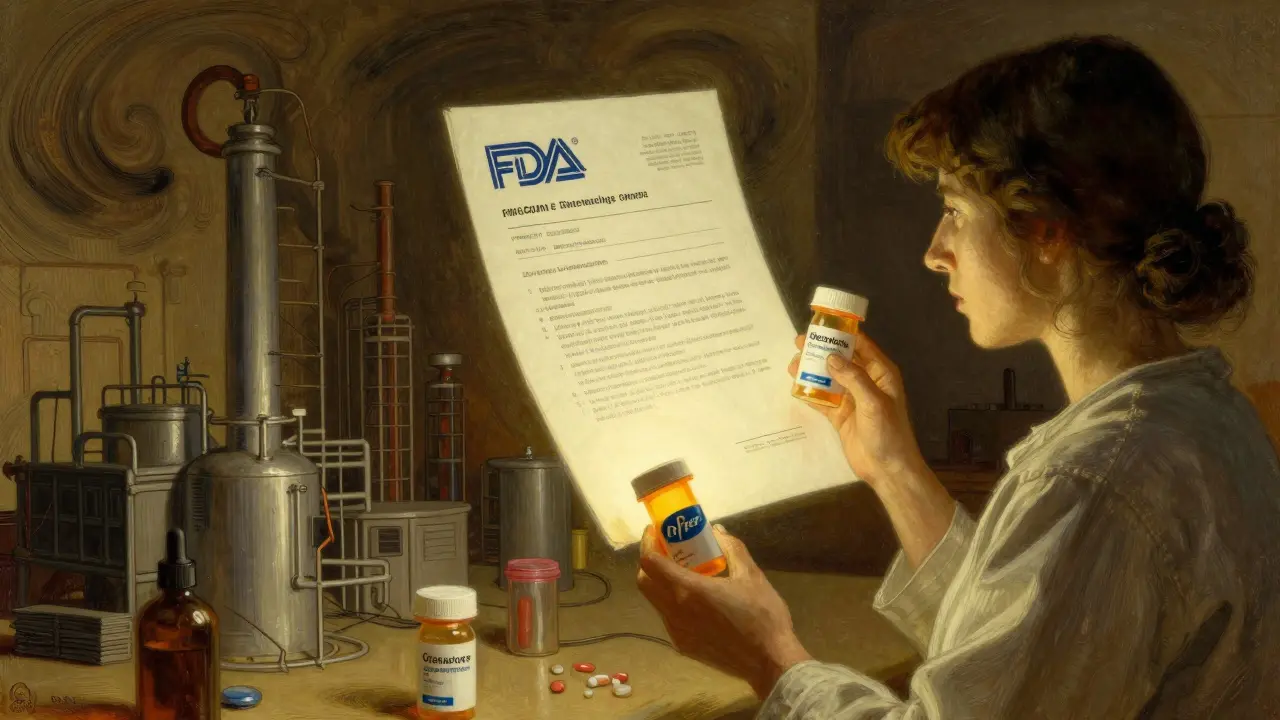
That’s why authorized generics appear on the FDA’s List of Authorized Generic Drugs - not in the Orange Book. The Orange Book only lists traditional generics that went through the Abbreviated New Drug Application (ANDA) process. Authorized generics skip that step entirely.
How Traditional Generics Are Different
Traditional generics are what most people think of when they hear "generic." They’re cheaper versions of brand-name drugs, approved by the FDA after proving they’re bioequivalent.
That means they must deliver the same amount of active ingredient into your bloodstream at the same rate as the brand. But here’s the catch: they can have different inactive ingredients. That’s the fillers, dyes, preservatives, and coatings. These don’t affect how the drug works, but they can affect how your body reacts.
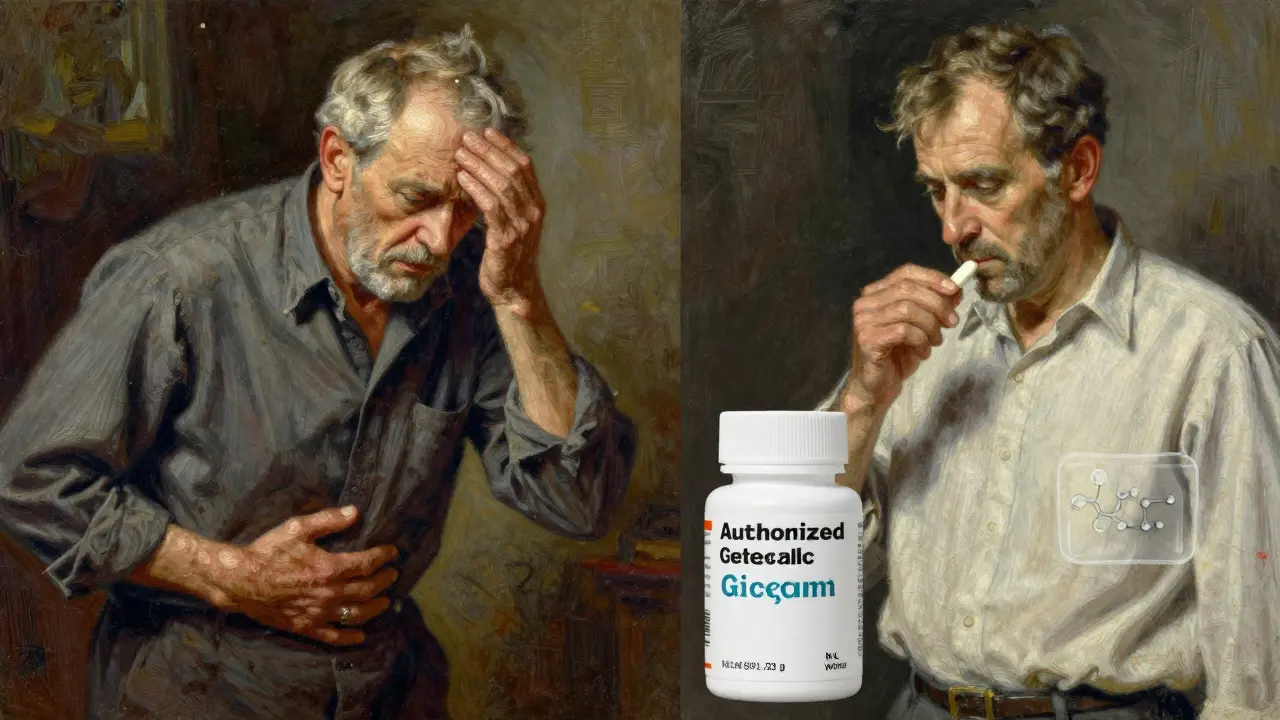
For example, someone might be allergic to a dye used in a traditional generic version of levothyroxine. The brand version uses a different dye. The authorized generic? It uses the exact same dye as the brand. No change at all.
Traditional generics also face delays. They often wait for patent expiration and then compete for the 180-day exclusivity period granted to the first company to challenge the patent. That’s why some drugs have no generics for years - even after patents expire.
Authorized generics don’t play that game. They can launch anytime. No waiting. No legal battles. Just the same drug, cheaper.
Why Authorized Generics Exist
You might wonder: why would a brand company sell its own drug under a generic label? It sounds weird. But it’s smart business.
When a brand drug’s patent expires, the company loses its monopoly. Traditional generics flood the market. Prices crash. Profits drop. But if the brand company launches its own authorized generic - say, Greenstone LLC, which is owned by Pfizer - it keeps a slice of the market. It’s not just about profit. It’s about control.
Some critics say this tactic hurts competition. If the brand company releases its own generic right when the patent expires, it can undercut the first traditional generic applicant. That applicant loses their 180-day exclusivity window. They can’t compete. And that delays more generics from entering.
According to a 2022 Health Affairs study, 38.5% of brand-name drugs with expired patents had authorized generics launched at the same time as the first traditional generic. That’s not coincidence. It’s strategy.
Still, for patients, it’s a win. Authorized generics are often priced 15-30% lower than the brand. Sometimes even cheaper than traditional generics.
Real-World Impact: What Patients Experience
Pharmacists in New Zealand and the U.S. report a clear trend: patients who’ve had bad reactions to traditional generics ask specifically for authorized versions.
Why? Because they’ve felt the difference. A change in filler can cause stomach upset, dizziness, or even affect how well a drug works for someone with sensitive conditions like epilepsy or thyroid disease. The brand and the authorized generic? Identical. No surprises.
A 2022 survey by the National Community Pharmacists Association found that 67% of independent pharmacists had patients request authorized generics by name. These aren’t doctors or pharmacists - these are everyday people who noticed something changed in their pill and remembered what worked.
But here’s the problem: most people can’t tell the difference. A GoodRx study showed 78% of patients couldn’t distinguish between an authorized generic and a traditional generic just by looking at the bottle. The labels look different. The colors might be off. The shape might vary. But the pill inside? Same thing.
And insurance? That’s where things get messy. Some pharmacy benefit managers (PBMs) treat authorized generics like brand drugs. They charge you a higher co-pay. Even though the drug is identical to the brand, you’re paying more. That’s not fair. And it’s not common knowledge.
How to Spot an Authorized Generic
If you want to make sure you’re getting an authorized generic, here’s how:
- Check the manufacturer name on the bottle. If it’s the same company as the brand - like Novartis for Diovan and Diovan HCT by Sandoz - it’s likely authorized.
- Look for companies known for authorized generics: Greenstone (Pfizer), Prasco Laboratories, Patriot Pharmaceuticals. These three handle 78% of all authorized generics in the U.S.
- Visit the FDA’s official List of Authorized Generic Drugs (updated monthly). Search by brand name. If it shows up, the authorized version exists.
- Ask your pharmacist: "Is this an authorized generic?" They can check the NDA holder and confirm.
Don’t rely on the word "generic" alone. That doesn’t mean authorized. Always verify.
What This Means for Your Health
Authorized generics aren’t a loophole. They’re a regulatory tool designed to give patients access to the exact drug they were prescribed - at a lower cost.
For chronic conditions - high blood pressure, diabetes, depression, thyroid disorders - consistency matters. A slight variation in inactive ingredients can throw off absorption. For some, it’s a minor issue. For others, it’s a health risk.
Authorized generics eliminate that risk. No reformulation. No new manufacturing line. No guesswork.
And with 1,872 authorized generic products available in the U.S. as of September 2023, they’re not rare. They’re common. They’re growing. IQVIA predicts they’ll make up 15.3% of the U.S. generic market by 2027.
That means more people will have access to identical drugs - cheaper, safer, and just as effective.
What’s Next? Regulatory Changes on the Horizon
The FDA has been tightening rules. Since January 2023, companies must file Form FDA 356h within 30 days of launching an authorized generic. No more hiding.
The 2022 Consolidated Appropriations Act ordered the FDA to study how authorized generics affect competition. Findings are due by December 2024. Congress is watching.
Some lawmakers want to ban brand companies from launching their own generics. Others say it’s a legitimate way to lower prices. The debate isn’t over.
But for now, the rules are clear: authorized generics are not traditional generics. They’re the brand - just without the name.
If you’ve ever wondered why your pill looks different, or why your co-pay didn’t drop - now you know. It’s not a trick. It’s a choice. And you have the right to ask for the version that matches your original prescription.





Comments(12)