
Inhaler Risk Assessment Tool
This tool helps you understand your personal risk for oral thrush and hoarseness when using inhaled corticosteroids. Based on your daily dose, age, health conditions, and other factors, it calculates your risk level and provides personalized recommendations.
Using an inhaled corticosteroid (ICS) for asthma or COPD can save your life. But if you don’t take a few simple steps after each puff, you might end up with a white, painful coating in your mouth-or a voice that sounds like gravel. These aren’t rare side effects. They’re common, preventable, and often ignored.
Why Your Inhaler Causes Oral Thrush
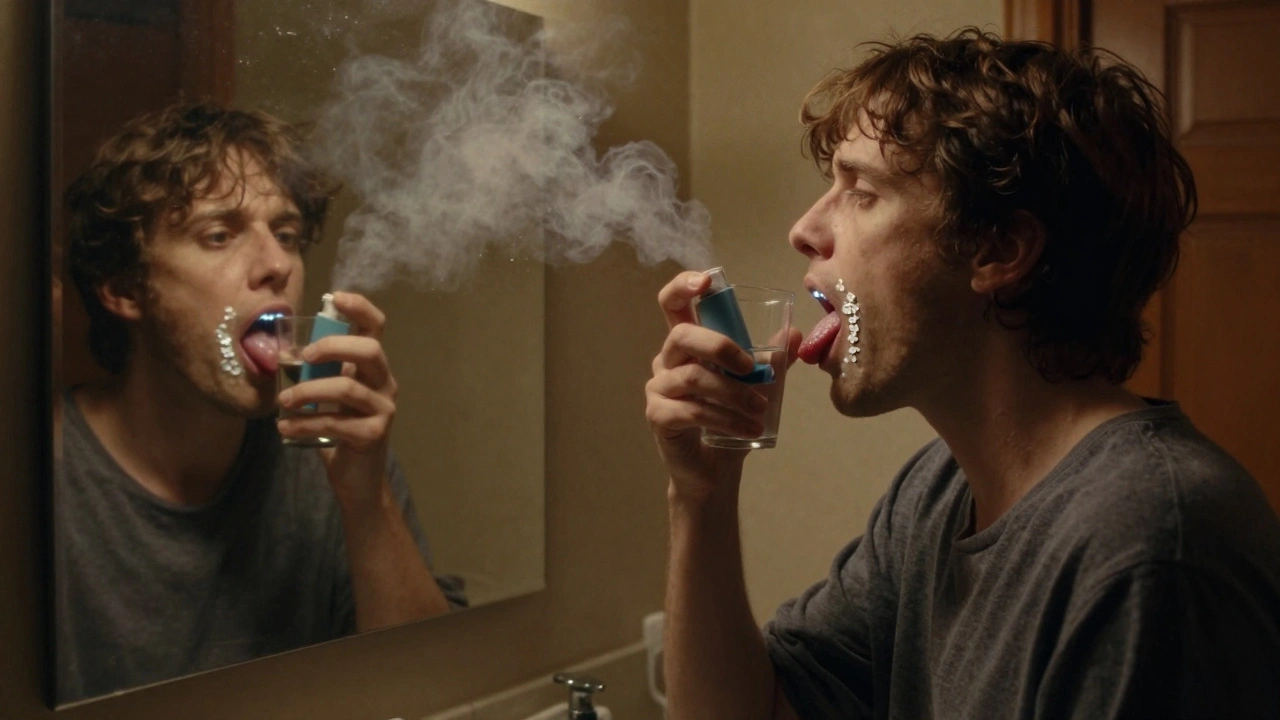
Inhaled corticosteroids like fluticasone, budesonide, and beclomethasone are designed to land in your lungs. But they don’t always make it there. Up to 80% of the dose can stick to your mouth and throat. That’s not a design flaw-it’s physics. The particles are too heavy to stay airborne long enough to reach deep into your airways. When these steroids sit in your mouth, they weaken your local immune defenses. Normally, your body keeps Candida albicans-a harmless fungus that lives in most of us-in check. But with steroids suppressing your oral immune response, the fungus takes over. That’s how you get oral thrush. The signs are hard to miss: creamy white patches on your tongue, inner cheeks, or throat. They don’t brush off easily. When you scrape them, you’ll see red, raw skin underneath. You might feel a burning sensation, lose your sense of taste, or notice a bad, metallic taste in your mouth. Some people describe it as feeling like their mouth is full of cotton.Why Your Voice Goes Hoarse
Hoarseness is another direct result of steroid particles landing on your vocal cords. It’s not an allergy. It’s irritation. The steroid causes mild swelling in the tissues around your larynx. You might notice your voice sounds raspy or weak within minutes after using your inhaler. It can last for hours. Some people think it’s just a cold. Others ignore it until it becomes chronic. This isn’t just annoying-it’s a warning. If your voice is hoarse every time you use your inhaler, your technique might be off. Or you’re not rinsing. Or both.The Simple Fix: Rinse, Gargle, Spit
The single most effective way to prevent both oral thrush and hoarseness is this: rinse your mouth with water, gargle for 10 seconds, swish it around, then spit it out. Do it every single time you use your inhaler. It sounds too easy. But studies show it cuts your risk of thrush by 60-70%. A 2025 review in Healthcare (Basel) called this practice the cornerstone of prevention. No drug, no fancy gadget, no expensive mouthwash beats this. Don’t just swish. Don’t just rinse. Do it properly. Use about a quarter cup of water. Swirl it around your tongue, cheeks, and roof of your mouth. Gargle like you’re trying to clear your throat. Spit. Don’t swallow. You’re washing away the steroid residue, not absorbing it. Some people skip this step because they’re in a rush. Or they use their inhaler at night and forget. Or they think, “I only use it once a day-it’s not a big deal.” But thrush doesn’t care about your schedule. One missed rinse can be enough to let the fungus take hold.Spacers Are Your Best Friend
If you’re using a metered-dose inhaler (MDI)-the kind that sprays a puff when you press it-you’re at higher risk. The spray hits your mouth with force, coating your tongue and throat. A spacer changes everything. It’s a plastic tube that attaches to your inhaler. You spray the medicine into the spacer first, then breathe it in slowly. The big particles settle in the spacer. Only the fine mist reaches your lungs. Studies show using a spacer reduces oral deposition by up to 50%. That means less steroid in your mouth. Less thrush. Less hoarseness. Some doctors say, “If you use a spacer, you don’t need to rinse.” But that’s risky advice. A 2023 European Respiratory Journal study found that even with spacers, 25% of patients still developed thrush-because they didn’t rinse. So don’t choose one over the other. Use both. Spacers are cheap. Most pharmacies sell them for under $15. They’re reusable. Clean yours once a week with mild soap and water. Let it air dry. Don’t wipe it with a towel-fibers can stick to the inside and interfere with the mist.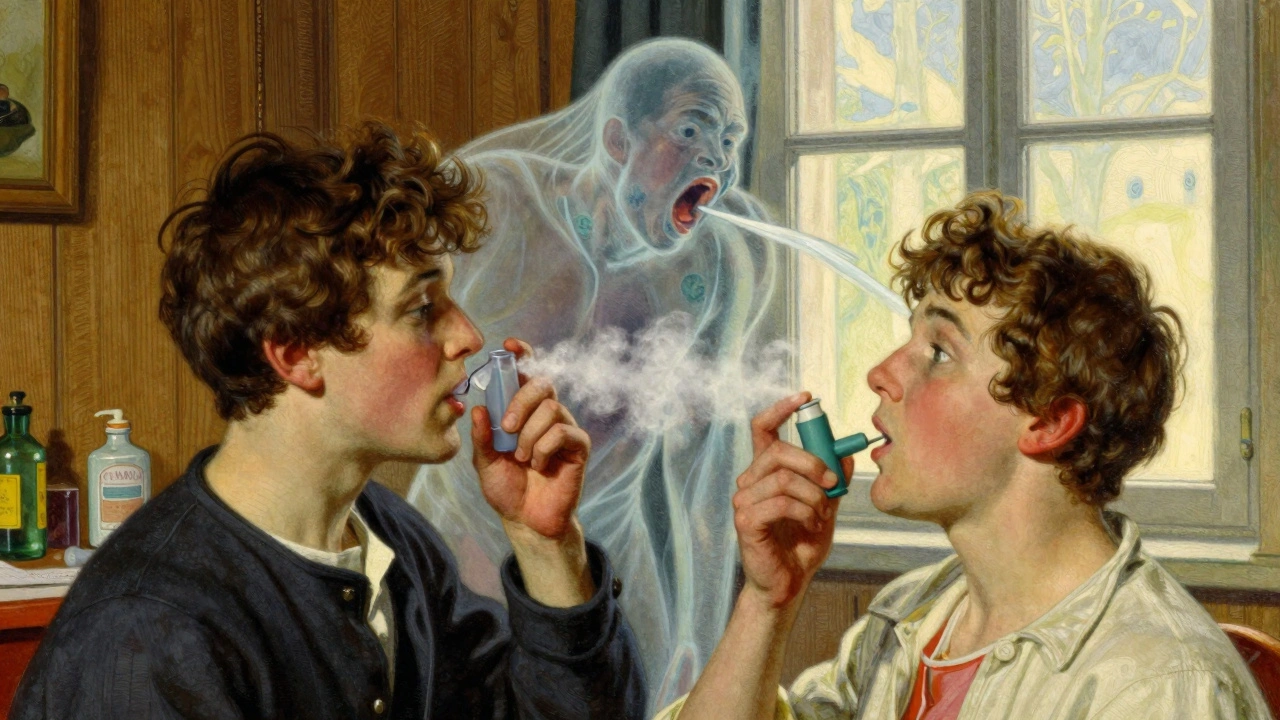
Who’s Most at Risk?
Not everyone gets thrush from inhalers. But some people are far more likely to.- People using high doses-more than 800 mcg per day of beclomethasone equivalent (like 500 mcg of fluticasone twice daily)
- People with diabetes, especially if their HbA1c is above 7.0%
- Elderly patients, because saliva production drops with age
- People with poor oral hygiene
- Those who wear dentures and don’t clean them daily
What About Dry Mouth?
Steroids can also reduce saliva. Less saliva means less natural cleaning in your mouth. That increases your risk of cavities and gum disease. If your mouth feels dry after using your inhaler, keep a water bottle handy. Sip throughout the day. Avoid sugary drinks. Chew sugar-free gum if you can-it boosts saliva flow.What If You Already Have Thrush?
If you see white patches or feel burning, don’t wait. See your doctor. Don’t try to scrape it off yourself-that can cause bleeding and infection. Doctors treat oral thrush with antifungal medicines like nystatin oral suspension (a liquid you swish and swallow) or clotrimazole troches (lozenges that dissolve in your mouth). Treatment usually takes 7-14 days. But if you don’t fix your inhaler habits, it will come back. One patient on Asthma.net shared: “I got thrush twice in three years. Then I started rinsing and gargling after every use. Five years later-zero thrush. It’s not glamorous. But it works.”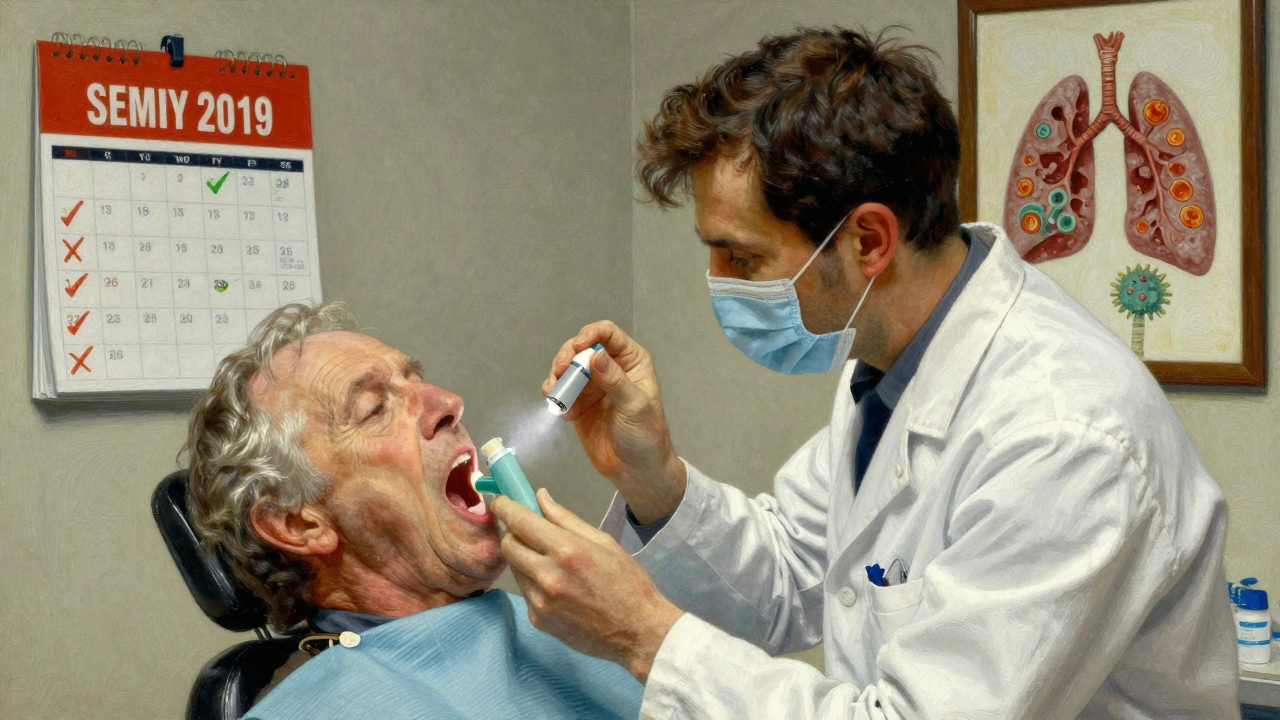
How to Make This a Habit
The hardest part isn’t knowing what to do. It’s doing it every time. Here’s how to make it stick:- Keep a cup of water next to your inhaler-on your nightstand, by your sink, in your car.
- Set a phone reminder labeled “RINSE AFTER INHALER” for your morning and evening doses.
- Pair rinsing with another habit: brush your teeth right after, or wash your hands.
- Ask your pharmacist to demonstrate proper inhaler and spacer technique. Many offer free training.
- Check your mouth weekly. Use a flashlight. Look for white patches. Catch it early.
What’s New in 2025?
The latest research from July 2025 confirms what we’ve known: prevention beats treatment. But there’s progress. New inhalers are being designed with built-in spacers and coatings that reduce oral deposition. Some smart inhalers now track when you use them-and remind you to rinse via an app. Dentists are getting involved too. The American Dental Association now includes ICS-related oral risks in their patient education materials. In pilot programs where respiratory and dental teams work together, patients saw a 35% drop in oral complications. The future isn’t just better drugs. It’s better habits.Final Word: Don’t Let Fear Stop You
Some patients stop using their inhalers because they’re scared of thrush. That’s dangerous. Untreated asthma kills. But thrush? It’s manageable. Preventable. Even avoidable. You don’t need to stop your medication. You just need to rinse. It takes 30 seconds. It costs nothing. It works. Do it every time. Every single time.Can I just use a spacer and skip rinsing?
Using a spacer reduces the amount of medication that lands in your mouth by about half, but it doesn’t eliminate it entirely. Studies show that even with a spacer, some steroid residue remains. Rinsing after inhaler use removes that leftover residue and cuts your risk of thrush by an additional 60-70%. The safest approach is to use both-a spacer and a rinse.
Does mouthwash work better than water for rinsing?
Plain water is just as effective as antiseptic mouthwash for preventing thrush from inhaled steroids. In fact, some mouthwashes contain alcohol, which can dry out your mouth and make thrush worse. The goal is to wash away the steroid, not kill bacteria. Water does that perfectly. Stick to plain water unless your doctor recommends something else.
I use my rescue inhaler during attacks. Should I rinse then too?
Yes-even rescue inhalers like albuterol can contain corticosteroids if they’re combination inhalers (like Symbicort or Advair). If your rescue inhaler is a steroid, rinse after every use. If it’s only a bronchodilator (like albuterol alone), rinsing isn’t needed for thrush prevention. But if you’re unsure, check the label or ask your pharmacist. When in doubt, rinse.
Can oral thrush from inhalers lead to something more serious?
In healthy people, oral thrush is usually just uncomfortable. But in those with weakened immune systems-like people with diabetes, HIV, or on long-term steroids-it can spread to the esophagus or even the bloodstream. That’s rare, but it’s why early treatment matters. If your thrush doesn’t clear up in 10 days, or if you have trouble swallowing, see your doctor immediately.
How long does hoarseness last after using an inhaler?
Hoarseness usually starts within minutes of using your inhaler and can last several hours. If your voice stays hoarse for more than a day or two, or if it’s getting worse, your technique might be off. Try tilting your head slightly down when inhaling-it helps direct the mist into your lungs instead of your throat. If it doesn’t improve, talk to your doctor. Persistent hoarseness could also be a sign of vocal cord irritation that needs attention.
Are some inhalers more likely to cause thrush than others?
Yes. Older corticosteroids like beclomethasone and fluticasone tend to deposit more in the mouth. Newer ones like ciclesonide and mometasone are designed to be less likely to cause thrush because they’re activated only in the lungs. But even with these, rinsing is still recommended. The difference in risk is small enough that skipping rinsing isn’t worth the gamble.
Can I prevent thrush by brushing my teeth right after using my inhaler?
Brushing your teeth after using your inhaler is fine, but don’t do it immediately. Wait at least 30 minutes. Brushing too soon can damage your tooth enamel, which steroids can make more vulnerable. Rinsing with water right after is the best first step. Brush your teeth later as part of your normal routine.






Comments(11)