
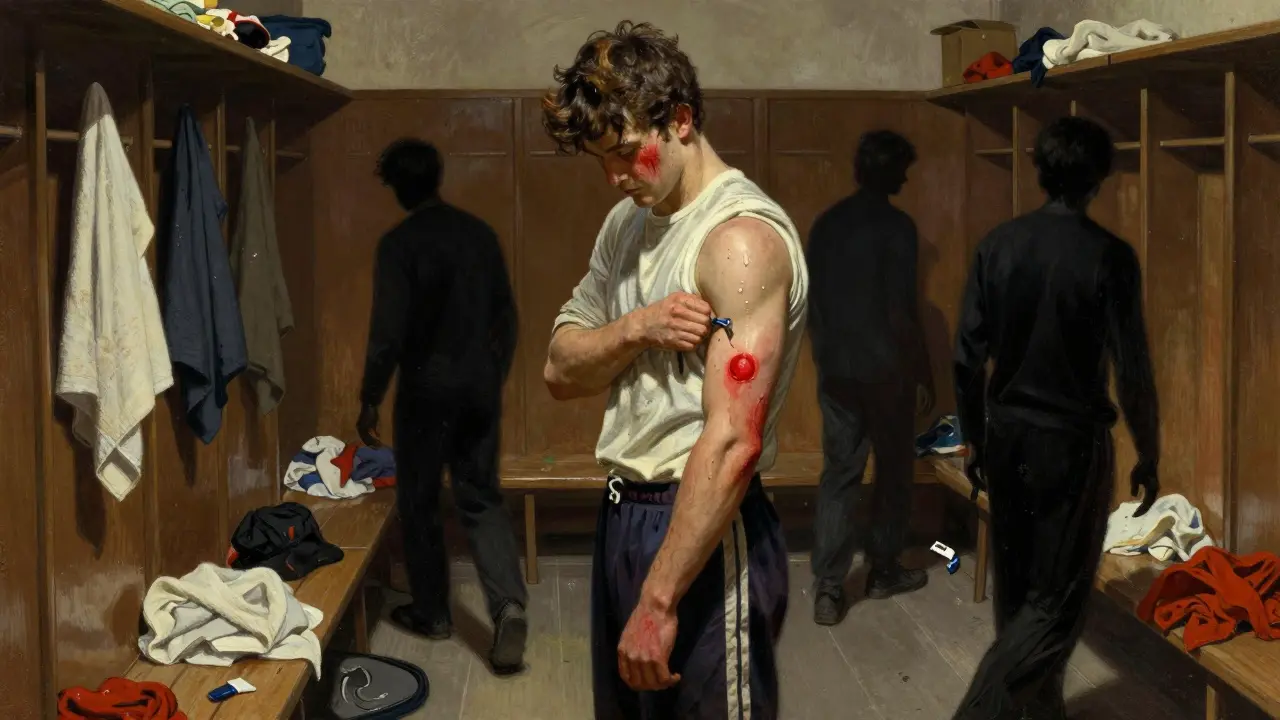
Most people think of MRSA as a hospital problem - something that happens to patients after surgery or during a long stay. But that’s not true anymore. In fact, more than a quarter of MRSA infections picked up in hospitals today didn’t come from inside the hospital at all. They came from the community. And the same is true in reverse: healthy people out in the wild are getting hospital strains. The lines between MRSA types have blurred, and understanding the difference isn’t just helpful - it’s life-saving.
What Exactly Is MRSA?
| Feature | Community MRSA (CA-MRSA) | Hospital MRSA (HA-MRSA) |
|---|---|---|
| SCCmec Type | IV or V (smaller, simpler) | I, II, or III (larger, complex) |
| Common Clone (US) | USA300 (70% of cases) | USA100, ST239 |
| PVL Toxin | Usually present | Rarely present |
| Antibiotic Resistance | Often only to beta-lactams | Resistant to many drugs: erythromycin, clindamycin, fluoroquinolones |
| Typical Infection Site | Skin, abscesses, boils | Bloodstream, lungs, surgical sites |
| Median Hospital Stay | 1.5 days | 13 days |
MRSA stands for methicillin-resistant Staphylococcus aureus. It’s a type of staph bacteria that doesn’t respond to common antibiotics like penicillin, amoxicillin, or methicillin. Staph is everywhere - on skin, in noses, in the air. Most of the time, it’s harmless. But when it gets into a cut, a surgical wound, or your lungs, it can turn dangerous. And when it’s MRSA, your usual go-to antibiotics won’t touch it.
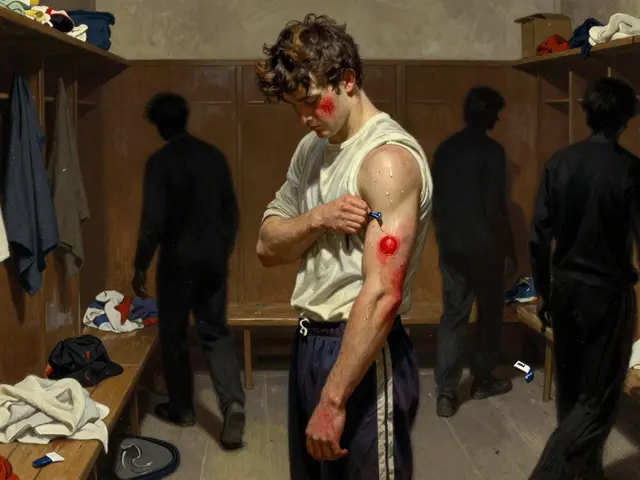
For decades, MRSA was called a hospital bug. It showed up in ICUs, operating rooms, and dialysis centers. But in the late 1990s, something changed. Healthy kids, athletes, and military recruits started showing up with angry, pus-filled boils - and they’d never been in a hospital. These were new strains, smarter, faster, and more aggressive. They didn’t need a catheter or a ventilator to cause trouble. Just skin contact. Shared towels. Dirty gym equipment.
How CA-MRSA Spreads - It’s Not What You Think
Community MRSA doesn’t need a hospital to survive. It thrives in places where people are close, sweaty, and often injured. Think wrestling mats. Locker rooms. Prisons. Homeless shelters. Military barracks. The risk of catching it in a prison? Nearly 15 times higher than average. In a shelter? Almost nine times higher.
It spreads through skin-to-skin contact - especially when there’s a scrape, a cut, or a rash. Sharing razors, towels, or sports gear? Big risk. Injecting drugs? Even bigger. The USA300 strain, which dominates in the U.S., is especially good at moving through people who use needles. Poor hygiene, reused syringes, and frequent skin punctures make it a perfect vector.
And here’s the twist: you don’t have to be sick to spread it. About 1.3% of people in the general population carry MRSA in their nose or on their skin without knowing it. That’s over 4 million Americans alone. They’re silent carriers. They go to work. They hug their kids. They visit the ER for a sprained ankle. And they drop the bacteria where it doesn’t belong.
How HA-MRSA Survives - The Hospital Advantage
Hospital MRSA evolved in a different world. It’s built for survival in a place where antibiotics are everywhere. That’s why it carries bigger genetic packages - SCCmec types I to III - that let it resist not just penicillin, but also clindamycin, erythromycin, and even fluoroquinolones. Up to 98% of HA-MRSA strains resist erythromycin. Only 35% of CA-MRSA strains do.
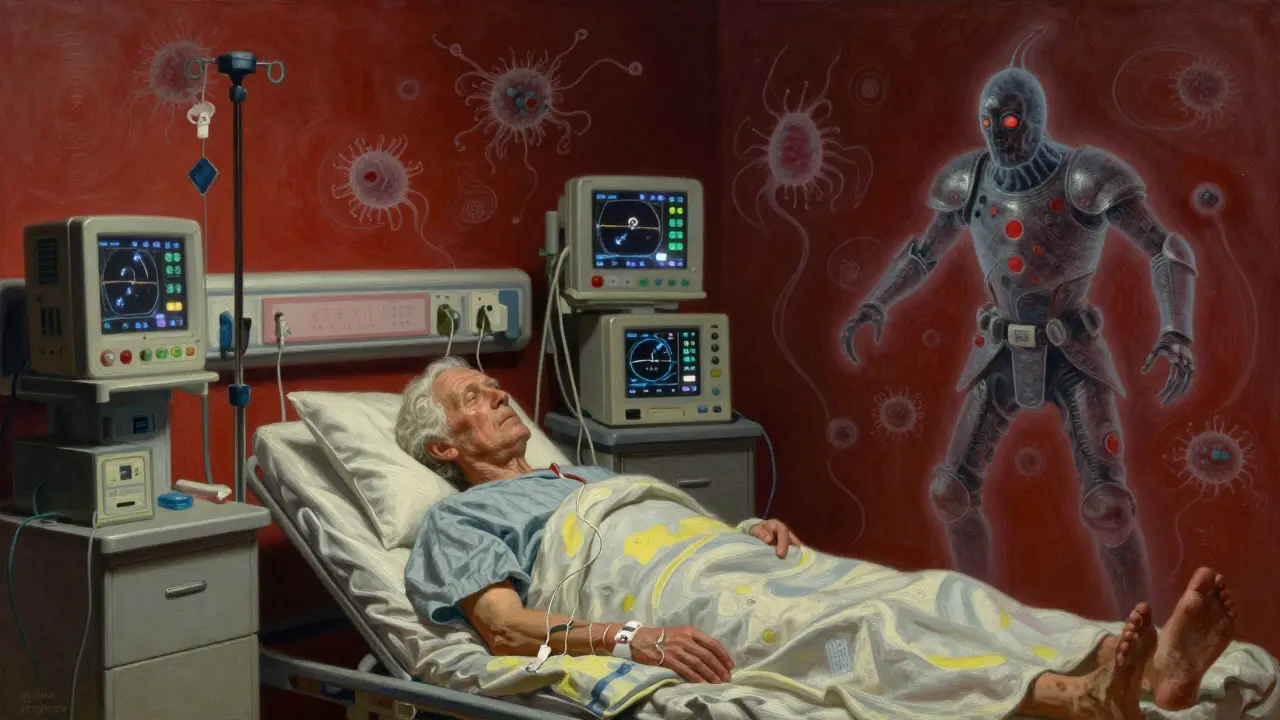
HA-MRSA doesn’t just hide in wounds. It clings to IV lines, catheters, ventilators - anything that breaks the skin’s natural barrier. Patients with weakened immune systems, long hospital stays, or recent surgeries are sitting ducks. The average hospital stay is 4 to 5 days. But MRSA can live on skin for months. That’s why someone can leave the hospital MRSA-free, get colonized at home, and come back weeks later with a full-blown infection - and it’ll look like a hospital-acquired case.
What’s scary is that this isn’t one-way traffic. A 2017 Canadian study found that nearly 28% of hospital-onset MRSA infections were caused by community strains. And 27.5% of community cases came from hospital strains. That’s not a leak. That’s a loop.
Why the Symptoms Are Different
CA-MRSA and HA-MRSA don’t just look different under a microscope - they act differently in the body.
CA-MRSA is a skin bully. It loves the surface. You’ll see it as a swollen, red, painful boil. Sometimes it’s mistaken for a spider bite. It can turn into an abscess. It might come with fever. But it rarely goes deep. Most people with CA-MRSA are otherwise healthy. They’re 18, 32, 45 - not 85 with diabetes and kidney failure. And they usually leave the hospital in less than two days.
HA-MRSA? It’s the silent invader. It doesn’t start with a boil. It starts with a fever that won’t break. A cough that turns into pneumonia. A surgical site that won’t heal. It attacks the bloodstream. Lungs. Urinary tract. Bones. It’s the kind of infection that needs ICU care. Patients stay for weeks. Some don’t make it.
And then there’s PVL - Panton-Valentine leukocidin. It’s a toxin made by most CA-MRSA strains, especially USA300. PVL kills white blood cells. It’s why CA-MRSA can cause necrotizing pneumonia - a rare, fast-moving lung infection that kills tissue. It’s rare, but when it happens, it’s brutal. And it almost never comes from HA-MRSA.
Treatment: One Size Doesn’t Fit All
Here’s where things get dangerous. If you’re a doctor and you assume all MRSA is the same, you might give the wrong drug. And that can cost someone their life.
For CA-MRSA skin infections? Often, you don’t even need antibiotics. Just drain the abscess. Cut it open, let the pus out. That’s it. If you do need a pill, clindamycin works in 96% of cases. Trimethoprim-sulfamethoxazole? 92%. Tetracyclines? 89%. These are old, cheap drugs. And they still work.
But HA-MRSA? Forget those. It laughs at clindamycin. Only 35% of HA-MRSA strains respond. You need stronger stuff: vancomycin, linezolid, daptomycin. These are IV drugs. Expensive. Hard on the kidneys. Sometimes you need them for weeks.
But here’s the new problem: hybrids. Strains are mixing. You’re starting to see CA-MRSA with the virulence of USA300 - but the resistance of HA-MRSA. They carry PVL and still shrug off vancomycin. That’s a nightmare scenario. And it’s happening.
Doctors now have to guess. Did this patient get it from the gym? Or from the ICU? Did they have surgery last year? Are they on dialysis? If you’re wrong, you pick the wrong antibiotic. And then the infection spreads.
The Real Problem: The Blurred Line
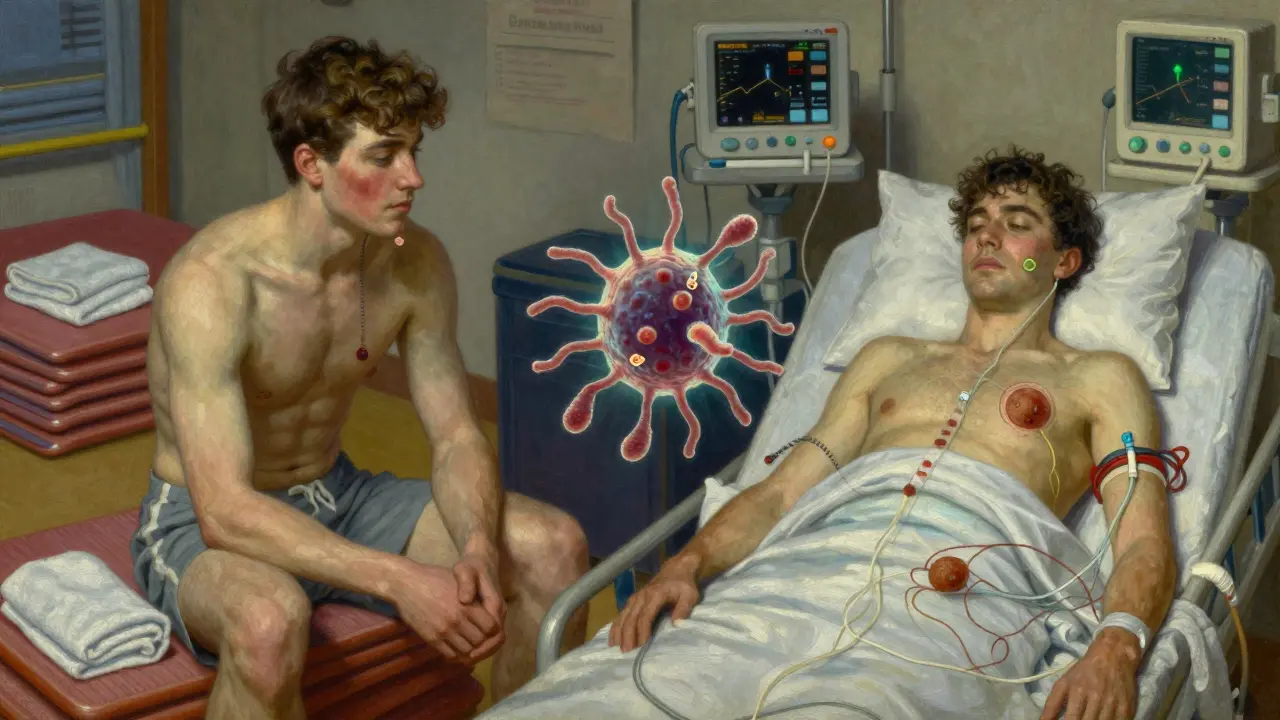
The CDC’s old definition of CA-MRSA - ‘infection in someone with no hospital contact in the past year’ - doesn’t work anymore. Why? Because people move. A guy gets a knee replacement. He’s in the hospital for five days. He goes home. Two weeks later, he gets a boil. His doctor calls it CA-MRSA. But his strain? It’s the same one that’s been circulating in the hospital for years. He got it there. He brought it home. Now his kid has it.
Studies show that hospital history is a terrible predictor of what strain someone has. A 2008 study in the Journal of Infectious Diseases found that 30% of patients labeled as CA-MRSA had HA-MRSA genetics. And 25% of HA-MRSA cases had CA-MRSA traits. The labels are broken.
That’s why experts now say we need to stop thinking of MRSA as two separate problems. It’s one problem with two faces. One ecosystem. One chain of transmission.
What Needs to Change
Here’s the hard truth: hospitals can’t control MRSA anymore by just cleaning their own rooms. They need to treat the community as part of the infection control plan.
That means:
- Screening high-risk patients - not just those who’ve been hospitalized, but also those who’ve been in prison, shelters, or rehab centers.
- Teaching the public about hygiene - no sharing towels, cover boils, wash hands after the gym.
- Stopping unnecessary antibiotic use in the community. Every time someone takes amoxicillin for a cold, they’re helping MRSA survive.
- Tracking strains genetically, not just by where they were found. Labs need to report not just ‘MRSA,’ but the clone type: USA300, ST59, etc.
And it means doctors need to think differently. If a healthy 22-year-old walks in with a big boil, don’t assume it’s just CA-MRSA. Test it. Know what you’re treating. Because that strain might be the one that’s already in your ICU.
Bottom Line
MRSA isn’t a hospital bug or a community bug anymore. It’s a moving target. It jumps between settings. It evolves. It mixes. It hides in plain sight. And it’s getting harder to treat because we’re still using old maps to navigate a changed landscape.
If you’ve had a skin infection that didn’t respond to antibiotics - or if someone you know did - get it tested. Don’t just take the diagnosis at face value. The difference between clindamycin and vancomycin isn’t just a pill. It’s recovery versus death. And the next strain to break through might be the one you didn’t expect.
Can you get MRSA from a toilet seat?
It’s possible, but unlikely. MRSA survives on surfaces for hours to days, but it doesn’t thrive there. You’re far more likely to catch it from skin contact - like sharing towels, gym equipment, or touching an open wound after someone with MRSA touched the same surface. Regular cleaning helps, but handwashing and covering wounds are more effective.
Is MRSA always dangerous?
No. Many people carry MRSA on their skin or in their nose without any symptoms. This is called colonization. It only becomes dangerous when the bacteria enter the body through a cut, burn, or medical device. Healthy people rarely get sick from it. But for someone with a weak immune system, even a small skin infection can turn deadly.
Can MRSA be cured completely?
Yes. Most skin infections are cured with drainage and antibiotics. Even serious cases like pneumonia or bloodstream infections can be treated successfully with the right drugs. But eradication isn’t guaranteed. Some people remain colonized after treatment, meaning they still carry the bacteria without being sick. This increases their risk of reinfection or spreading it to others.
Are natural remedies like tea tree oil effective against MRSA?
Some lab studies show tea tree oil can kill MRSA in a petri dish. But there’s no solid proof it works in real infections in humans. Relying on it instead of medical treatment can delay proper care and let the infection spread. For any serious skin infection, see a doctor. Don’t gamble with MRSA.
Why do some people keep getting MRSA infections?
Repeated infections usually mean one of three things: they’re still exposed to the source (like a family member who’s colonized), they have a skin condition like eczema that creates easy entry points, or they’re not finishing their antibiotics. In some cases, the bacteria hide in the nose or skin folds and come back. Doctors may recommend decolonization - nasal ointment and special soap - to break the cycle.
MRSA is no longer a hospital problem or a community problem. It’s both. And until we treat it as one connected threat, we’ll keep losing ground. The next outbreak won’t come from a sterile operating room. It’ll come from a locker room. Or a prison. Or a shared apartment. And it’ll be just as deadly.




Comments(10)