

Antacid-Antibiotic Separation Calculator
Calculate Safe Separation Time
Ensure your antibiotics work properly by taking them at the right time relative to your antacid.
Key Takeaways
-
Timing matters: Separation by 2-6 hours is crucial for maximum absorption.
-
Check your antacid: Aluminum, magnesium, and calcium-containing products are most problematic.
-
Ask your pharmacist: They can provide specific timing for your combination.
-
Consider alternatives: If you need antacids long-term, discuss options with your doctor.
When you take an OTC antacid like Tums or Maalox for heartburn, you’re not just calming your stomach-you might be blocking your antibiotic from working. This isn’t a myth. It’s a well-documented, clinically significant interaction that can turn a simple infection into a stubborn, recurring problem. If you’ve ever been told your antibiotics didn’t work, and you’ve been popping antacids without thinking twice, this is why.
How Antacids Sabotage Antibiotics
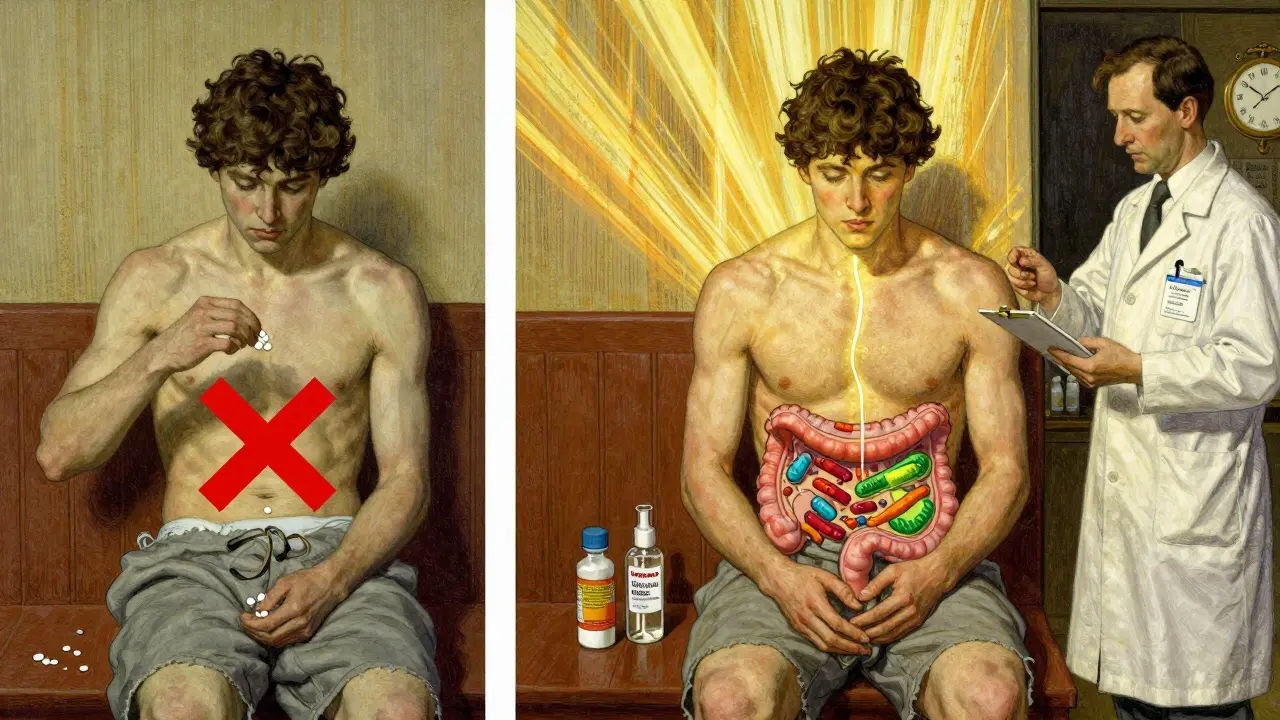
OTC antacids work by neutralizing stomach acid using metal ions like aluminum, magnesium, and calcium. These same metals are the problem when you take antibiotics like tetracycline, doxycycline, ciprofloxacin, or levofloxacin. The metal ions in antacids bind tightly to these antibiotics in your gut, forming insoluble complexes. Think of it like a magnet sticking to metal-except instead of attracting, they trap the antibiotic so your body can’t absorb it.
Studies show this can slash antibiotic absorption by up to 90%. For example, when tetracycline is taken with an aluminum-containing antacid, its bioavailability drops from nearly 100% to as low as 10%. That means you’re swallowing a pill, but your body barely gets any of it. The same thing happens with ciprofloxacin: its absorption plummets from 70% to just 15-25% when taken with antacids. Without enough antibiotic in your bloodstream, the infection keeps going.
Which Antibiotics Are Most Affected?
Not all antibiotics are equally vulnerable. The big offenders are:
- Tetracycline and doxycycline: These are hit hardest. Aluminum and magnesium antacids can reduce absorption by 70-90%.
- Ciprofloxacin and levofloxacin: Fluoroquinolones are especially sensitive. Even a single antacid tablet can cut absorption in half.
- Amoxicillin: The effect is smaller-around 18-22% reduction-but still enough to matter in stubborn infections.
On the other hand, penicillin derivatives like amoxicillin-clavulanate show mixed results. Some studies found no impact. Others saw a slight dip. The takeaway? Don’t assume it’s safe. If you’re on antibiotics and reach for an antacid, assume it’s interfering.
Why Timing Matters More Than You Think
It’s not enough to just take them at different times. You need to separate them by the right window. Here’s what the data says:
- For tetracyclines: Take the antibiotic at least 2 hours before or 4 hours after the antacid.
- For fluoroquinolones (cipro, levo): Separate by 4 to 6 hours. Some experts recommend even longer.
- For doxycycline: A minimum 2-hour gap is advised, but 4 hours is safer.
Why the difference? It depends on how fast each antibiotic is absorbed. Tetracyclines get absorbed quickly in the upper gut, so even a short delay can prevent binding. Fluoroquinolones are absorbed over a longer stretch, so you need more time to keep the antacid out of the way.
And don’t think “I’ll take my antibiotic at night and the antacid in the morning.” That’s not enough. Antacids can linger in your stomach for hours, especially if you’ve taken multiple doses. A 2022 study in F1000Research found that even 4 hours apart wasn’t always enough if the antacid was high-dose or taken with food.
What About Other Acid Reducers?
You might think, “I’ll just switch to Pepcid or Prilosec instead.” That’s smarter-but not risk-free.
H2 blockers like famotidine and proton pump inhibitors (PPIs) like omeprazole don’t contain metal ions, so they don’t form those tight chemical bonds. But they still raise stomach pH, which can affect how some antibiotics dissolve. For example, ketoconazole and itraconazole (antifungals) need acid to be absorbed, so PPIs hurt them. But for most antibiotics, PPIs are safer than antacids.
Still, if you’re on antibiotics, avoid PPIs unless your doctor says so. They can mask symptoms and delay diagnosis. And if you’re using them long-term, that’s another issue entirely.
Real-World Consequences
This isn’t just theory. In March 2024, University Hospitals documented a case where a patient kept failing ciprofloxacin treatment for a UTI. She was taking Tums daily for heartburn. Her urine cultures showed the same bacteria every time. Only after she stopped the antacids and waited 6 hours between doses did the infection clear.
And she’s not alone. A Reddit thread from August 2023 had 47 reports of failed antibiotic courses linked to antacid use. Many patients didn’t even know this interaction existed. A 2022 consumer survey found only 32% of OTC antacid users were aware of the risk-even though the warning is printed on the bottle.
The CDC estimates over 35,000 U.S. deaths each year are tied to antibiotic resistance. When antibiotics fail because they weren’t absorbed properly, it doesn’t just prolong illness-it fuels resistance. Bacteria survive, adapt, and become harder to kill next time.
What Should You Do?
Here’s what works:
- Don’t take antacids with antibiotics. If you need relief, wait.
- Time it right. Take antibiotics 2-6 hours before or after your antacid. Use a timer if you have to.
- Check the label. Look for aluminum, magnesium, or calcium on the ingredients. If it’s there, assume it interferes.
- Ask your pharmacist. They see this every day. They can tell you exactly how long to wait for your specific combo.
- Consider alternatives. If you’re on antibiotics for more than a few days, talk to your doctor about switching to an H2 blocker like famotidine. It’s safer, even if it takes longer to work.
And if you’re using antacids daily? That’s a red flag. Frequent heartburn could mean GERD, ulcers, or H. pylori infection-conditions that need real treatment, not just antacids masking the symptoms.
The Bigger Picture
More than 15 million Americans use OTC antacids every week. Over 250 million antibiotic prescriptions are filled each year in the U.S. alone. That’s a massive overlap. And yet, most people don’t connect the dots.
The FDA mandated clearer labeling on antacid bottles in 2019. But a 2022 audit found only 67% of major brands complied. That means one in three bottles you pick up might not warn you properly.
Pharmacists are on the front lines. They’re the ones who catch this before it turns into a hospital visit. If you’re filling a prescription and you mention you take antacids, they should ask you when. If they don’t, ask them.
Antacids are convenient. They work fast. But they’re not harmless. When paired with antibiotics, they can turn a simple fix into a long, frustrating battle. The solution isn’t to avoid antacids altogether. It’s to use them wisely-on purpose, with timing, and with awareness.
Can I take antacids and antibiotics at the same time if I chew them?
No. Chewing doesn’t change the chemistry. The metal ions in antacids still bind to antibiotics in your stomach and intestines, no matter how they’re delivered. Whether it’s a tablet, chewable, or liquid, the interaction happens the same way. Timing is the only reliable fix.
What if I accidentally took them together?
If you took them together once, don’t panic. One dose likely won’t ruin your treatment. But don’t make it a habit. If you’re on a 7- to 14-day antibiotic course and you do this multiple times, you’re risking treatment failure. Contact your pharmacist or doctor if this happens often.
Do all antacids cause this interaction?
No-but most common ones do. Antacids with aluminum, magnesium, or calcium are the main culprits. Sodium bicarbonate (baking soda) can also interfere, though less consistently. Antacids without metal ions (like those with only simethicone) are rare and still not guaranteed safe. Always check the active ingredients.
Can antacids make antibiotics stronger?
In rare cases, yes-but not with antibiotics. Some drugs like iron or certain antifungals absorb better in alkaline environments. But for antibiotics like tetracycline or ciprofloxacin, antacids only reduce absorption. There’s no benefit. Don’t try to use antacids to boost your meds.
Is it safe to use antacids while on penicillin?
It’s lower risk, but still not zero. Studies show amoxicillin absorption drops by 18-22% when taken with aluminum-magnesium antacids. That’s not a huge drop-but in a serious infection, even 20% less drug can mean the difference between healing and relapse. Best to separate them by 2 hours.





Comments(10)