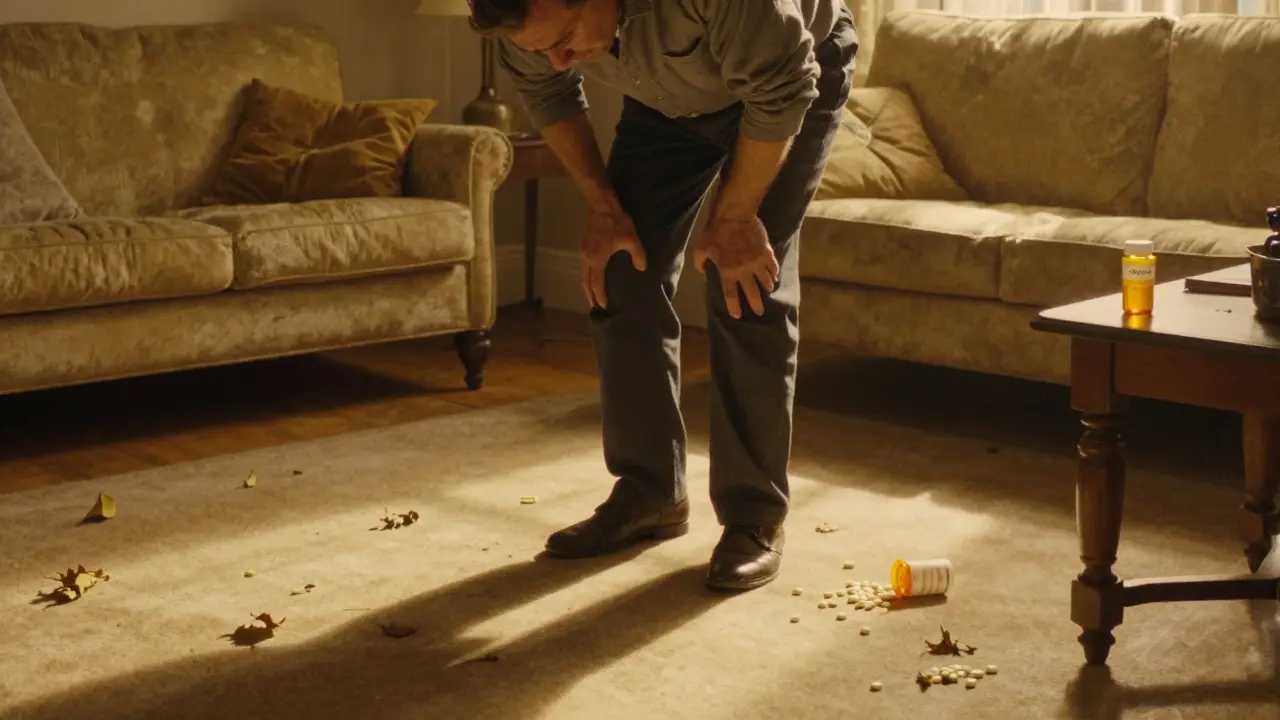
If you're taking a statin and your legs feel heavy, your shoulders ache, or you just can't seem to shake off muscle fatigue, you're not imagining it. Statin-induced muscle pain isn't rare - it's common. About 1 in 3 people on statins report some form of muscle discomfort. But here’s the twist: most of them don’t have true muscle damage. And even fewer need to quit the drug for good. The real issue isn’t the statin itself - it’s how your body reacts to it.
What Exactly Is Statin Myopathy?
Statin myopathy isn’t one thing. It’s a group of muscle-related side effects that range from mild soreness to severe weakness. The most common form is just muscle aches - no blood tests needed. But in rare cases, creatine kinase (CK) levels spike, indicating actual muscle breakdown. That’s called rhabdomyolysis, and it affects less than 0.5% of users. Still, even the mild stuff can make people stop taking statins. And that’s dangerous. Stopping statins without a plan raises heart attack risk by 25%, according to American Heart Association data.
The truth? Statins work. They lower LDL cholesterol by 30-60%, depending on the dose. For people with high risk of heart disease, the benefit far outweighs the risk. But if your muscles start screaming, something’s off. And science now knows why.
The Three Big Reasons Statins Hurt Your Muscles
Three biological pathways are behind most statin muscle problems. None are simple. All are interconnected.
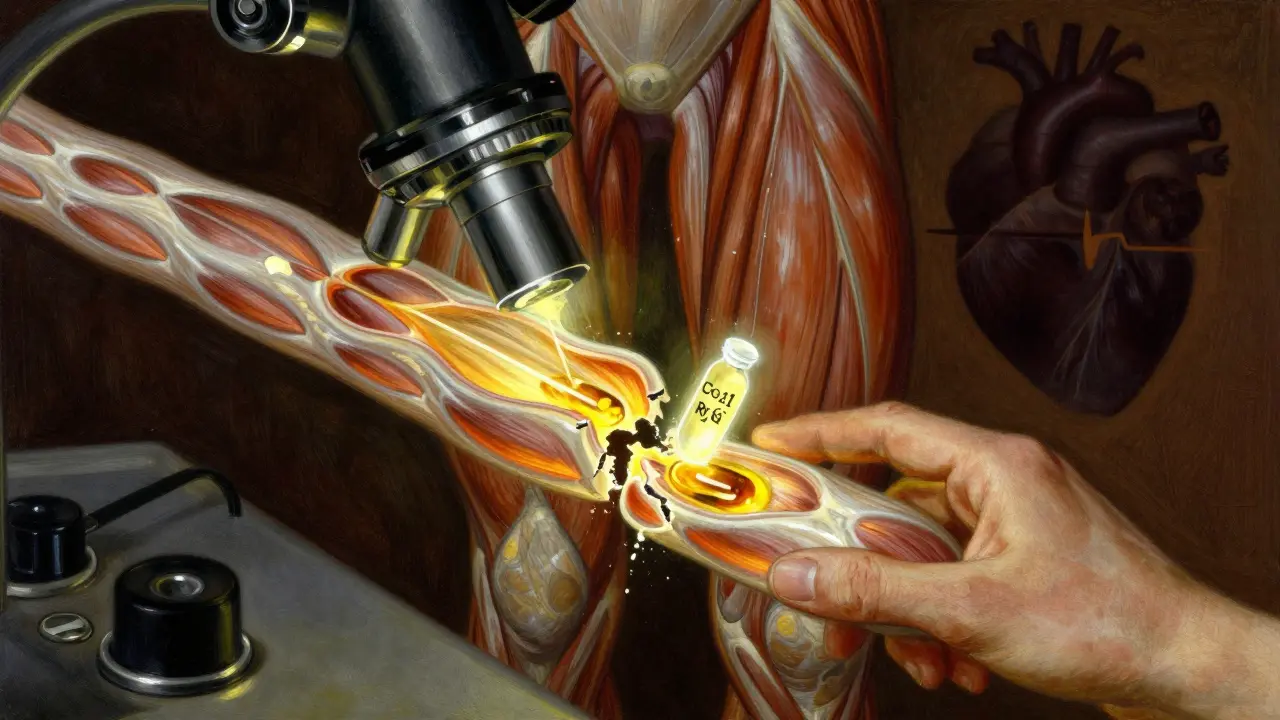
- Calcium leaks in muscle cells - Statins cause a protein called FKBP12 to fall off the RyR1 channel in your muscle fibers. That channel normally controls calcium flow. When it’s loose, calcium spills out randomly. This triggers muscle cell stress, inflammation, and even cell death. A 2019 study showed this happens in human muscle tissue - not the heart - which explains why your legs hurt but your heart keeps beating fine.
- CoQ10 drops - Statins block the same pathway that makes cholesterol... and CoQ10. CoQ10 is your muscle’s battery charger. Without enough, mitochondria can’t produce energy. Muscle cells get tired faster. One study found CoQ10 levels drop by 40% after just four weeks on statins. That’s not a coincidence.
- Autoimmune reaction (rare but serious) - In 5-10% of persistent cases, the body starts making antibodies against HMG-CoA reductase - the very enzyme statins target. This is called anti-HMGCR myositis. It’s not just muscle pain. It’s muscle inflammation. And it often doesn’t go away until you stop statins and start immune-suppressing drugs. About 60% of these patients had taken statins before the reaction.
These aren’t theories. They’re proven in human muscle biopsies, blood tests, and clinical trials. And each one points to a different fix.
Why Some People Are More at Risk
Not everyone gets muscle pain on statins. Why? Genetics, age, and lifestyle play a role.
- People over 65 are more likely to have symptoms.
- Those with kidney disease, hypothyroidism, or vitamin D deficiency are at higher risk.
- Drug interactions matter. Taking statins with certain antibiotics (like clarithromycin), antifungals, or even grapefruit juice can spike statin levels in the blood.
- Physical inactivity makes it worse. Sedentary users report 41% more muscle symptoms than those who move regularly.
And yes - women report muscle pain more often than men. But we don’t know if that’s biological or because women are more likely to report symptoms. Either way, it’s real.

What Works: Real Solutions, Not Just Myths
There’s a lot of noise out there. “Take CoQ10.” “Try vitamin D.” “Switch to red yeast rice.” Let’s cut through it.
1. Don’t Quit Right Away
First, confirm the statin is the problem. Stop it for 4 weeks. If your muscles feel better? That’s a strong signal. If not? Look elsewhere - fibromyalgia, arthritis, or nerve issues can mimic statin myopathy.
2. Try a Different Statin
Not all statins are equal. Rosuvastatin and atorvastatin are more likely to cause muscle issues. Pravastatin and fluvastatin are less likely to penetrate muscle tissue. Switching can work for 40% of people. Lowering the dose helps too - 65% of people tolerate a reduced dose without losing cholesterol control.
3. CoQ10 Supplementation
Take 200 mg daily. It’s not magic, but in clinical trials, it reduced muscle pain by 35%. One 2022 study showed 78% of patients improved. It’s cheap, safe, and worth a try. Don’t expect miracles - but if your muscles feel better, you’ve got your answer.
4. Move - Even a Little
This is the most underused tool. A 2021 Mayo Clinic study found that people who walked 150 minutes a week had 58% fewer muscle symptoms. Why? Exercise helps restore FKBP12 binding to RyR1 channels. In rats, it cut calcium leaks by 65%. Human data matches. You don’t need to run a marathon. Just 30 minutes of brisk walking, five days a week, makes a measurable difference.
5. Try Non-Statin Options
If you can’t tolerate statins at all, there are other options:
- Ezetimibe - Lowers LDL by 20-30%. Minimal muscle side effects. Often used with a low-dose statin.
- PCSK9 inhibitors - Injectables like evolocumab. Lower LDL by 60%. Muscle adverse events? Only 3.7% - less than placebo. Cost is high ($5,850/year), but for high-risk patients, it’s life-saving.
- Bempedoic acid - A newer oral drug that works in the liver, not muscles. Muscle side effects are rare.
6. For Autoimmune Myositis
If your CK stays high, your symptoms don’t improve, and you have anti-HMGCR antibodies - you need a rheumatologist. Treatment usually involves prednisone and methotrexate. About 68% of these patients go into remission within six months. This is rare, but it’s real. And it’s treatable.
What Doesn’t Work
Let’s kill some myths.
- Red yeast rice - It contains natural statins. If you’re sensitive to statins, this will likely make things worse.
- Vitamin D alone - If you’re deficient, fixing it helps. But if your levels are normal? No benefit.
- Stopping exercise - This makes it worse. Movement protects your muscles from statin effects.
- Generic “detox” supplements - No evidence. Just waste of money.
What’s Coming Next
Science is moving fast. A new drug called S107 - which locks the RyR1 channel shut - reduced muscle symptoms by 52% in a 2023 trial. It’s not on the market yet, but it’s proof we’re getting closer.
Two new statin formulations (STT-101 and STT-202) are in early trials. They’re designed to stay in the liver and avoid muscle tissue. Early animal data shows 70% less muscle exposure. If this works in humans, muscle pain might become a thing of the past.
And here’s the hopeful part: combining CoQ10 with 150 minutes of weekly exercise resolves symptoms in 80% of people. That’s not a fluke. That’s science.
The Bottom Line
Statins save lives. But they can hurt muscles. The good news? You don’t have to choose between your heart and your legs. There are clear, evidence-backed steps to take:
- Confirm the statin is the cause - stop it for 4 weeks.
- Try a different statin or lower dose.
- Add 200 mg of CoQ10 daily.
- Move - 30 minutes a day, five days a week.
- If nothing works, talk to your doctor about ezetimibe or PCSK9 inhibitors.
- If symptoms are severe and persistent - get tested for anti-HMGCR antibodies.
You’re not broken. You’re not weak. Your body just reacts differently. And now, we know how to help it.
Can statins cause permanent muscle damage?
In most cases, no. Muscle pain and weakness from statins usually go away within 1-4 weeks after stopping the drug. True muscle breakdown (rhabdomyolysis) is rare and reversible if caught early. The autoimmune form, anti-HMGCR myositis, can cause longer-lasting damage, but with proper treatment - like steroids and immunosuppressants - most people recover fully within 6-12 months.
Does CoQ10 really help with statin muscle pain?
Yes, for many people. Clinical trials show CoQ10 supplementation (200 mg/day) reduces muscle pain by about 35%. One study found 78% of patients improved. It doesn’t work for everyone, but it’s safe, cheap, and worth trying before switching medications. The benefit is strongest in people with low baseline CoQ10 levels.
Should I stop statins if I have muscle pain?
Don’t stop without talking to your doctor. Muscle pain doesn’t always mean you need to quit. Try switching statins, lowering the dose, or adding CoQ10 and exercise first. Stopping statins increases your risk of heart attack or stroke by 25%. The goal isn’t to avoid statins entirely - it’s to find a way to take them safely.
Can exercise make statin muscle pain worse?
No - it helps. Multiple studies show moderate exercise (like brisk walking 150 minutes per week) reduces statin-related muscle symptoms by up to 41%. Exercise helps restore normal calcium flow in muscle cells. People who stay active on statins report fewer symptoms than those who don’t move. Avoiding exercise makes things worse.
Are there statins that don’t cause muscle pain?
Some statins are less likely to cause muscle issues. Pravastatin and fluvastatin have lower muscle penetration and are better tolerated. Rosuvastatin and atorvastatin are more likely to cause problems, especially at higher doses. Switching to one of the gentler statins can help 40% of people who had trouble with others.
How do I know if I have the autoimmune form of statin myopathy?
If your muscle pain persists after stopping statins, your CK levels stay high, and you’ve had statin exposure in the past, ask your doctor about testing for anti-HMGCR antibodies. This rare form affects 0.02% of users but requires different treatment - usually immune-suppressing drugs like prednisone and methotrexate. It’s not something you can diagnose on your own.