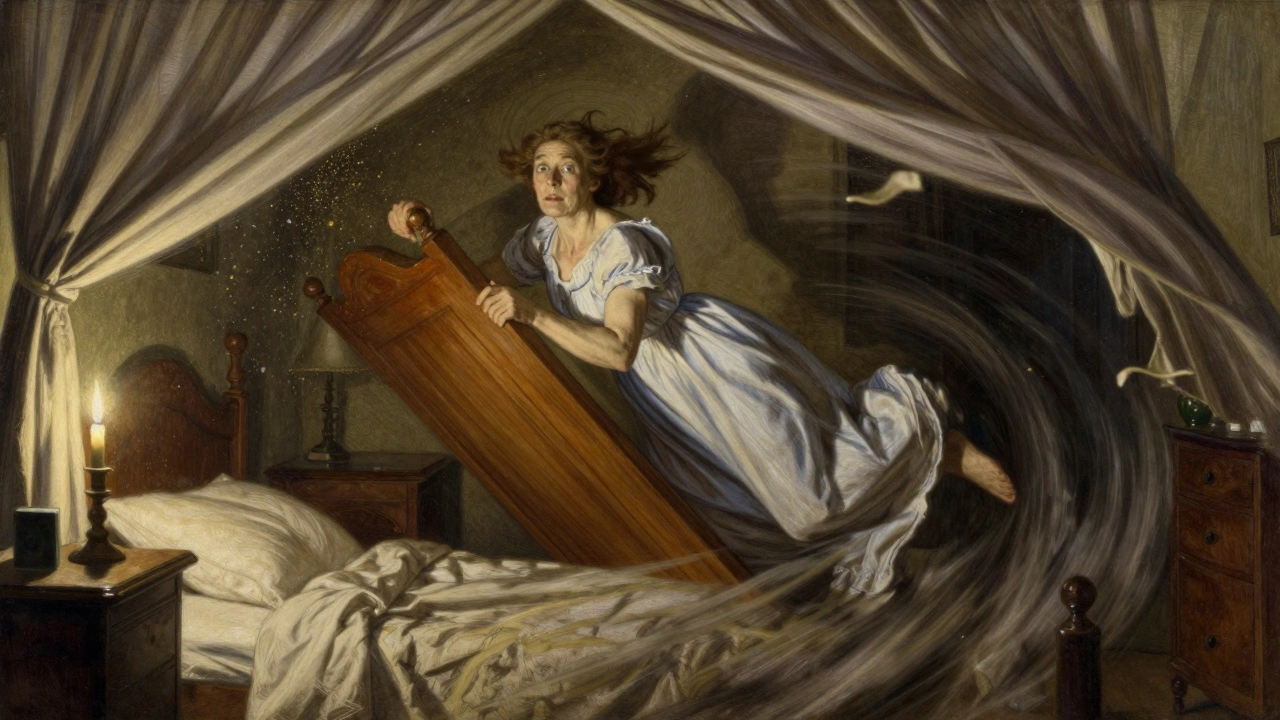
BPPV: Understanding Vertigo, Causes, and What Really Helps
When you roll over in bed and the room spins like a washing machine, you’re not imagining it. That’s BPPV, Benign Paroxysmal Positional Vertigo—a common inner ear disorder where tiny calcium crystals break loose and send false signals to your brain. Also known as ear crystals, this condition isn’t dangerous, but it’s terrifying when it hits—and it affects nearly 2 out of every 100 people at some point. It’s not a migraine, not anxiety, not a stroke. It’s a mechanical glitch in your balance system, and it responds to simple, non-drug fixes.
BPPV happens when crystals called otoconia, tiny calcium carbonate particles normally stuck in the utricle of your inner ear get dislodged and drift into one of the semicircular canals. When you move your head, these loose crystals push on fluid in the canal, tricking your brain into thinking you’re spinning—even when you’re still. That’s why the dizziness lasts only seconds to a minute, and only with certain movements: rolling over, looking up, or bending down. It’s not constant. It’s triggered. And that’s the key to fixing it.
Most people with BPPV are told to take pills for dizziness. But those pills don’t fix the problem—they just numb the symptoms. The real solution? Repositioning maneuvers. The Epley maneuver, the Semont maneuver, the Brandt-Daroff exercises—these aren’t magic. They’re physics. They use gravity to guide the crystals back where they belong. Studies show these techniques work in over 80% of cases after one or two tries. No surgery. No drugs. Just a few minutes of head movements, often done at home after a quick demo from a physical therapist.
What makes BPPV confusing is that it shows up like other conditions. It can mimic vestibular neuritis, Meniere’s disease, or even a mild stroke. That’s why proper diagnosis matters. A trained clinician can tell the difference by watching your eye movements during a positional test. If your eyes jerk in a specific pattern when you lie back with your head turned, it’s BPPV. No MRI needed. No blood tests. Just a chair and a quick check.
And here’s the thing: BPPV often comes back. About half of people have another episode within five years. That’s why knowing how to recognize it early matters. If you feel that sudden spin after turning your head, don’t reach for the medicine cabinet. Don’t panic. Try the Epley maneuver. There are reliable videos online that walk you through it step by step. And if it doesn’t help, or if you have hearing loss, ringing in the ear, or weakness on one side of your body—then it’s time to see a doctor. But if it’s just dizziness with movement? You’ve likely got BPPV. And you can fix it yourself.
The posts below cover everything you need to know about managing vertigo, avoiding medication traps, and using physical therapy to restore balance. You’ll find real advice on how to handle dizziness safely, what treatments actually work, and how to prevent future episodes—without relying on pills that mask the problem instead of solving it.