
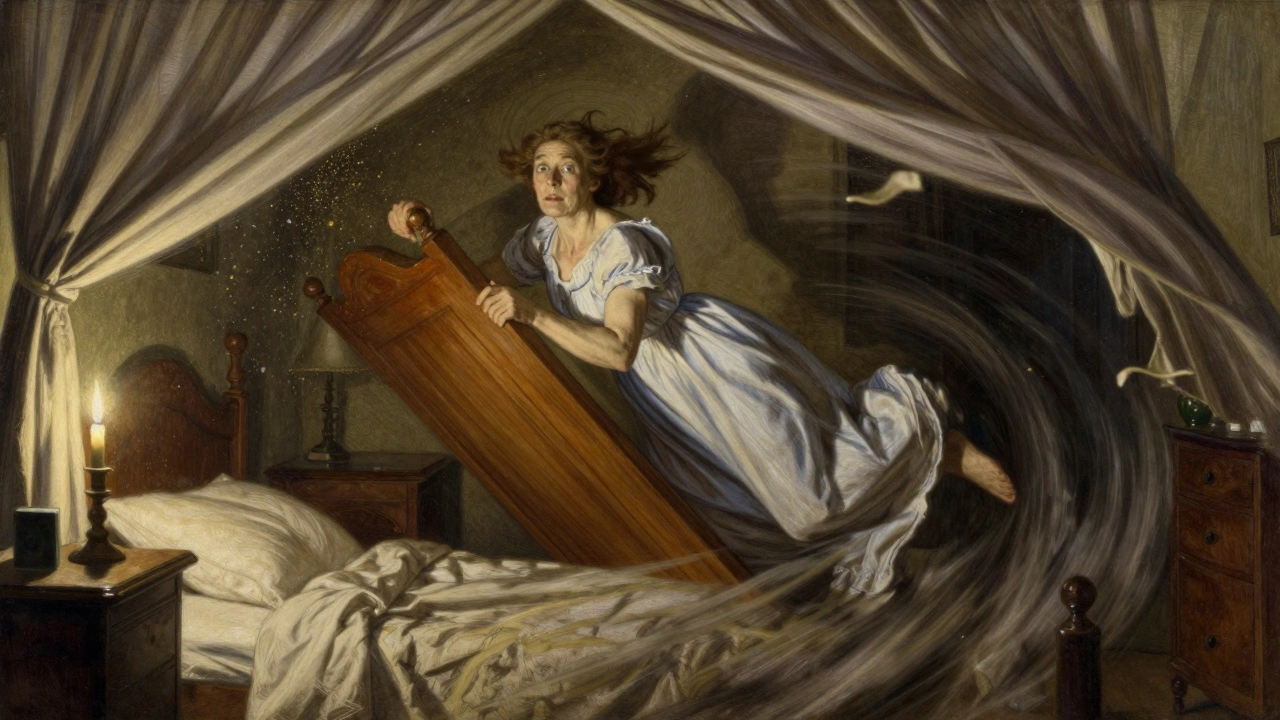
Imagine rolling over in bed and suddenly the room spins like a washing machine on high. You grab the headboard, feel nauseous, and wonder if you’re having a stroke. This isn’t rare. In fact, BPPV is the most common cause of vertigo you’ve never heard of. It doesn’t come with headaches, numbness, or weakness - just that terrifying, sudden spin when you move your head just right. And here’s the good news: it’s not dangerous. It’s also not something you have to live with. Canalith repositioning can fix it - often in minutes.
What Exactly Is BPPV?
BPPV stands for Benign Paroxysmal Positional Vertigo. Let’s break that down. Benign means it’s not life-threatening. Paroxysmal means it comes in sudden, short bursts. Positional means it’s triggered by head movement. And vertigo? That’s the spinning sensation - like you’re on a merry-go-round even when you’re lying still.
This isn’t just dizziness. It’s your inner ear sending false signals to your brain. Inside your ear, tiny calcium crystals called otoconia normally sit in a spot called the utricle, helping you sense gravity. But sometimes, they break loose. When they drift into one of the three fluid-filled semicircular canals - usually the posterior canal - they mess with the fluid movement. Your brain gets confused. It thinks you’re spinning when you’re not. That’s vertigo.
It’s not your imagination. Studies show BPPV causes over half of all peripheral vertigo cases. Around 2 in 10 people who go to the doctor with dizziness actually have it. And it’s not just older people - though it’s most common between 50 and 70. Women are 1.5 to 2 times more likely to get it than men. And yes, it can hit anyone. A 32-year-old yoga teacher, a 68-year-old retiree, even someone who just had a head bump.
How Do You Know It’s BPPV and Not Something Else?
Not all dizziness is BPPV. That’s why so many people get misdiagnosed. Vestibular neuritis? That’s constant spinning for days. Meniere’s disease? That comes with ringing in the ears and hearing loss. A stroke? That’s when you have slurred speech, double vision, or trouble walking.
BPPV has a fingerprint. Three things make it stand out:
- Timing: The spin lasts 5 to 30 seconds - rarely more than a minute.
- Trigger: It happens only with specific moves - rolling over, looking up, bending down, or turning your head quickly.
- Eye movement: Doctors can see a telltale jerking of the eyes (nystagmus) during the Dix-Hallpike test. That’s the gold standard for diagnosis.
Here’s the kicker: MRI scans are useless for diagnosing BPPV. They show normal results 99% of the time. Yet, 35% of patients in primary care get scanned anyway - costing thousands and delaying real treatment. A skilled clinician can diagnose BPPV just by asking questions and doing a simple head test. No machines needed.
What Triggers the Crystals to Move?
Why do these crystals get loose? No one knows for sure in every case. But we do know some common causes:
- Aging: As you get older, the inner ear structures weaken. Otoconia naturally detach.
- Head injury: Even a mild bump - like hitting your head on a cabinet - can shake them loose.
- Inner ear infections: Viral infections can disrupt the delicate balance of the inner ear.
- Long bed rest: Lying flat for days after surgery or illness can let crystals drift.
Some people get it without any clear cause. That’s called idiopathic BPPV. And yes, it can come back. About 15% of people have another episode within a year. Half will get it again within five years.
Canalith Repositioning: The Real Fix
Here’s the truth: medications don’t fix BPPV. Meclizine, dimenhydrinate, even benzodiazepines - they might dull the nausea, but they don’t move the crystals. And that’s the whole problem. You’re treating the symptom, not the cause.
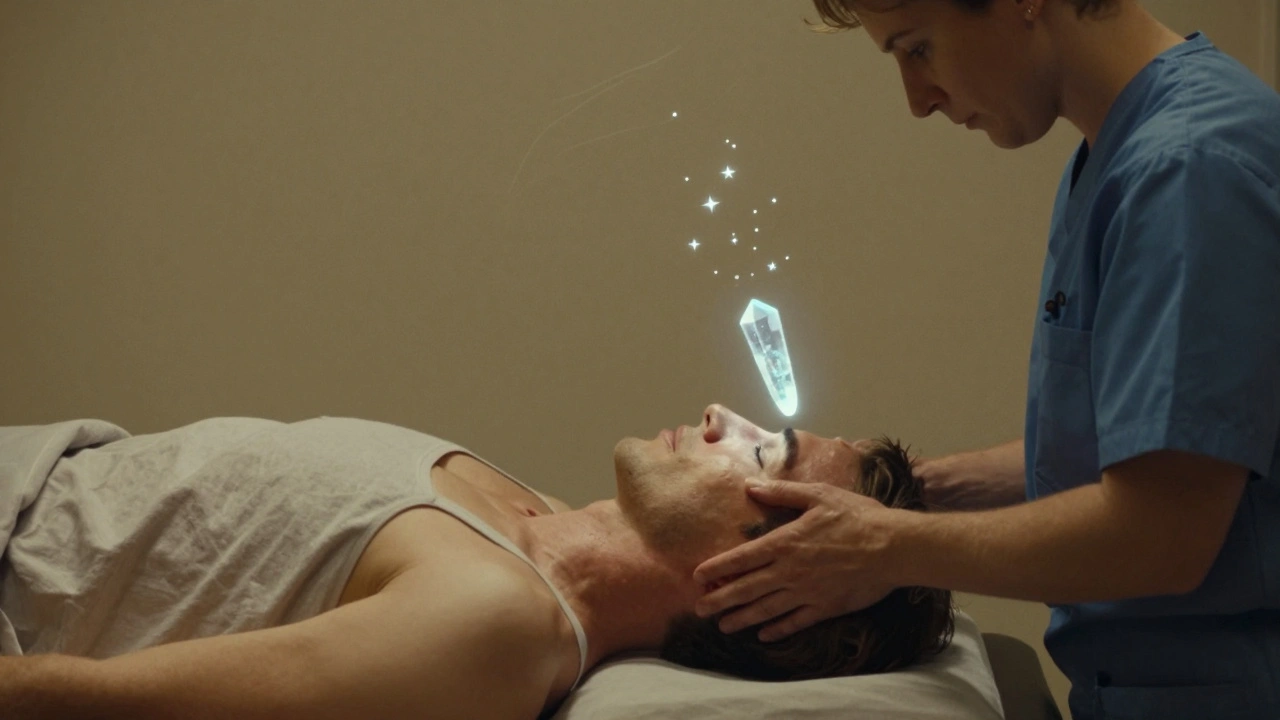
The real solution? Canalith repositioning. It’s a series of controlled head movements that guide the loose crystals back to where they belong - the utricle. Once they’re out of the canal, the false signals stop. Vertigo goes away.
The most common and effective technique is the Epley maneuver. It’s designed for posterior canal BPPV - which makes up 80-90% of cases. Here’s how it works:
- You sit upright on a table with your legs hanging off.
- The doctor turns your head 45 degrees to the affected side.
- You lie back quickly, with your head hanging slightly off the table.
- After 30 seconds, your head is turned 90 degrees to the opposite side.
- After another 30 seconds, you roll onto your side, facing down.
- Finally, you sit up slowly.
Each position holds for about 30 seconds. The whole thing takes 5 to 10 minutes. Success rate? 80-90% after one session. Most people feel better immediately. Some feel a little off for a day, but the spinning is gone.
There are other maneuvers too. The Semont maneuver works fast - it’s a quick side-to-side flop. The Lempert roll is for horizontal canal BPPV, which is rarer. And yes, you can do the Epley at home. Video-guided home versions have a 72% success rate. Written instructions? Only 45%. That’s why YouTube tutorials have over 15 million views.
What About Home Exercises and Apps?
You can try the Brandt-Daroff exercise at home. It’s a series of side-lying movements done twice a day for two weeks. It works - about 50% of the time. But it’s slow. And messy. You’ll probably feel dizzy every time you do it.
There are apps now - like DizzyFix - that use your phone’s motion sensors to guide you through the Epley maneuver. A 2021 NIH study showed 63% effectiveness. But they cost $80, and insurance won’t cover them. Still, for someone who can’t get to a clinic, it’s better than nothing.
Here’s the catch: if you do it wrong, you might make it worse. Moving the crystals into another canal can turn posterior BPPV into horizontal BPPV - which feels even weirder. That’s why getting it right matters. If you’re unsure, see a physical therapist or ENT specialist. They’ve done hundreds of these. You’ve probably done zero.
Why Do So Many People Wait So Long?
On average, people wait 3.2 months before getting the right diagnosis. Why?
- Doctors don’t know the test.
- Patients think it’s a migraine or anxiety.
- They’re given pills that don’t work.
- They’re told it’s “just aging.”
One woman in Wellington told me she had vertigo for six months. She saw three GPs. Each gave her motion sickness pills. She stopped driving. She stopped sleeping on her side. She was terrified to turn her head. Then she found a vestibular physiotherapist. One Epley maneuver. Gone. She cried. Not from pain - from relief.
That’s the pattern. People live with it because they don’t know it’s treatable. It’s not in the public consciousness like migraines or arthritis. But it should be.

What Happens After Treatment?
After the Epley maneuver, you’re usually told to avoid lying flat for 24-48 hours. Some clinics recommend sleeping propped up. But recent studies show that’s not necessary. The crystals are already out of the canal. You don’t need to guard them like they’re gold.
Recurrence is real. But it’s not inevitable. One study found vitamin D supplementation (1,000 IU daily) cut recurrence by 24% in people with low levels. That’s a simple, cheap, safe thing to try. Also, avoid sudden head movements for a few days. Don’t go to the hair salon for a shampoo wash right after treatment. Don’t do headstands in yoga. Give your inner ear a break.
And if it comes back? Do the Epley again. Or go back to your therapist. Most people need 1-3 sessions total. Rarely more.
What’s New in BPPV Treatment?
Technology is catching up. Some clinics now use video-oculography - tiny cameras that record eye movements during the Dix-Hallpike test. This makes diagnosis 40% more accurate than just watching with your eyes.
There’s also a new FDA-approved VR system called XTVRT. It guides patients through repositioning exercises in a virtual environment. It works - 78% symptom reduction in trials. But it’s expensive ($300 per course) and not widely available.
And yes, researchers are looking into genetic links and drugs that dissolve otoconia. But those are years away. Right now, the best treatment is still the Epley maneuver. Simple. Fast. Cheap. Effective.
When to See a Professional
You don’t need to suffer. If you have sudden spinning triggered by head movement - especially if it’s lasted more than a few days - get checked. Don’t wait. Don’t take pills hoping they’ll help. Ask your doctor: “Could this be BPPV? Can you do the Dix-Hallpike test?”
If they say no, ask for a referral to a vestibular physiotherapist or ENT specialist. They’re out there. They know what they’re doing. And they’ve fixed this exact problem hundreds of times.
BPPV isn’t a life sentence. It’s a glitch in your inner ear. And it’s fixable. You don’t need surgery. You don’t need drugs. You just need to move your head the right way - once.







Comments(8)