Imagine taking a pill every day for years, only to find out the virus you're fighting has learned how to ignore the medicine. This isn't a sci-fi plot; it's a real-world challenge called antiviral resistance is a process where a virus develops mutations that make an antiviral drug less effective or completely ineffective. Whether you're managing HIV, Hepatitis, or Herpes, the goal is the same: keep the virus suppressed so it doesn't have the chance to change and fight back.
How Viruses Outsmart Your Medication
Viruses are essentially copying machines. Every time they replicate, there's a chance for a random mistake-a mutation. Usually, these mistakes don't do much, but sometimes a mutation happens at the exact spot where a drug is supposed to attach. When this happens, the drug can't "lock on" to the virus, and the mutated version survives and multiplies. This is how resistance starts.
The ease with which a virus develops this resistance depends on what experts call the "genetic barrier." Think of it as a security system. Some drugs have a low barrier, meaning it only takes one small change for the virus to get around them. For instance, lamivudine used for Hepatitis B (HBV) has a low genetic barrier, with up to 70% of patients seeing resistant variants after five years. On the other hand, drugs like adefovir have a higher barrier, with resistance occurring in only about 29% of patients over the same period.
In some cases, viruses use a trick called genetic reassortment. This happens when viruses with segmented genomes swap pieces of their genetic code, essentially "trading" resistance secrets. This makes the fight more complex because the virus isn't just mutating; it's evolving through a shortcut.
The Power of Combination Therapy
If you've ever wondered why some people take one pill while others take a cocktail of several, it's all about the math of mutations. If a virus has to make one mistake to beat one drug, it's likely to happen. But if it has to make four specific mistakes at the same time to beat four different drugs, the odds drop drastically.
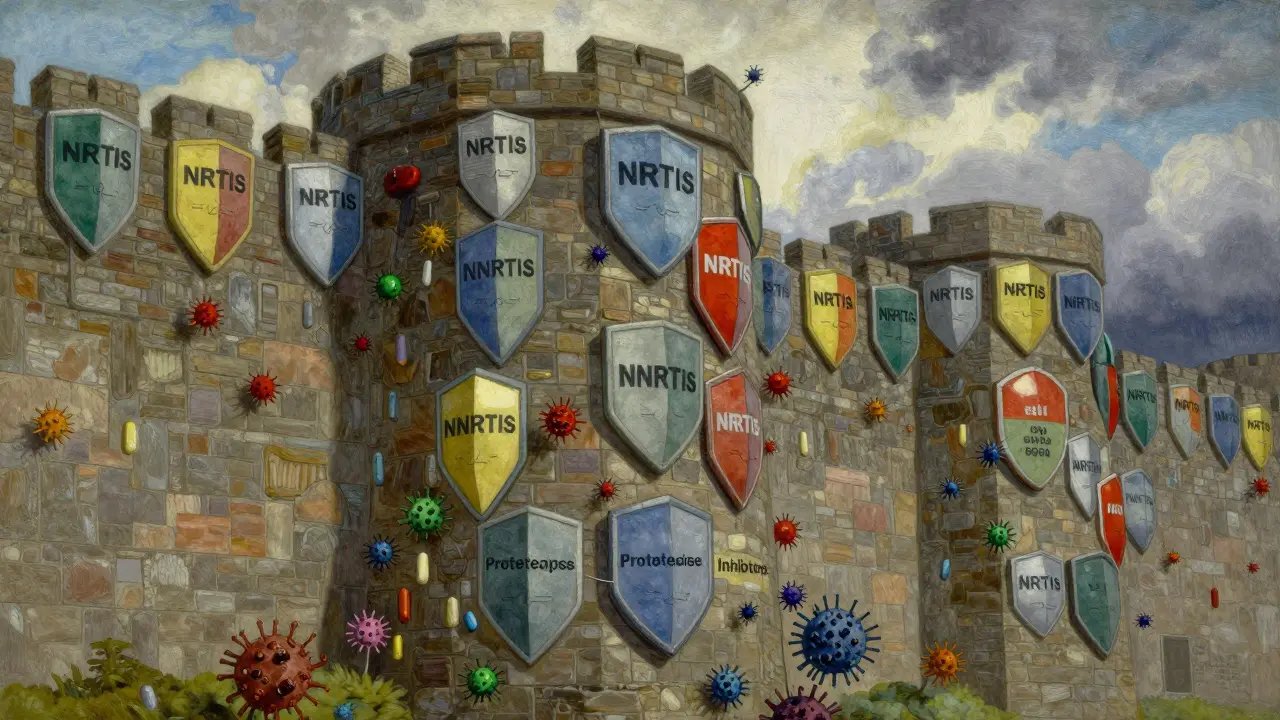
This is why combination antiretroviral therapy (also known as cART) is the gold standard for HIV. By combining different classes of drugs-like NRTIs, NNRTIs, and Protease Inhibitors-doctors create a massive genetic barrier. When properly administered, resistance rates for these combinations stay below 10% even after five years.
| Approach | Genetic Barrier | Typical Resistance Rate | Common Use Case |
|---|---|---|---|
| Monotherapy (Single Drug) | Low | High (>60% in 2 years for some) | Older HBV treatments |
| Combination Therapy | High | Low (<10% over 5 years) | Modern HIV (cART) |
| DAA Combinations | Very High | Very Low (<5%) | Hepatitis C (HCV) |
Dealing with Side Effects
Let's be honest: it's hard to stay consistent with a medication if it makes you feel miserable. About 25% to 30% of people experience significant side effects when they first start antiviral therapy. These can range from mild annoyances to things that seriously disrupt your day.
For those treating Hepatitis C with Direct-Acting Antivirals (DAAs), fatigue and headaches are common, affecting roughly 23% and 18% of patients respectively. While these are far easier to handle than the old interferon injections-which required shots three times a week for nearly a year-they can still tempt someone to skip a dose.
The danger here is that skipping doses because of side effects creates the perfect environment for resistance. When drug levels in your blood drop, the virus isn't completely killed, but it's under enough pressure to "learn" how to survive. This is where those dangerous mutations we talked about earlier really take hold.
Practical Tips for Staying on Track
Adherence isn't just about willpower; it's about systems. If you're struggling to remember your meds or are overwhelmed by a complex schedule, you're not alone. Surveys show that nearly a third of patients miss doses due to travel, complex schedules, or side effects.
Here are a few concrete ways to ensure you don't give the virus a chance to mutate:
- Use a Pill Organizer: About 63% of patients who maintain perfect adherence use a physical pill box. It removes the "Did I take it today?" guesswork.
- Set Digital Reminders: Mobile apps and alarms are used by 57% of adherent patients. Set an alarm for the same time every day to build a habit.
- Simplify Your Regimen: Ask your doctor about single-tablet regimens (STRs). Modern medicine has condensed several pills into one, which has shortened the time it takes for patients to get into a stable routine from eight weeks down to just two.
- Talk to a Specialized Pharmacist: Pharmacist-led support can lower resistance development rates by 28%. They can help you manage side effects or suggest ways to time your doses around meals.

Looking Ahead: The Future of Antivirals
The science is moving fast. We're seeing a shift toward drugs with even higher genetic barriers. A great example is lenacapavir, a newer HIV capsid inhibitor. In clinical trials, 96% of patients showed zero resistance development after 72 weeks. This suggests we're moving toward a future where medication is not only more effective but also harder for the virus to beat.
There are even more radical approaches on the horizon. Phase I trials are currently exploring CRISPR-Cas9 gene editing to completely erase viral reservoirs from the body. Early results have shown a 60% reduction in these reservoirs without any resistance emerging. While we aren't at a total cure yet, the focus is shifting from simply "managing" the virus to potentially eliminating it.
What happens if I miss a few doses of my antiviral medication?
Missing doses can lead to a "viral spike," where the virus begins replicating again. Because the medication is still present but at low levels, it creates a selection pressure that favors mutant strains. Over time, this can lead to full resistance, meaning the drug will no longer work, and you'll need to switch to a different, often more complex, regimen.
Does antiviral resistance mean I can't be treated?
Not at all. It just means your doctor needs to change the "weapon" they are using. Resistance testing (genotyping) allows doctors to see exactly which mutations the virus has and pick a drug that the virus hasn't learned to beat yet. For example, someone who develops resistance to one HIV drug might be switched to a dolutegravir-based regimen.
Why are combination therapies better than single-drug treatments?
Combination therapies attack the virus from multiple angles (e.g., blocking different enzymes like protease or integrase). For a virus to become resistant to a combination, it would need to develop several specific mutations simultaneously, which is statistically much less likely than developing a single mutation for one drug.
How do I know if my medication is developing resistance?
Resistance is usually detected through a "viral load" test. If your viral load starts to climb despite you taking your medication correctly, it's a red flag. Your doctor can then order a resistance test to analyze the genetic sequence of the virus and identify specific mutations.
Are the side effects of antivirals permanent?
For most people, the most intense side effects occur during the first few weeks of treatment as the body adjusts. Many symptoms, like mild nausea or headaches, fade over time. However, if you experience severe side effects, you should contact your provider immediately rather than stopping the drug, as they may be able to adjust the dose or switch you to a better-tolerated alternative.
Next Steps for Your Health Journey
If you're currently on antiviral therapy, the best thing you can do is stay proactive. Schedule a check-in with your doctor to discuss your latest viral load results and be honest about any doses you've missed. If side effects are getting in the way, don't suffer in silence-ask about the latest single-tablet options or a referral to a specialized pharmacist.
For those who have experienced treatment failure due to resistance, don't lose hope. The landscape of antiviral medicine is evolving rapidly, and new high-barrier drugs are being approved every year. The goal remains the same: sustained viral suppression and a long, healthy life.