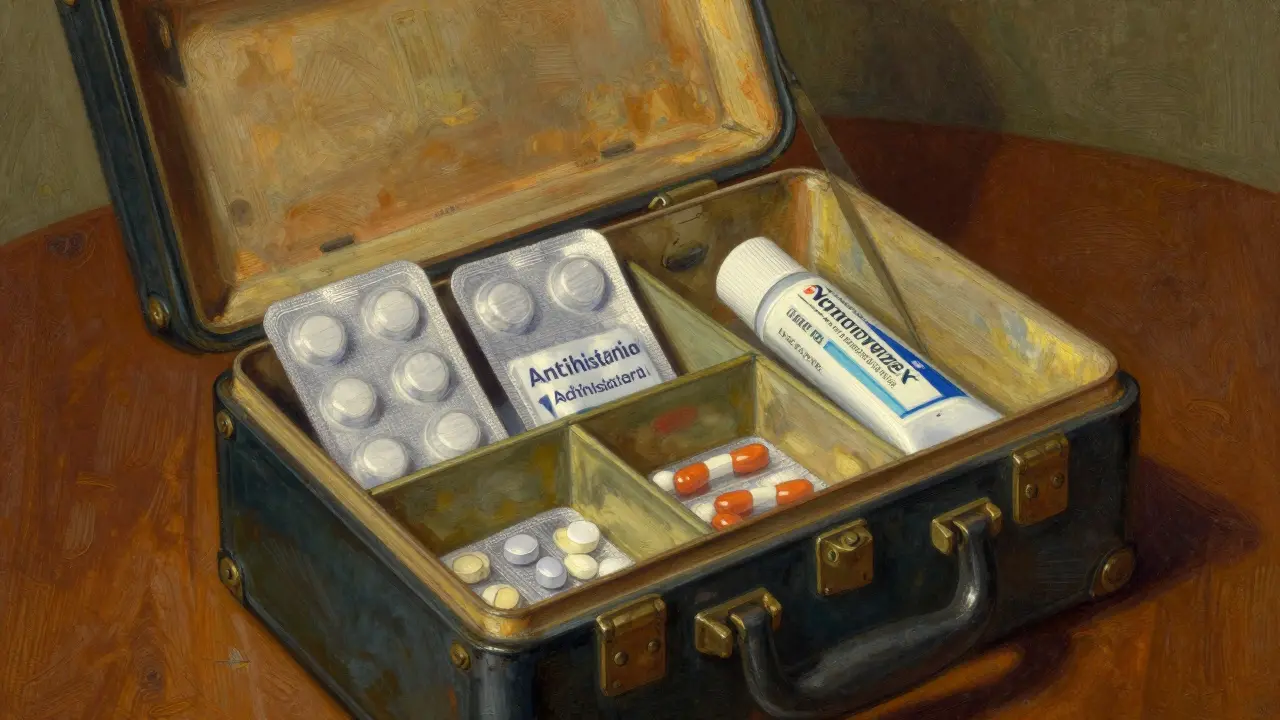
Medication Side Effect Kit Builder
Use this tool to customize your home safety kit. Select the items you already have or need to acquire. Note: Always consult a physician before adding new medications to your kit.
Kit Safety Audit
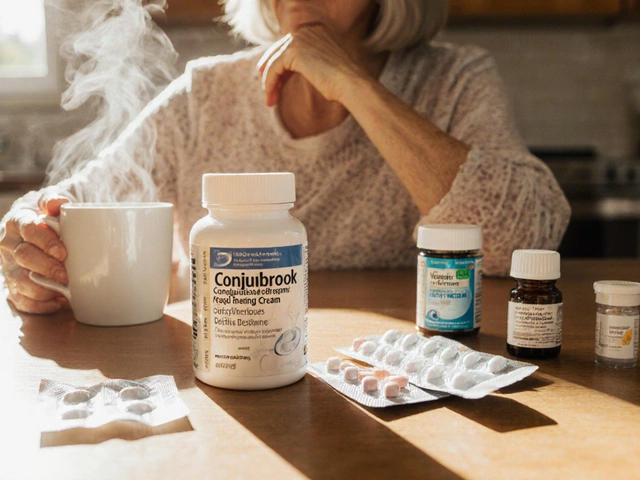
Most of us have a standard first-aid kit with bandages and antiseptic, but very few of us are prepared for what happens when a prescription drug causes a bad reaction. With about 70% of adults taking at least one prescription medication, the risk of a pharmacological complication is surprisingly high. While most side effects are mild, some can escalate quickly. Having a safety plan and a dedicated kit allows you to handle these reactions calmly and potentially prevents a trip to the emergency room.
Quick Guide: Essential Kit Components
- Allergy Relief: Antihistamines and hydrocortisone cream.
- Digestive Support: Antacids and anti-diarrheals.
- Critical Contacts: Poison control and family doctor numbers.
- Documentation: Current medication lists and reaction logs.
- Severe Response: Prescribed epinephrine (if applicable).
The Core Pharmacy: Managing Common Reactions
When a medication doesn't sit right, it usually hits one of three areas: the skin, the gut, or the immune system. Your kit should have targeted tools for these specific issues. For instance, allergic reactions affect roughly 5-10% of people after taking a new drug. Including Diphenhydramine (commonly known as Benadryl) is a must for treating hives or itching. For localized skin rashes, a 1% hydrocortisone cream helps reduce inflammation quickly.
Stomach issues are even more common, representing up to 30% of all adverse drug events. Many antibiotics trigger gastrointestinal distress in about a quarter of patients. To counter this, stock your kit with Loperamide (Imodium) for diarrhea and a variety of antacids. The trick here is timing; using antacids the moment you feel a flare-up can stop a mild stomach ache from becoming a full-blown crisis.
| Symptom | Recommended Kit Item | Typical Use Case |
|---|---|---|
| Itching/Hives | Antihistamines | Mild allergic reactions to new drugs |
| Skin Rash | Hydrocortisone Cream | Contact dermatitis or localized itching |
| Heartburn/Nausea | Antacids | Gastric irritation from NSAIDs or antibiotics |
| Diarrhea | Loperamide | Antibiotic-associated gut distress |
| Severe Anaphylaxis | Epinephrine Auto-injector | Life-threatening allergic shock (Prescription only) |
The Communication Hub: Contacts and Documents
In a medical crisis, your brain often freezes. You shouldn't be scrolling through your phone to find your doctor's number while you're struggling to breathe or dealing with a severe rash. Your kit needs a physical list of emergency contacts. This includes your primary care physician, pediatrician, and the Poison Control Center. In the U.S., the 24/7 hotline 1-800-222-1222 is a critical resource, as pharmaceutical exposures make up a huge chunk of their daily cases.
Beyond phone numbers, you need a detailed medical history for everyone in your house. This isn't just a list of names; it should be a comprehensive log of current dosages, known allergies, and any past bad reactions. Following the "5 Rights of Medication Safety"-right patient, right drug, right dose, right route, and right time-helps ensure that when you're talking to an emergency operator, you provide accurate data. Also, keep a week's supply of essential chronic medications. Abruptly stopping things like beta-blockers or certain antidepressants can cause withdrawal in up to 30% of patients, adding more chaos to an already stressful situation.

Safety Warnings and Critical Pitfalls
Not every medication is safe for every person. One of the biggest dangers in home kits is the accidental overdose of acetaminophen. If you're taking a combination cold medicine and then add Tylenol on top, you could easily hit toxic levels. This leads to thousands of emergency room visits every year. Always keep medications in their original packaging so you can read the active ingredients and dosage limits clearly.
There is also a very strict rule regarding children: Aspirin should never be given to kids. Doing so risks Reye's syndrome, a rare but devastating condition with a high mortality rate. For children, stick to acetaminophen or ibuprofen, and always dose by weight (typically 10-15 mg/kg for acetaminophen) rather than age.
Tailoring Your Kit for Special Needs
A one-size-fits-all kit doesn't work for everyone. For seniors, who often manage four or five different prescriptions at once, the kit needs larger-print labels and a simplified medication schedule. The risk of drug-drug interactions is much higher in this group, so a clear list of everything they take is vital for any paramedic who walks through the door.
If you or a family member has diabetes, your kit needs more than just allergy meds. Include glucose tablets to treat hypoglycemia, which can be triggered by certain medication interactions. For those with heart conditions, the American Heart Association suggests having regular-strength aspirin on hand-specifically to be chewed during a potential heart attack-but remember, this is for adults only.
Maintenance and Long-Term Storage
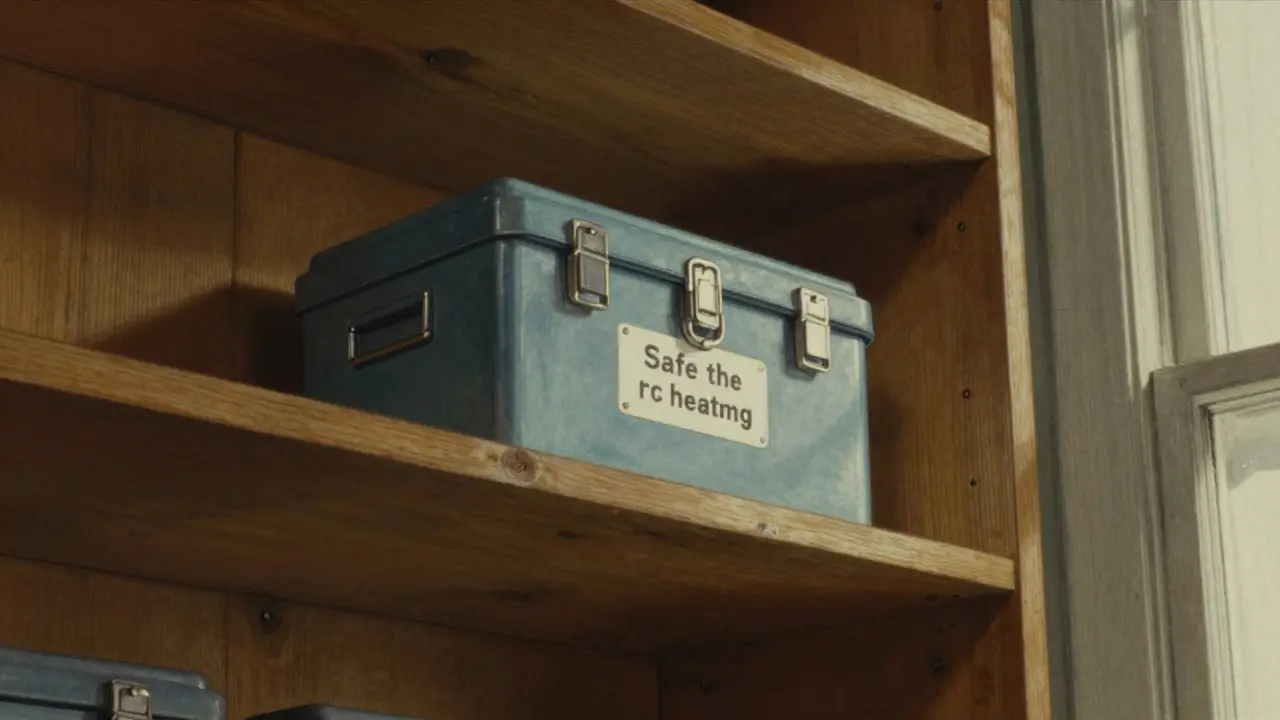
A kit is only useful if the medicine inside actually works. Many people forget that medications lose potency over time. Some can lose up to 50% of their effectiveness even before the official expiration date if they are stored in a humid bathroom or a hot car. Store your kit in a cool, dry, and accessible place, but keep it high enough or locked so children can't reach it. Accidental poisoning in children is a massive issue, with tens of thousands of emergency visits annually.
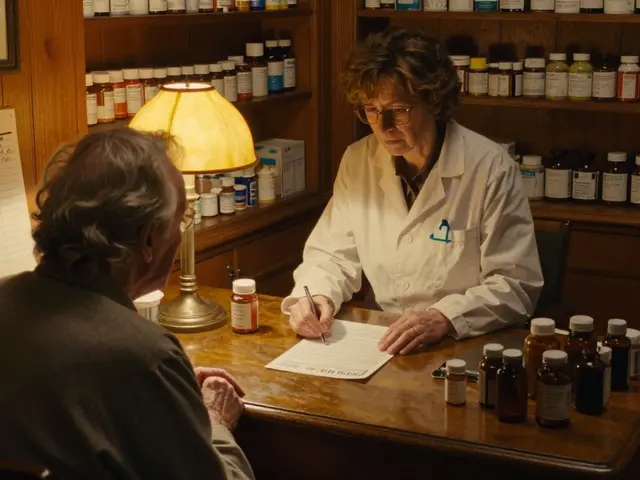
Set a calendar reminder to check your kit every three months. Rotate out anything that has expired and check that your batteries (for thermometers or auto-injectors) are still good. If you start a new prescription, take five minutes to talk to your pharmacist. They can tell you exactly which side effects to watch for and if you need to add something specific to your emergency kit to manage them.
Knowing When to Stop Home Care
Your home kit is a bridge to professional care, not a replacement for it. It is designed to stabilize you and manage mild-to-moderate reactions. If you experience new or unexplained chest pain, swelling of the throat, or difficulty breathing, skip the kit and call 911 immediately. The goal is to keep the patient stable until professional help arrives, not to attempt a complex medical treatment at home.
What is the difference between a first-aid kit and a medication side effect kit?
A standard first-aid kit is designed for physical trauma like cuts, burns, and sprains. A medication side effect kit focuses on pharmacological reactions, containing antihistamines, antacids, and detailed drug history logs to manage adverse reactions to prescriptions or OTC drugs.
Can I use activated charcoal for medication overdoses?
Current medical consensus suggests that activated charcoal is ineffective for most pharmaceutical overdoses and should only be administered under the direct guidance of a healthcare professional. Do not include it as a self-treatment option in your home kit.
How often should I replace the medications in my kit?
You should perform a full audit of your kit quarterly. Check expiration dates and storage conditions. If medications have been exposed to high heat or humidity, they may lose potency and should be replaced even if the date hasn't passed.
Why is it dangerous to give aspirin to children?
Giving aspirin to children can trigger Reye's syndrome, a serious condition that causes swelling in the liver and brain. This can be fatal or lead to permanent brain damage. Use weight-based doses of acetaminophen or ibuprofen instead.
What should I do if I'm not sure if a symptom is a side effect?
Document the symptom, the time it started, and the dose of medication you took. Use your kit's notepad to record these details and call your pharmacist or primary care doctor for guidance. If the symptom is severe, seek immediate emergency care.