

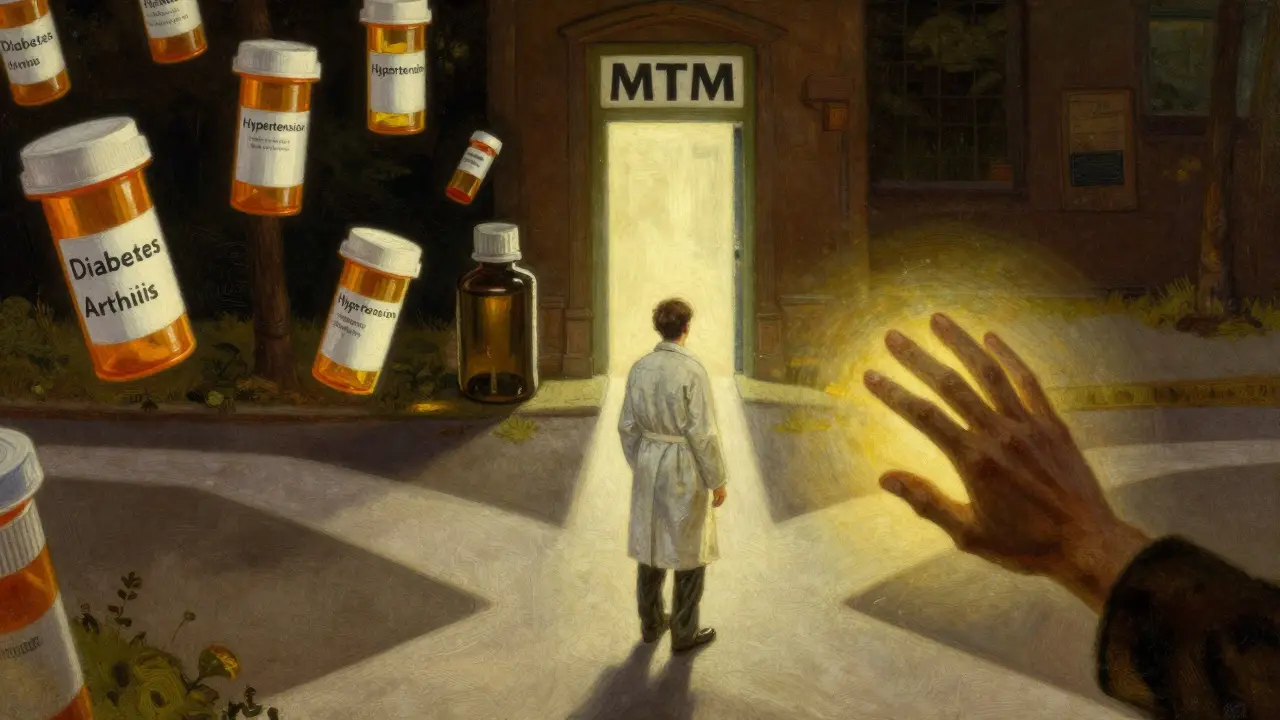
Have you ever felt overwhelmed by the number of pills you take every day? Maybe you’re on medication for diabetes, high blood pressure, and arthritis, plus a few over-the-counter supplements. You’re not alone. Millions of people juggle multiple prescriptions, and many don’t even know if they’re taking them correctly-or if they’re safe together. That’s where Medication Therapy Management (MTM) comes in. It’s not just another pharmacy service. It’s a personalized, free support system designed to help you get the most out of your meds-and avoid dangerous mistakes.
What Exactly Is Medication Therapy Management?
MTM is a service offered by your Medicare Part D plan, led by licensed pharmacists. Think of it as a full health check-up-for your medications. It’s not about filling prescriptions. It’s about making sure every pill you take is doing what it’s supposed to, without causing harm. The goal? To stop drug interactions, reduce side effects, improve how well your meds work, and even save you money.
MTM is built around two main types of reviews: a yearly Comprehensive Medication Review (CMR) and quarterly Targeted Medication Reviews (TMRs). The CMR is your big, in-depth session. You sit down (in person or over video call) with a pharmacist who asks: What are you taking? Why? Are you having side effects? Are you skipping doses? Are any of these drugs overlapping or conflicting? Then they give you a written plan: a Personal Medication Record (PMR), which lists every single medication-prescription, OTC, vitamins, herbal stuff-and a To-Do List of actions to take.
Who Qualifies for MTM Services?
You don’t have to ask for it. If you’re eligible, your Medicare Part D plan will reach out. To qualify, you must meet three simple criteria:
- You have three or more chronic conditions-like diabetes, heart disease, COPD, depression, or kidney disease.
- You’re taking eight or more Medicare Part D-covered medications.
- Your total annual drug costs are over $4,430 (this number can change slightly each year).
That might sound strict, but if you’re on multiple meds for long-term health issues, you’re likely already in. Even if you don’t get an invitation, you can call your plan’s MTM line and ask. Some plans have looser rules. You’re not too old, too young, or too healthy to qualify-you just need to fit the criteria.
What Happens During a Medication Review?
During your CMR, your pharmacist doesn’t just read your list. They dig deep. They’ll ask:
- Are you taking your blood pressure pill at the same time every day?
- Do you know why you’re on that antidepressant?
- Are you still taking that painkiller your doctor gave you two years ago?
- Have you noticed dizziness, swelling, or stomach issues since starting a new med?
- Are you using the same pharmacy for everything? (This matters-pharmacists can spot dangerous overlaps across prescriptions.)
They’ll also check for cheaper alternatives. Maybe your insulin costs $500 a month, but there’s a generic version that works just as well for $120. Or maybe you’re taking two different drugs that do the same thing-doubling your risk of side effects. The pharmacist will write down all these issues and send a report to your doctor, with suggestions to fix them. You’re not alone in this. The pharmacist works with your doctor to make changes safely.
Why It Matters: Real Benefits, Real Results
MTM isn’t just a nice-to-have. It’s backed by data. Studies show that patients who complete MTM sessions:
- Take their meds more consistently-up to 20% better adherence.
- Have fewer hospital visits because of drug-related problems.
- Save money-on average, $200 to $500 a year on medications after switching to lower-cost options.
- Feel more in control of their health.
One patient in Tennessee, a 72-year-old woman with diabetes and heart failure, was taking 12 medications. After her CMR, her pharmacist found she was on two drugs that lowered potassium dangerously. One was unnecessary. Another had a cheaper, safer alternative. She cut her monthly cost by $180 and stopped feeling weak all the time. That’s not luck. That’s MTM.

Who Can Help If You Can’t Attend the Meeting?
What if you’re housebound, have memory issues, or feel too overwhelmed to talk? That’s okay. You can assign a caregiver-your spouse, adult child, or friend-to join the meeting for you. They can ask questions, take notes, and help follow up. The pharmacist will send the same Personal Medication Record and To-Do List to both of you. No one should be left behind because they can’t make a phone call.
How to Get Started
You don’t need to sign up or fill out forms. If you qualify, your plan will mail or email you an invitation. It’ll include a phone number to schedule your review. If you haven’t heard anything by the end of the year, call your Medicare Part D plan’s customer service. Ask: “Am I eligible for Medication Therapy Management?”
Don’t wait for them to find you. If you’re on multiple meds, you deserve this service. It’s free. It’s confidential. And it’s designed just for you.
What MTM Isn’t
MTM isn’t a quick chat at the pharmacy counter when you pick up your refill. It’s not a sales pitch for a new drug. It’s not a one-time fix. It’s an ongoing partnership. You’ll get quarterly check-ins to see how things are going. If you start a new med, get sick, or change doctors, you can request an extra review anytime.
Also, MTM doesn’t replace your doctor. It supports them. The pharmacist doesn’t prescribe or change your meds alone. They flag issues and work with your doctor to make safe, smart adjustments.
What to Bring to Your Appointment
Before your CMR, gather everything:
- All prescription bottles-even ones you haven’t taken in months.
- Any vitamins, supplements, or herbal remedies (like turmeric, fish oil, or melatonin).
- Over-the-counter drugs: painkillers, antacids, sleep aids, allergy meds.
- A list of your doctors and their contact info.
- Any symptoms you’ve noticed: fatigue, nausea, confusion, swelling, rashes.
The more complete your list, the better the review. Don’t worry if you don’t remember names-just bring the bottles. The pharmacist will identify them.
What Happens After the Review?
You’ll get a printed or digital Personal Medication Record. Keep it with you. Show it to every new doctor, ER staff, or pharmacist. It’s your medication lifeline.
You’ll also get a To-Do List. It might say:
- Ask your doctor about switching from Brand X to generic.
- Stop taking the sleeping pill after two weeks.
- Get a blood test to check kidney function.
- Use a pill organizer for morning and night doses.
Follow up on these. Call your doctor. Call your pharmacist. You’re the captain of your health team now.
MTM Is Evolving
Right now, MTM is tied to Medicare Part D. But it’s starting to spread. States like Tennessee and New Mexico are using MTM in their Medicaid programs. Private insurers are testing it for non-Medicare patients. The future? MTM becoming a standard part of care for anyone with chronic illness-not just seniors.
Pharmacists are becoming key players in team-based care. They’re the medication experts. And now, they’re finally getting the time to use that expertise-on you.
Don’t Let Your Meds Work Against You
Medications save lives. But when they’re not managed well, they can hurt you. A wrong dose. A hidden interaction. A forgotten refill. These aren’t mistakes you should have to fix alone.
MTM gives you a trained expert who will sit down, listen, and fix what’s broken. It’s not magic. It’s medicine-done right.
Is Medication Therapy Management free?
Yes. MTM services are completely free for eligible Medicare Part D beneficiaries. There are no extra fees, copays, or hidden charges. The service is covered as part of your prescription drug plan benefits.
Do I need to be on Medicare to get MTM?
Currently, MTM is required by law for all Medicare Part D plans. If you’re not on Medicare, you won’t automatically qualify. But some private insurers and Medicaid programs are starting to offer similar services. Check with your plan or ask your pharmacist if they offer a comparable medication review.
Can I get MTM if I don’t have chronic conditions?
If you don’t have three or more chronic conditions and aren’t taking eight or more Part D medications, you won’t qualify under Medicare rules. But if you’re taking multiple drugs-even for short-term issues-you can still ask your pharmacist for a free medication review. Many community pharmacies offer basic reviews, even if they’re not part of a formal MTM program.
Will the pharmacist change my prescriptions?
No. Pharmacists can’t change your prescriptions on their own. But they can identify problems and send detailed recommendations to your doctor. Your doctor then decides whether to make changes. The pharmacist’s role is to spot risks, suggest alternatives, and make sure you understand your treatment plan.
How often will I meet with a pharmacist?
You’ll have one full Comprehensive Medication Review each year. After that, you’ll get quarterly Targeted Medication Reviews-usually triggered if you start a new drug, have a hospital stay, or if your plan detects a potential issue. You can also request an extra review anytime you have concerns.
What if I don’t understand my medications?
That’s exactly why MTM exists. Pharmacists are trained to explain meds in plain language. They’ll tell you what each drug does, why you need it, when to take it, and what side effects to watch for. No jargon. No rush. You’ll leave with a clear plan you can follow.
Can I bring my family to the appointment?
Yes. You’re encouraged to bring a caregiver, family member, or friend. They can help you remember details, ask questions you might forget, and support you in following the plan. The pharmacist will share the same information with them.
What if I’m already doing fine with my meds?
Even if you feel fine, MTM can still help. Many problems-like drug interactions or unnecessary meds-don’t cause obvious symptoms right away. A pharmacist might find you’re taking two drugs that do the same thing, or that a supplement is reducing your main medication’s effect. Prevention is better than fixing a crisis later.
If you’re taking multiple medications, don’t guess. Don’t assume. Get your free MTM review. It’s your right-and your best shot at staying healthy, safe, and in control.







Comments(13)