
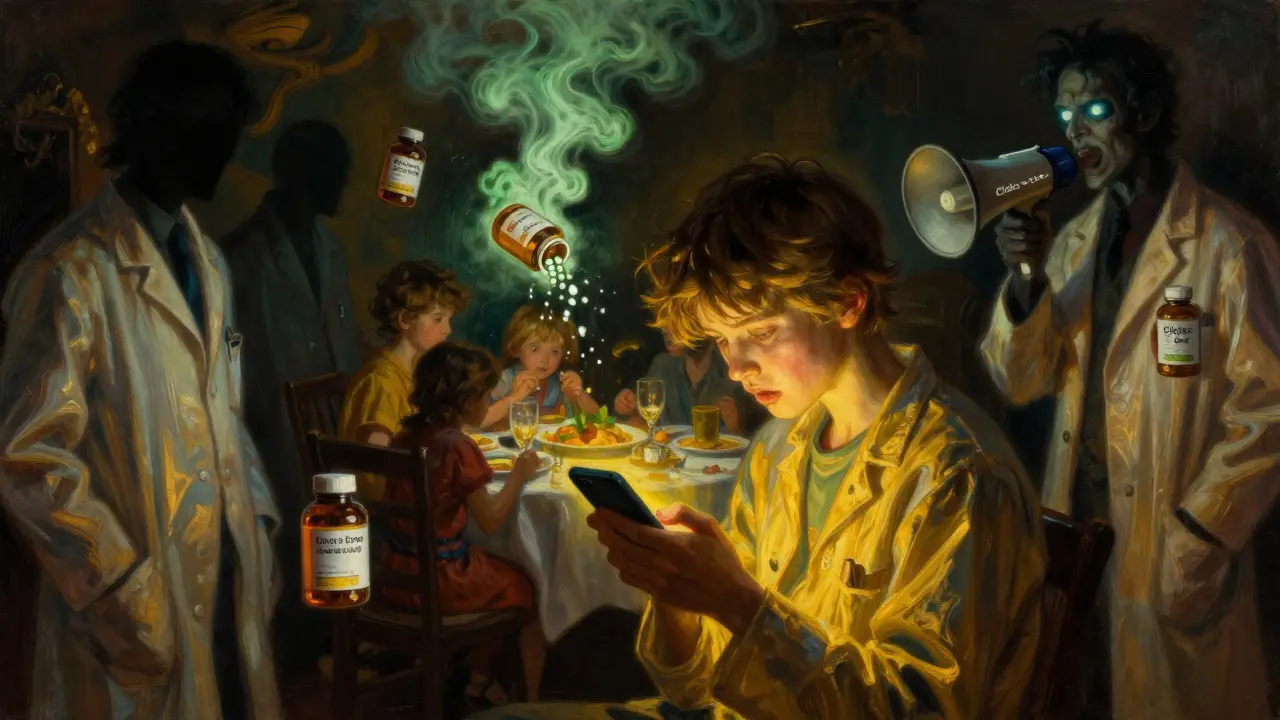
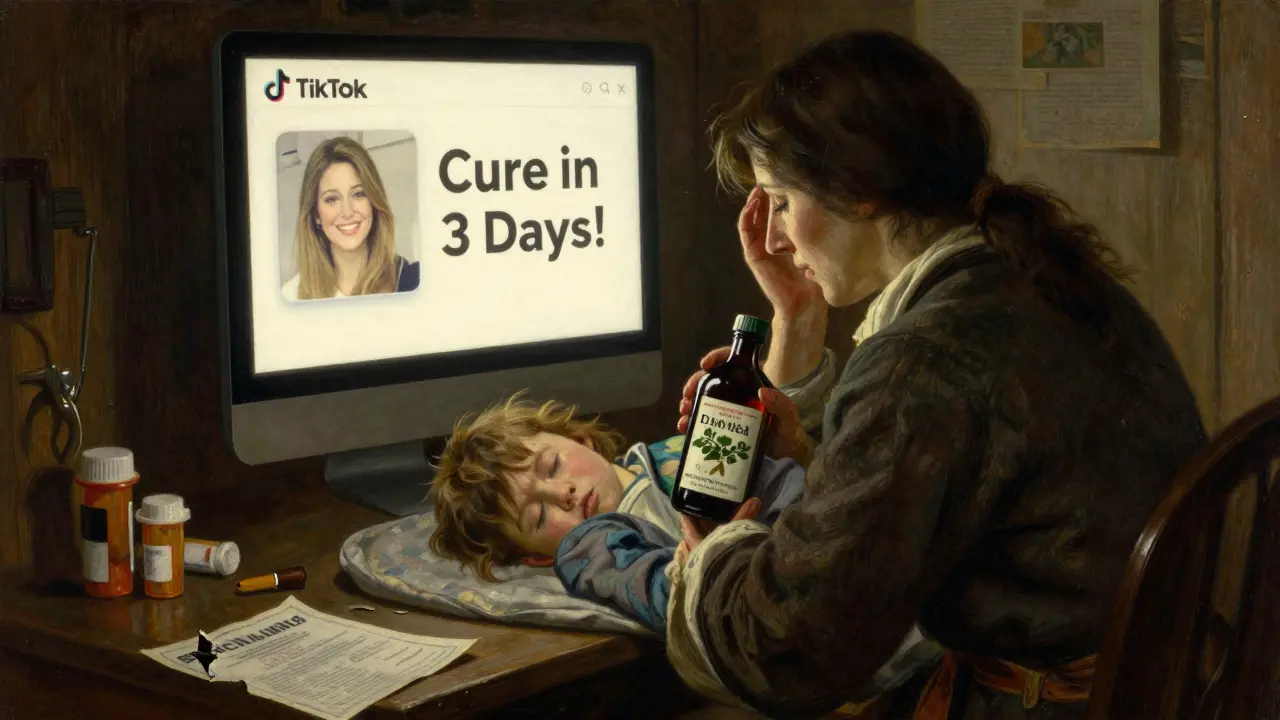
Scrolling through TikTok or Instagram, you see a post: "This one supplement cured my chronic pain in 3 days-no prescriptions needed!" It looks real. The person seems sincere. The before-and-after photos are convincing. You’re tempted to try it. But here’s the truth: unsafe medication advice on social media is killing people-quietly, slowly, and often without anyone noticing until it’s too late.
It’s not just about fake miracle cures. It’s about real people taking dangerous combinations of pills because a stranger on YouTube said it "works for them." It’s about parents giving their kids herbal syrups instead of prescribed antibiotics because an influencer claimed it’s "more natural." And it’s about teens self-medicating for anxiety with over-the-counter supplements they found in a viral reel-without knowing what’s in them or how they interact with their existing meds.
Who’s Really Giving This Advice?
Most of the time, it’s not a doctor. It’s not a pharmacist. It’s not even someone with medical training. It’s a content creator with 500,000 followers, a sponsored post from a supplement brand, and zero credentials. According to Healthline, many health influencers on social media are paid to push products. That doesn’t mean everything they say is false-but it does mean their goal isn’t your health. It’s clicks, shares, and commissions.
Ask yourself: Who is this person? Do they have a medical license? Are they a registered pharmacist or a certified nurse practitioner? If the answer is no, then their advice is not medical advice-it’s marketing dressed up as help. The Baton Rouge Clinic says it plainly: avoid anyone making claims about medications or treatments who isn’t a licensed health professional. That’s not a suggestion. That’s a rule.
The "Miracle Cure" Trap
"Cure for diabetes in 7 days." "Reverse heart disease with apple cider vinegar." "This tea eliminates all inflammation." These aren’t just misleading-they’re dangerous.
Real medicine doesn’t work like that. Conditions like diabetes, high blood pressure, or autoimmune diseases require ongoing, personalized management. There are no shortcuts. No secret formulas. No viral hacks. If someone claims they’ve found a cure that doctors are hiding, they’re either lying or deeply misinformed.
The UNMC Health Security Transmission article warns that if you can’t find the same claim backed up by reputable news outlets, government health sites, or peer-reviewed journals, it’s almost certainly misinformation. Try Googling the exact phrase. If the top results are all TikTok videos, Instagram posts, and affiliate product pages-walk away.
One Size Doesn’t Fit All
Someone on Reddit says they took turmeric for their arthritis and it worked wonders. So you try it too. But what if you’re on blood thinners? Turmeric can increase bleeding risk. What if you have kidney disease? Turmeric can worsen it. What if you’re pregnant? It’s not safe.
Medical advice without context is meaningless. What works for one person can harm another. Your weight, age, liver function, other medications, allergies, and medical history all matter. A social media post doesn’t know any of that. Only your doctor or pharmacist does.
The UNMC article puts it simply: "It’s unsafe to take medical advice from someone who is unfamiliar with your medical history, and what works for one person may not work for everyone." That’s not opinion. That’s science.
How Algorithms Trick You
Why do you keep seeing this stuff? Because the algorithm wants you to. Social media platforms don’t show you what’s true. They show you what keeps you scrolling.
If you’ve ever clicked on a post about "natural cures for cancer," the algorithm will keep feeding you more of the same-because it thinks that’s what you want. You start believing it’s common knowledge. You stop questioning it. That’s called an echo chamber.
A study from the University of Denmark found that people’s views on vaccines were shaped almost entirely by the type of content they engaged with. If you only see anti-vaccine posts, your feed becomes a bubble of misinformation. And the more you engage, the deeper you get trapped.
Dr. Wang and Katherine Togher from Boston University explain that this algorithmic bias is especially dangerous for teens. They’re still learning how to judge sources. They trust influencers more than doctors. And they’re the most likely to act on what they see online.
Red Flags You Can’t Ignore
Here’s a quick checklist to spot unsafe medication advice before you click, share, or try it:
- Claims of instant results - "Cured in 24 hours," "No more pills needed," "Works faster than prescription drugs." Real medicine takes time.
- Secret or banned treatments - "Doctors don’t want you to know this," "The FDA banned it because it’s too effective." That’s a classic conspiracy red flag.
- Only one side of the story - No mention of risks, side effects, or interactions. If they’re not telling you the downsides, they’re not being honest.
- Product promotion - The post ends with a link to buy something. If they’re selling it, their priority isn’t your health.
- No credentials - No mention of medical training, license number, or institutional affiliation. If they won’t say who they are, why should you trust them?
How to Verify Anything You See
You don’t have to be a doctor to tell truth from trash. Here’s how to check any health claim in three steps:
- Look up the person - Search their name + "credentials," "license," or "pharmacist." If they’re a certified professional, it’ll show up. If not, walk away.
- Check the claim - Type the exact claim into Google. Look for results from the CDC, FDA, Mayo Clinic, Johns Hopkins, or peer-reviewed journals. If the top results are blogs or YouTube videos, it’s not reliable.
- Ask a professional - Before you try anything, talk to your pharmacist. They’re trained to spot dangerous interactions. They see this stuff every day. And they won’t sell you anything.
Healthline recommends always verifying with at least three trustworthy sources. The CDC says the same. Don’t rely on one post. Don’t rely on one influencer. Don’t rely on your gut feeling.
What Platforms Are Doing (And What They’re Not)
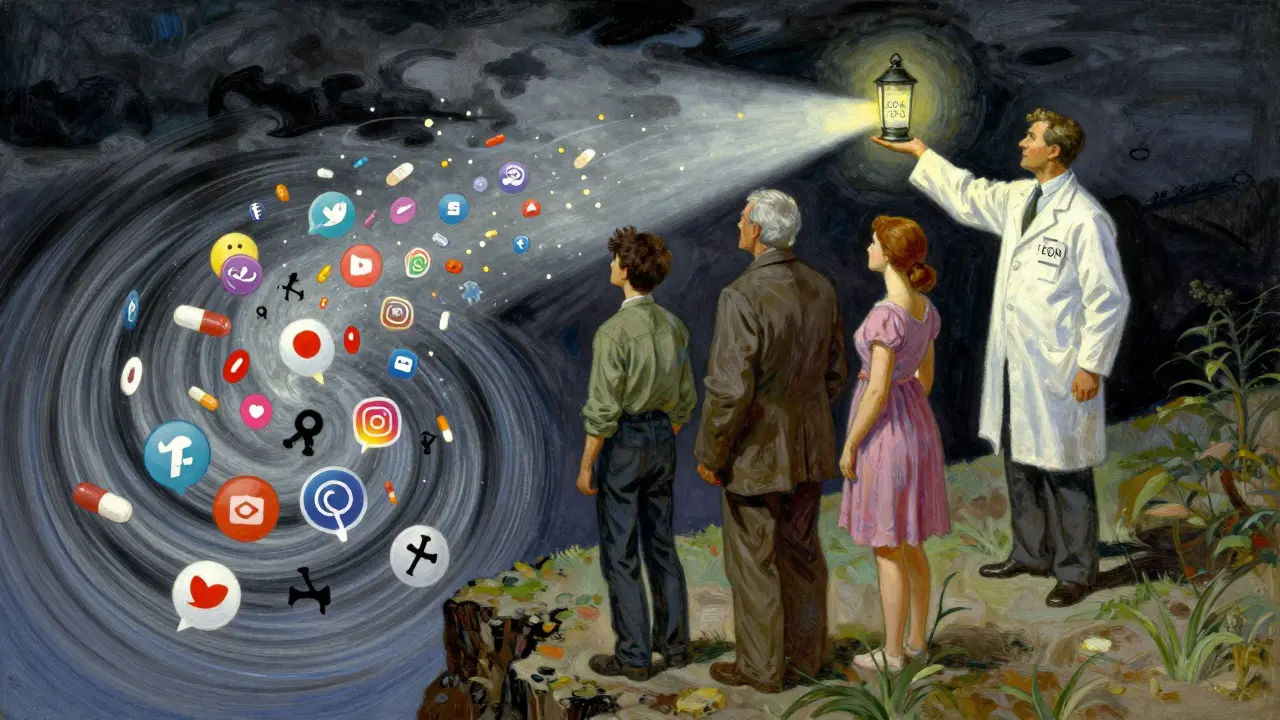
Facebook, Instagram, and Twitter tried to fix this during the pandemic. They added "flag-and-fact-check" labels to posts with false claims. Sometimes they even redirect you to the CDC or WHO page. But here’s the problem: these labels are inconsistent. Many dangerous posts still slip through. And most users don’t even notice them.
There’s also a technique called "pre-bunking"-showing people accurate information before they see the lie. Research shows this works better than trying to correct misinformation after the fact. But platforms rarely use it at scale. So the burden falls on you.
What You Can Do Right Now
You can’t control what’s posted. But you can control what you believe, share, and do.
- Unfollow accounts that push quick-fix health products.
- Follow official sources: CDC, WHO, FDA, your country’s health ministry, and licensed pharmacies.
- Before sharing a health post, ask: "Would I say this to my mother in person?" If the answer is no, don’t share it.
- Teach younger family members how to spot fake advice. Show them how to Google claims. Show them how to check credentials.
- If you see dangerous advice, report it. Most platforms have a "report misinformation" button. Use it.
Medication safety isn’t about being paranoid. It’s about being smart. The internet is full of good information-but it’s also full of people who profit from your fear, confusion, and hope. Don’t let them make your health decisions for you.
When in doubt, pause. Look it up. Talk to a professional. Your body isn’t a social media experiment.
Can social media influencers legally give medical advice?
No. In most countries, including New Zealand and the U.S., it’s illegal for unlicensed individuals to give medical advice-even if they don’t charge for it. Licensed professionals can only advise patients they’ve examined and have a formal relationship with. Social media influencers who claim to diagnose or prescribe are breaking the law, even if they say "just sharing my experience."
What should I do if I already took advice from social media?
Stop taking the substance or following the regimen immediately. Contact your pharmacist or doctor. Tell them exactly what you saw, what you took, and when. They can check for dangerous interactions, side effects, or signs of overdose. Don’t wait for symptoms to appear. Many harmful reactions start quietly.
Are natural supplements safer than prescription drugs?
No. "Natural" doesn’t mean safe. Many supplements contain unregulated ingredients, hidden drugs, or dangerous doses. The FDA has found weight-loss supplements laced with stimulants, erectile dysfunction pills mixed with banned substances, and herbal teas contaminated with heavy metals. Just because something comes from a plant doesn’t mean it won’t hurt you-or kill you.
Why do so many people believe social media health advice?
Because it’s emotional, simple, and personalized. Real medicine is complicated. It takes time. It often involves lifestyle changes. Social media offers quick fixes with emotional stories. It feels personal-even though it’s not. Plus, algorithms show you only what matches your beliefs, making false advice seem normal and widespread.
Can I trust health advice from a doctor on social media?
Only if they’re clearly identifying themselves as a licensed professional and are sharing general information-not diagnosing or prescribing. Even then, don’t follow their advice without consulting your own doctor. A doctor posting on Instagram isn’t your doctor. Their advice is not tailored to your history, allergies, or current meds. Treat it like public health education-not personalized care.
What’s the best way to protect my kids from bad health advice online?
Talk to them. Not with fear, but with curiosity. Ask what they saw online. Help them check sources together. Show them how to search for "CDC [topic]" or "FDA warning [product]." Encourage them to question everything that sounds too good to be true. Teach them that real health doesn’t go viral-it’s slow, consistent, and backed by science.
Final Thought: Your Health Isn’t a Trend
Medication safety isn’t about being suspicious of everything online. It’s about knowing when to pause. When to ask. When to walk away.
There’s no shortcut to good health. No app, no supplement, no viral video can replace the careful, personalized care you get from a licensed professional who knows your body, your history, and your needs.
If you’re unsure, don’t guess. Don’t scroll. Don’t share. Call your pharmacist. Visit your doctor. Or just wait a day. Most dangerous advice loses its power when you don’t act on it right away.
Safe medication use isn’t about being perfect. It’s about being careful. And that starts with one question: "Who really benefits if I believe this?"




Comments(9)