
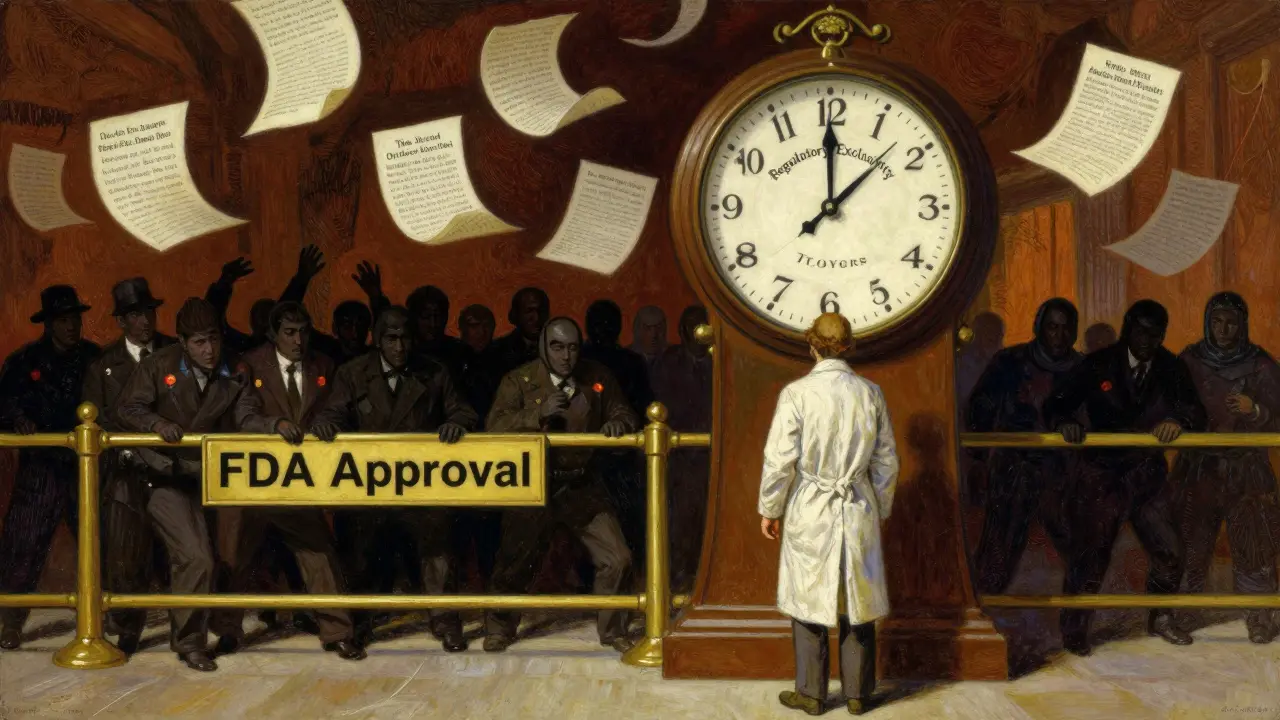
When a new drug hits the market, it doesn’t just rely on patents to keep competitors away. In fact, many drugs enjoy years of market control without any patent at all. That’s because of something called regulatory exclusivity - a government-granted shield that blocks generics and biosimilars from entering the market, even if no patent exists. It’s not about invention. It’s about approval. And it’s one of the most powerful, yet least understood, tools in modern drug pricing.
What Exactly Is Regulatory Exclusivity?
Regulatory exclusivity is a legal delay on generic drug approval. It’s not something a company applies for like a patent. It’s automatically triggered when the FDA approves a new drug - if it meets certain criteria. Think of it like a timer that starts ticking the moment the FDA says, "Yes, this drug is safe and effective." During that time, no other company can get approval for a copy - even if they’ve reverse-engineered the formula perfectly.
Unlike patents, which protect specific chemical structures or methods of making a drug, exclusivity protects the entire drug product. It doesn’t matter if someone invents a new way to make it. If the active ingredient is the same, they can’t sell it until the clock runs out.
This system was created by Congress in the 1980s - first with the Orphan Drug Act in 1983, then the Hatch-Waxman Act in 1984. The goal? Encourage companies to develop new drugs, especially for rare diseases or complex therapies, by guaranteeing them a window of profit. Without it, many drugs would never get made. The cost to bring a new drug to market? Often over $2 billion. And it takes 10 to 15 years. If companies couldn’t count on exclusivity, the risk wouldn’t pay off.
The Main Types of Exclusivity in the U.S.
Not all exclusivity is the same. The FDA grants several types, each with different rules and lengths. Here’s what you’ll actually see in the real world:
- New Chemical Entity (NCE) Exclusivity: 5 years - This is the most common. If a drug contains a chemical structure never approved before, it gets five years of full protection. During the first four years, the FDA won’t even accept an application for a generic version. At year five, generics can be approved - but only if they prove they’re the same as the original.
- Orphan Drug Exclusivity: 7 years - For drugs treating diseases affecting fewer than 200,000 people in the U.S. This one’s powerful. Even if a drug isn’t a new chemical, if it’s the first approved for a rare condition, it gets seven years of market control. That’s why so many new drugs today target ultra-rare diseases - the payoff is bigger.
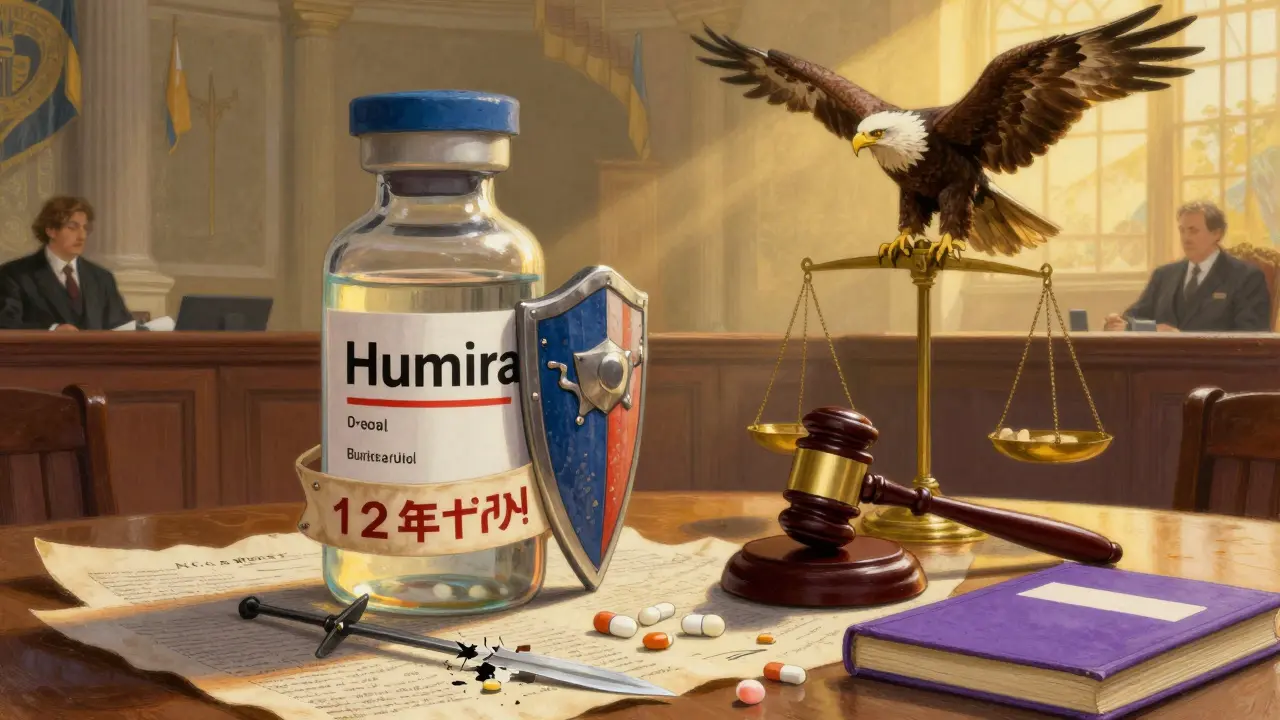
- Biologics Exclusivity: 12 years - Biologics (like Humira, Enbrel, or cancer immunotherapies) are made from living cells, not chemicals. They’re harder to copy. The BPCIA of 2009 gave them 12 years of exclusivity. That’s longer than any other category. Many biologics have patents that expire before approval - so this 12-year window is what really protects revenue.
- 3-Year Exclusivity - For new uses, new formulations, or new patient populations of an already-approved drug. If a company adds a new indication - say, using a diabetes drug to treat heart failure - they get three years of exclusivity for that new use. Generics can still sell the old version, but not the new one.
These periods can stack. A drug could have 5 years of NCE exclusivity, plus 7 years of orphan status, plus a 3-year extension for a new use. That’s 15 years of market control - all without a single patent.
How It Compares to Patents
Patents and exclusivity are often confused. But they’re completely different tools.
| Feature | Regulatory Exclusivity | Patent Protection |
|---|---|---|
| Who grants it? | Food and Drug Administration (FDA) | U.S. Patent and Trademark Office (USPTO) |
| When does it start? | Upon FDA approval | Upon patent issuance (often years before approval) |
| How long does it last? | 5, 7, 12, or 3 years (fixed by law) | 20 years from filing date |
| Can it be challenged? | No - automatic if criteria met | Yes - companies sue to invalidate patents |
| What does it protect? | The drug product itself | Specific chemical structure, method, or use |
| Can generics enter early? | Only after the exclusivity period ends | Generics can challenge patents and enter before expiration |
The big difference? Patents can expire before a drug even hits shelves. A drug might take 12 years to get approved. If the patent was filed at the start of development, it might have only 8 years left when it’s finally sold. That’s where exclusivity saves the day. It starts at approval - so companies get the full protection they need.
Real-World Impact: Humira and the .9 Billion Example
Humira (adalimumab) is the textbook case. It’s a biologic for rheumatoid arthritis, psoriasis, and Crohn’s disease. Its key patent expired in 2016. But biosimilars didn’t arrive until 2023. Why? Because of the 12-year regulatory exclusivity period.
During those seven years between patent expiry and biosimilar entry, AbbVie kept selling Humira at full price. In 2022 alone, it made $19.9 billion in U.S. sales. That’s more than most countries spend on their entire healthcare systems in a year.
That’s not a fluke. It’s the rule. The FDA found that the average innovator drug enjoys 12.3 years of combined patent and exclusivity protection. For biologics? 14.7 years. That’s longer than most people work before retirement.
Global Differences Matter
The U.S. isn’t the world. Other countries handle exclusivity differently - and those differences affect where drugs launch first.
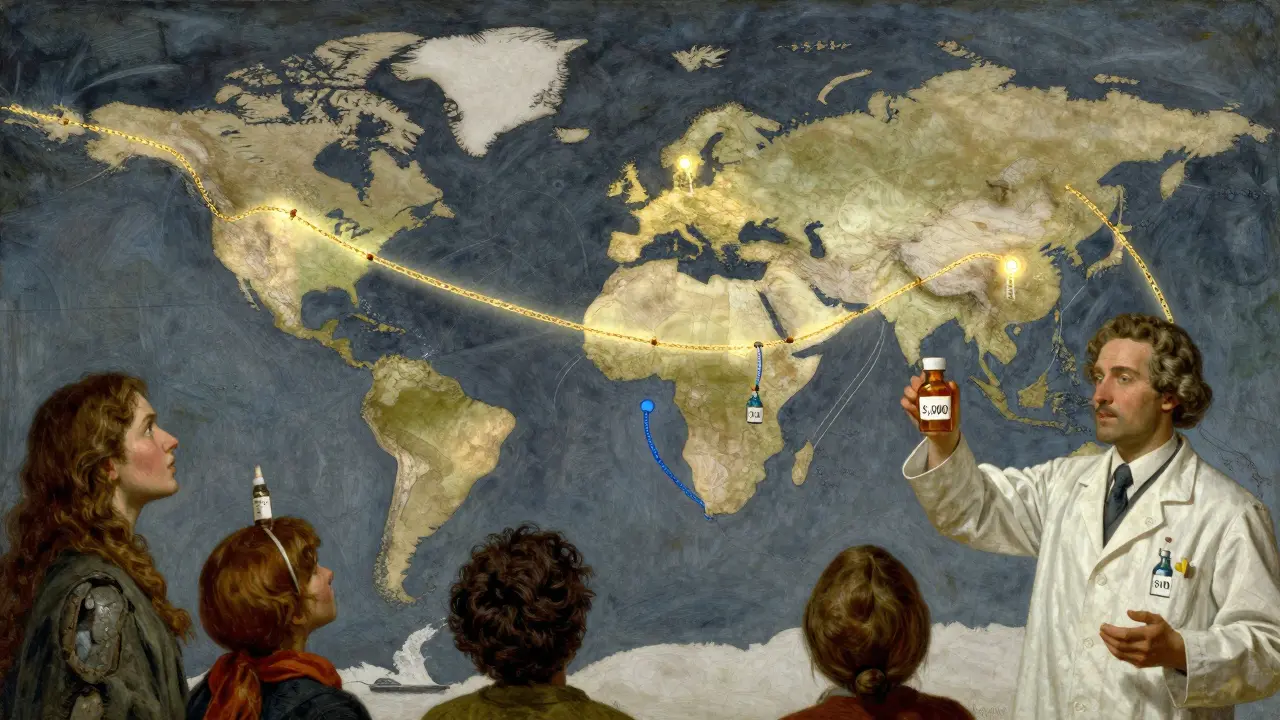
- European Union: Uses an "8+2+1" system. Eight years of data protection (no generics can use the originator’s clinical data), then two years of market exclusivity (no sales), and a possible extra year for new indications.
- Japan: Gives 10 years of data exclusivity for new chemical entities - longer than the U.S. for NCEs, but shorter than the U.S. for biologics.
- Canada and Australia: Follow the U.S. model closely, with 5 years for NCEs and 8 years for biologics.
Companies often time their launches based on these rules. A drug might launch in the U.S. first because of the 12-year biologics term, then roll out in Europe where exclusivity ends sooner. This creates global pricing disparities - and drives where generics appear.
Who Benefits? Who Loses?
Regulatory exclusivity is a double-edged sword.
For drugmakers, it’s essential. Without it, the financial risk of developing new drugs - especially complex ones like cell therapies or rare disease treatments - would be too high. A 2024 survey by the Association for Accessible Medicines found that 89% of originator companies say exclusivity is "essential" for recouping R&D costs.
But for patients and insurers? It’s a different story. IQVIA reports that drugs under exclusivity sell for 3.2 times the price of generics. When a drug like Humira has no competition for seven years after patent expiry, prices stay sky-high. Public Citizen and other consumer groups argue this delays affordable access and inflates healthcare costs.
Even generic manufacturers are split. Some say exclusivity gives them a clear timeline to plan. Others say the 4-year waiting period before they can even submit an application forces them to develop drugs blind - increasing their risk and cost.
What’s Changing Now?
The system isn’t frozen. Pressure is building to shorten exclusivity - especially for biologics.
In 2023, Congress proposed the "Affordable Prescriptions for Patients Act," which would cut biologics exclusivity from 12 to 10 years. It didn’t pass. Lobbying from big pharma was fierce.
The EU is also moving. Its 2023 pharmaceutical strategy suggests reducing data exclusivity from 8 to 6 years to speed up generic entry.
The FDA itself says it’s modernizing exclusivity frameworks to better balance innovation and access. Its 2024-2026 Drug Competition Action Plan explicitly targets "reforming exclusivity periods" - signaling change is coming.
Experts predict that by 2030, the average total protection period for new drugs will shrink from 12.3 years to 10.8 years. But biologics? They’ll likely keep their 12-year shield. They’re too complex to copy. The science hasn’t caught up.
How Companies Use Exclusivity Strategically
Big pharma doesn’t just wait for exclusivity - they engineer it.
Some companies file for orphan status even when a disease affects more than 200,000 people - by narrowly defining the patient group. Others add new uses to extend 3-year exclusivity. One company even split a single drug into two separate formulations to get two 5-year exclusivity periods.
It’s legal. It’s common. And it’s why you’ll see dozens of versions of the same drug on the market - each with a different expiration date.
Managing this requires teams of regulatory specialists who track expiration dates across countries, indications, and patent filings. One major company told me they assign a full-time exclusivity manager per product. The cost? Hundreds of hours of work per drug.
And the FDA’s Purple Book? It’s the only public database tracking exclusivity status - but it’s incomplete. Many companies don’t update it. So even regulators sometimes don’t know exactly when a drug will lose protection.
Why This Matters to You
Whether you’re a patient, a caregiver, or just someone paying insurance premiums, regulatory exclusivity affects your wallet. It’s why some drugs cost $1,000 a pill while others cost $10. It’s why new cancer treatments take years to become affordable. And it’s why the next breakthrough drug might never be developed - if the rules change too fast.
There’s no perfect balance. Too much exclusivity? Prices stay high. Too little? Innovation dries up. The system is designed to favor innovation - and it works. But at what cost? That’s the question lawmakers, patients, and drugmakers are still fighting over.
For now, if you’re waiting for a generic version of a new drug - check the approval date. The clock on exclusivity started then. And it’s ticking.
Is regulatory exclusivity the same as a patent?
No. Patents protect inventions and are granted by the patent office. Exclusivity is granted by the FDA and protects the drug product itself. Patents can be challenged in court. Exclusivity cannot - if the drug meets the legal criteria, the protection is automatic.
Can a drug have both patent and regulatory exclusivity?
Yes. Most new drugs have both. Patents often expire before approval, so exclusivity fills the gap. For example, a biologic might have a patent expiring in 2018 but get 12 years of exclusivity starting in 2020. That means no biosimilars until 2032 - even though the patent was long gone.
Why do biologics get 12 years of exclusivity but small-molecule drugs only get 5?
Biologics are made from living cells and are far more complex to replicate than chemical drugs. Even small changes in manufacturing can alter their safety or effectiveness. The 12-year period was designed to account for the higher cost, longer development time, and technical difficulty of creating biosimilars. It’s not about fairness - it’s about science.
Can generics enter the market before exclusivity ends?
Not legally. The FDA is prohibited from approving a generic or biosimilar until the exclusivity period ends. However, some companies file applications during the exclusivity window - just not for approval. For NCEs, generics can submit their application after four years, but the FDA can’t approve it until year five.
Does regulatory exclusivity apply outside the U.S.?
Yes, but the rules vary. The EU uses an 8+2+1 system. Japan gives 10 years. Canada and Australia follow the U.S. model but with shorter terms for biologics. Companies often launch drugs first in countries with longer exclusivity to maximize profits before generics arrive elsewhere.





Comments(14)