
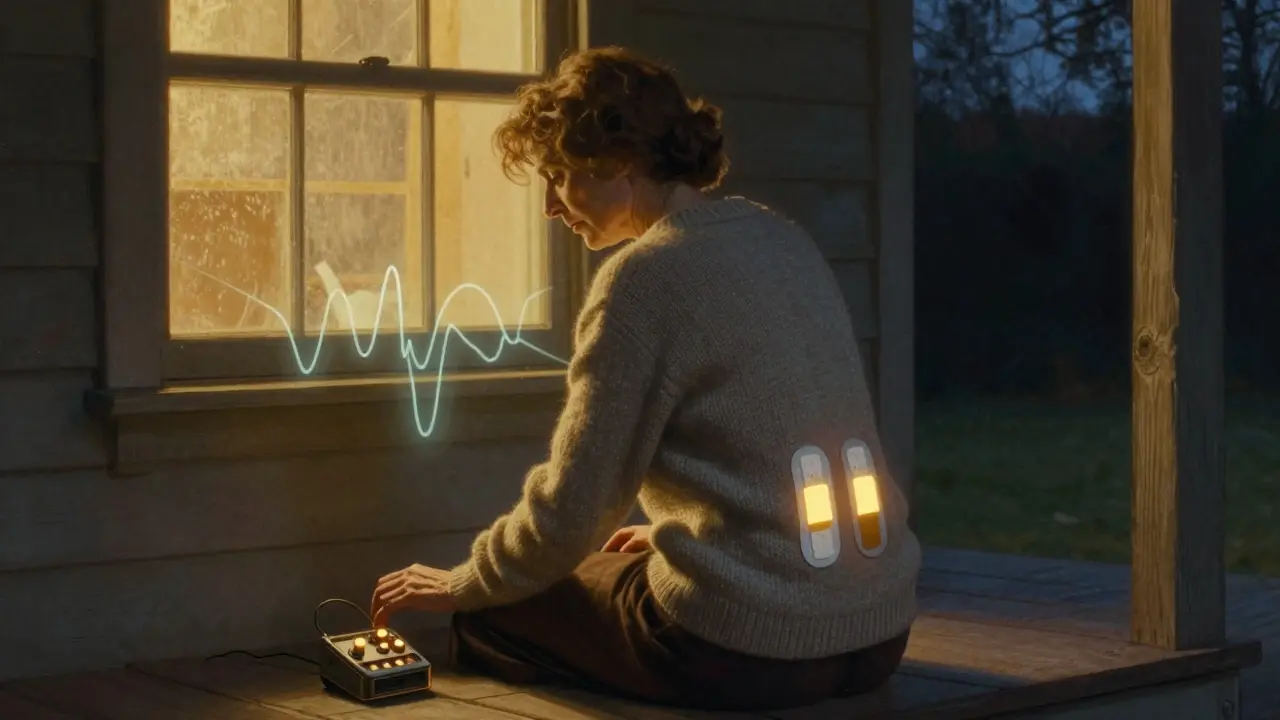
When your back flares up, your knees ache, or labor contractions hit hard, reaching for a pill isn’t always the best-or safest-option. That’s where TENS therapy comes in. It’s not magic. It’s not surgery. It’s a small, battery-powered device that sends gentle electrical pulses through your skin to your nerves. And for millions of people, it’s a game-changer.
What Exactly Is TENS Therapy?
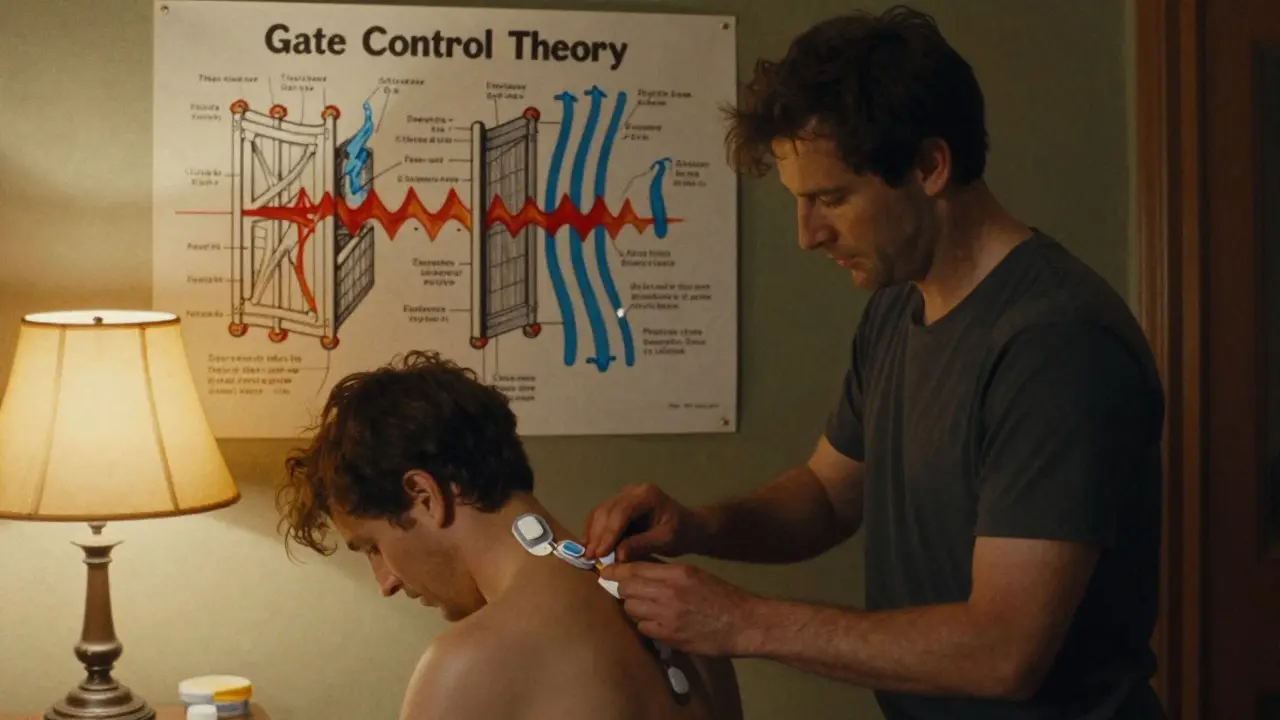
TENS stands for Transcutaneous Electrical Nerve Stimulation. It’s a non-drug way to manage pain by using low-voltage electricity. You stick adhesive pads-called electrodes-on your skin near the painful area. Then you turn on the device. It sends tiny electrical pulses through those pads into your nerves. It doesn’t cure the cause of your pain. But it changes how your brain feels it. Think of it like a noise-canceling headset for pain signals. The electricity doesn’t heal your spine or arthritis. It just helps your body ignore the signal long enough to get through the day. This method has been around since the 1970s, built on a theory from 1965 called the Gate Control Theory. Basically, your nerves have gates. When big, fast nerves (like those sensing touch or vibration) are activated, they can shut the gate on slow, painful signals. TENS turns on those big nerves. And suddenly, the pain feels quieter.How Does TENS Actually Work?
There are three main ways TENS units work, depending on how you set them up:- Conventional TENS (high-frequency): Set between 50-100 pulses per second. You feel a tingling, buzzing sensation-not painful, but strong enough to notice. This is the most common setting. It blocks pain signals fast, but the relief usually lasts only while you’re using it.
- Acupuncture-like TENS (low-frequency): Set at 2-5 pulses per second. The sensation is stronger, sometimes even a bit uncomfortable. This triggers your body to release natural painkillers-endorphins. Relief can last hours after you turn it off.
- Burst mode: A mix of both. It sends quick bursts of high-frequency pulses, then pauses. This hits both the pain-blocking and endorphin-release pathways at once.
What Conditions Does TENS Help With?
TENS isn’t a cure-all. But it’s been shown to help with specific types of pain:- Back pain: Especially chronic lower back pain. One study showed a 35% drop in pain scores for people using TENS compared to placebo.
- Osteoarthritis: Knees and hands. TENS reduces stiffness and improves movement in many users.
- Post-surgical pain: After joint replacements or abdominal surgery, TENS can cut opioid use by nearly 30%.
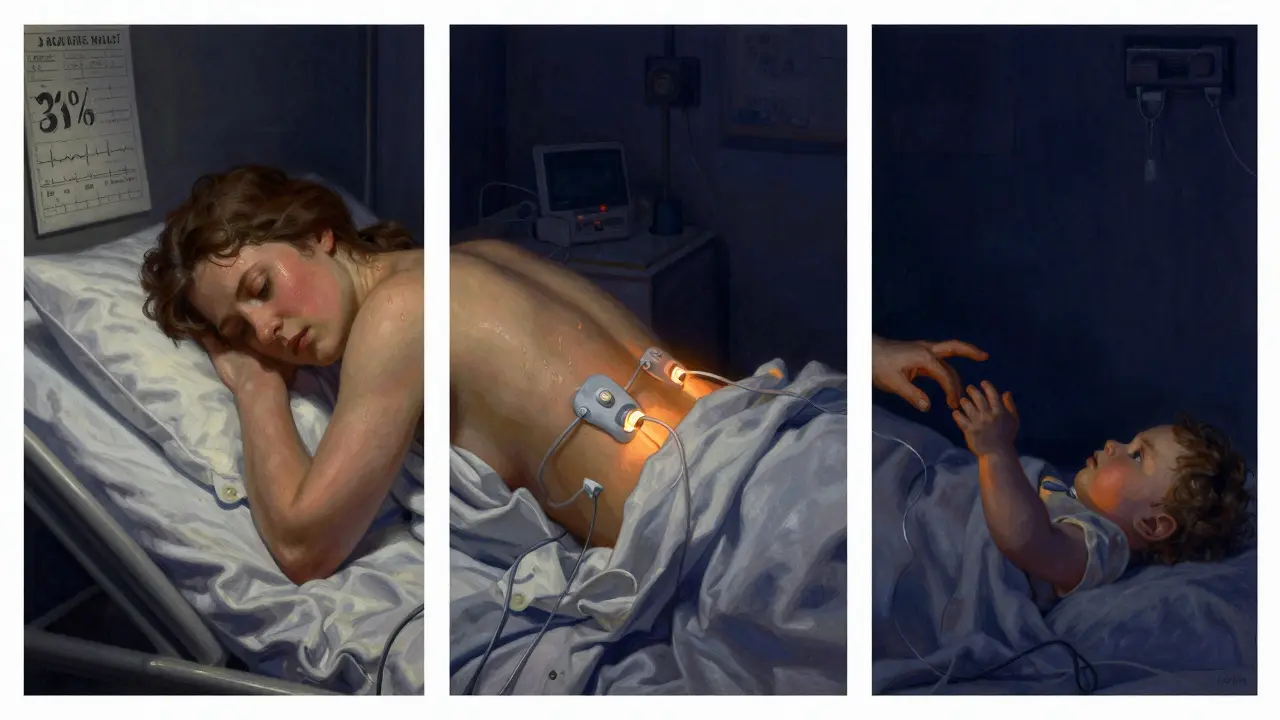
- Labor pain: A 2020 Cochrane Review found women using TENS during labor reported 31% more pain relief than those who didn’t.
- Neuropathic pain: Nerve pain from diabetes or shingles. Results vary, but some users get meaningful relief.
Real People, Real Results
On Amazon, over 1,200 users gave TENS units an average rating of 4.3 out of 5. The top praises? “Instant relief,” “No side effects,” and “I can finally walk to the mailbox.” One woman in Ohio, 54, had chronic back pain for 8 years. Her pain score was 7.8 out of 10. After using TENS correctly for 20 minutes, it dropped to 3.2. She cut her oxycodone use in half. But it’s not perfect. On Reddit’s chronic pain forum, users say things like: “It works great… until I move and the pads fall off.” Or: “I have to crank it to 85% to feel anything, and the battery dies in 90 minutes.” Skin irritation is the #1 complaint. About 1 in 3 users get redness or itching under the electrodes. Using conductive gel helps. So does changing pads every 2-3 uses.How to Use TENS Right
Most people buy a TENS unit online and guess how to use it. That’s why so many fail. Here’s what actually works:- Place electrodes close to the pain. Put them within 1-2 inches of the sore spot. For lower back pain, place one on each side of the spine, just above the hips.
- Start low, go slow. Turn it on at the lowest setting. Slowly increase until you feel a strong tingling-not pain.
- Use the right frequency. For sharp, recent pain (like after a sprain), use 80-100 Hz. For dull, long-term pain (like arthritis), try 2-5 Hz.
- Use it for 20-30 minutes at a time. You can use it multiple times a day, but don’t go over 6 hours total.
- Don’t use it on your head, neck, chest, or over broken skin. Avoid your carotid artery (front of neck) and your heart area.
TENS vs. Other Pain Treatments
How does TENS stack up against the competition?| Method | Speed of Relief | Duration | Side Effects | Cost (per month) |
|---|---|---|---|---|
| TENS Therapy | Immediate | Hours (if endorphin mode) | Mild skin irritation | $0-$50 (device one-time) |
| NSAIDs (Ibuprofen) | 30-60 mins | 4-6 hours | Stomach upset, kidney risk | $10-$30 |
| Opioids | 15-30 mins | 4-8 hours | Addiction, drowsiness, constipation | $50-$200+ |
| Physical Therapy | Days to weeks | Weeks to months | Fatigue, soreness | $50-$150 per session |
| Acupuncture | Variable | Hours to days | Minor bruising | $75-$120 per session |
The Future of TENS
TENS isn’t stuck in the 1980s. New tech is making it smarter. In May 2023, the FDA cleared the first AI-powered TENS device: NeuroLoop AI. It uses sensors to read your nerve response and adjusts the settings automatically. In trials, it reduced pain 44% more than regular TENS. New electrodes are coming with built-in sensors that check skin contact and adjust current in real time. No more slippage. No more weak signal. And insurance? In the U.S., Medicare and many private plans now cover TENS units under code E0720. That’s a $150 reimbursement. In Australia and New Zealand, some private insurers cover it too-if you have a doctor’s note. The CDC now recommends TENS as a first-line option for chronic pain. With the opioid crisis still raging, non-drug tools like this are getting more attention than ever.Who Should Avoid TENS?
TENS is safe for most people. But skip it if you:- Have a pacemaker or implanted defibrillator
- Are pregnant (unless approved by your OB-GYN-some use it for labor, but not on the belly)
- Have cancer in the area you want to treat
- Have open wounds, rashes, or infections where the pads go
- Have epilepsy and plan to use it near your head or neck
Final Thoughts: Is TENS Worth It?
If you’re tired of pills, worried about side effects, or just want something you can use at home-yes. TENS is worth trying. It’s not a miracle. But it’s one of the few pain tools that’s safe, affordable, and gives you control. You don’t need a doctor’s script to buy one. You don’t need to wait for an appointment. You can try it tonight. The trick? Don’t give up after one try. Use it right. Turn it up. Place the pads well. Stick with it for a week. Most people who stick with it report real improvement. And if it doesn’t work? At least you didn’t add another pill to your routine.Can I use TENS every day?
Yes. Most people use TENS 2-4 times a day for 20-30 minutes each session. There’s no evidence that daily use causes harm. Just avoid using it for more than 6 hours total per day. If your skin gets red or irritated, give it a day off.
Do I need a prescription to buy a TENS unit?
No. You can buy TENS units over the counter at pharmacies, online, or medical supply stores. But if you want insurance to cover it (like Medicare in the U.S.), you’ll need a doctor’s note saying it’s medically necessary.
How long do TENS batteries last?
It depends on the intensity and model. At low settings, most last 10-15 hours. At high intensity (where most people need it), expect 6-8 hours. Rechargeable units are better than disposable batteries. Look for models with lithium-ion batteries-they last longer and hold charge better.
Can TENS help with nerve pain from diabetes?
Some people with diabetic neuropathy find relief, especially in the feet and hands. Studies show mixed results, but about 40% of users report moderate to significant pain reduction. Use high-frequency mode (80-100 Hz) and place electrodes on the most painful spots. Don’t expect it to fix the nerve damage-but it can make daily life easier.
Why does TENS sometimes stop working?
Three main reasons: 1) Electrodes dried out or moved-replace them or reposition. 2) You got used to the sensation-your nerves adapt. Try switching modes (e.g., from high to low frequency). 3) Your pain changed-maybe it’s deeper now, or spreading. If TENS stops helping, talk to a physical therapist. You might need a different approach.






Comments(11)