

Cardiovascular disease isn’t just one thing. It’s a group of conditions that quietly damage your heart, brain, and blood vessels-often without warning. Every year, more than 800,000 Americans die from heart disease alone. That’s nearly one in three deaths. And stroke? It’s the fifth leading cause of death in the U.S., with someone having one every 40 seconds. These aren’t distant threats. They’re real, preventable, and happening right now-to people just like you.
What Exactly Is Cardiovascular Disease?
When doctors say "cardiovascular disease," they’re talking about problems with your heart and blood vessels. This includes coronary artery disease (clogged arteries feeding your heart), stroke (blocked or burst blood vessels in the brain), peripheral artery disease (narrowed arteries in your legs), and heart failure (when your heart can’t pump well enough). All of these share the same root cause: damage to the inside of your arteries from plaque buildup, high blood pressure, and chronic inflammation.
The American Diabetes Association defines a specific subset called "atherosclerotic cardiovascular disease"-or ASCVD. That’s the kind that comes with a history of heart attack, angina, bypass surgery, stroke, or blocked leg arteries. If you’ve had any of these, you’re in the highest risk group. And here’s the hard truth: if you have diabetes, obesity, or high blood pressure, you’re already on that path-even if you feel fine.
The Silent Triggers: Risk Factors You Can’t Ignore
Cardiovascular disease doesn’t strike out of nowhere. It’s built over years by habits and conditions most people treat as "normal."
- Hypertension: 116 million U.S. adults have high blood pressure. Many don’t even know it. When your blood pressure stays above 130/80 mmHg, it’s like constantly blasting your arteries with pressure-until they crack or clog.
- Dyslipidemia: LDL cholesterol above 100 mg/dL is dangerous. For people with diabetes or prior heart events, doctors now aim for under 55 mg/dL. That’s not a suggestion-it’s a life-saving target.
- Diabetes: 11.3% of U.S. adults have it. And if you have type 2 diabetes, your risk of heart attack is the same as someone who already had one.
- Obesity: Nearly 42% of Americans have a BMI over 30. Fat tissue doesn’t just sit there-it releases chemicals that inflame your blood vessels.
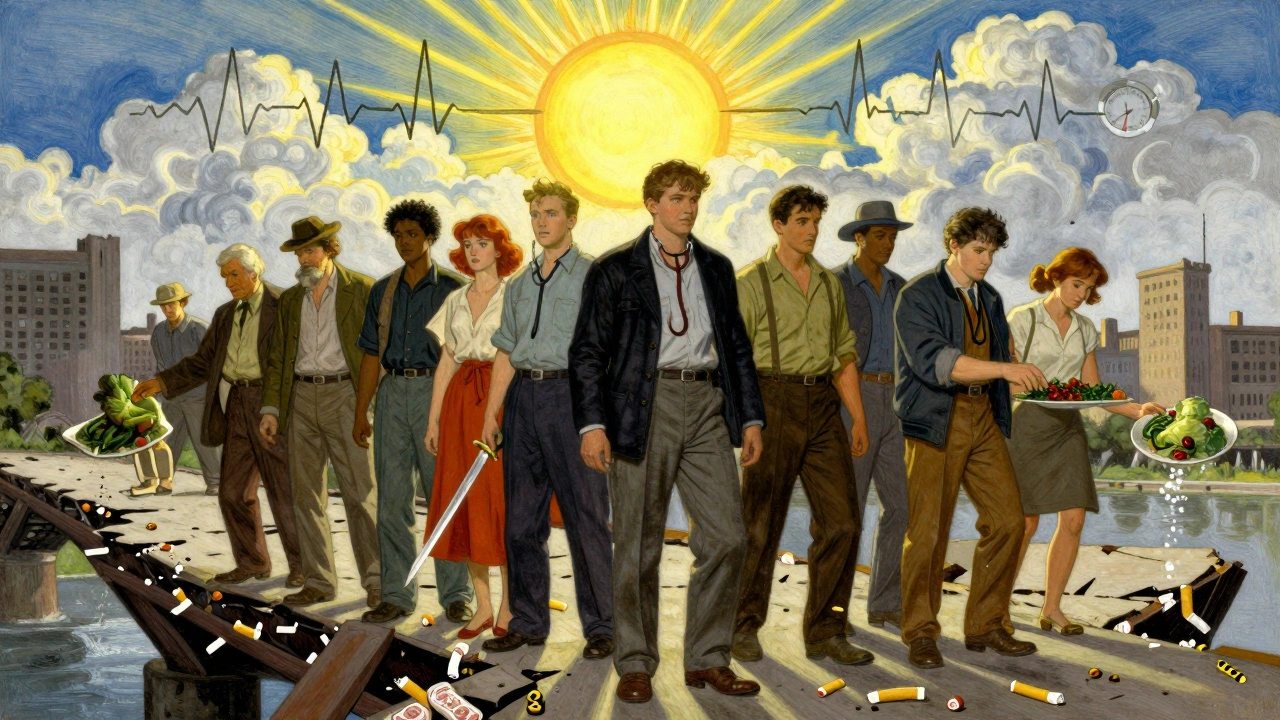
- Smoking: 11.5% of U.S. adults still smoke. Each cigarette damages your artery lining within minutes. Quitting cuts your heart attack risk in half within a year.
And here’s something most people miss: depression. People with heart disease are three to four times more likely to be depressed. And if you’re depressed, your risk of heart attack goes up by 30%. Your mental health isn’t separate from your heart health-it’s part of the same system.
How Doctors Diagnose It Today
Years ago, doctors waited for symptoms-chest pain, numbness, shortness of breath-before acting. Now, they look for warning signs before symptoms appear.
The 2023 ACC/AHA guidelines recommend a coronary artery calcium (CAC) scan for people with intermediate risk (7.5-20% chance of a heart event in 10 years). This non-invasive CT scan shows calcium buildup in your heart arteries. No calcium? Your risk is low. High calcium? You need aggressive action now.
For stroke risk, doctors check carotid arteries with ultrasound. For leg artery disease, they measure ankle-brachial index (ABI)-a simple test comparing blood pressure in your ankle to your arm. If it’s below 0.9, your legs aren’t getting enough blood.
And now, AI is stepping in. The new PCE-AI risk calculator improves prediction accuracy by over 12% compared to older models. It looks at your age, race, blood pressure, cholesterol, smoking status, and diabetes-and gives you a personalized risk score. No guesswork. Just data.
What Actually Works: Treatment That Saves Lives
Medication isn’t the whole answer-but it’s a critical piece.
Statins are still the backbone. They lower LDL cholesterol by 30-50%. Even if you feel fine, if you’ve had a heart attack or have diabetes, you likely need one. Side effects? Muscle aches in about 5-10% of people. But the risk of another heart attack without it? Much higher.
Now, two newer classes of drugs are changing everything: SGLT2 inhibitors (like empagliflozin) and GLP-1 receptor agonists (like semaglutide). Originally for diabetes, they’ve been proven to reduce heart failure hospitalizations, stroke, and death-even in people without diabetes. The 2025 ADA guidelines now say: if you have heart disease, kidney disease, or heart failure, you should be on one of these-regardless of your blood sugar.
For stroke survivors, dual antiplatelet therapy (aspirin + clopidogrel) for 21 days after the event cuts recurrence risk by 25%. But only 27.8% of eligible patients get it. Why? Often, it’s not the doctor’s fault-it’s the system. Too many patients fall through the cracks after discharge.
Prevention Isn’t Just About Pills
The CDC’s HEARTS package outlines six proven strategies for primary care clinics: controlling hypertension, promoting healthy eating, tobacco cessation, access to medicines, risk-based care, and team-based support. Countries that implemented this saw CVD deaths drop by 15-25%.
Workplace programs work too. Johnson & Johnson reduced employee CVD risk by 26% over 10 years with wellness coaching, gym access, and nutrition support. Community programs like the National Diabetes Prevention Program cut CVD events by 18% in people with prediabetes.
But the biggest barrier isn’t medicine-it’s inequality. In the U.S., your zip code predicts your heart health better than your genes. Black Americans die from cardiovascular disease at 30% higher rates than white Americans-even when they have the same cholesterol, blood pressure, and smoking habits. Access to care, healthy food, safe neighborhoods, and stress-free work environments? Those matter more than any pill.

The Big Picture: Costs, Trends, and What’s Next
Cardiovascular disease costs the U.S. $444 billion a year-$268 billion in medical bills, $176 billion in lost productivity. By 2035, that could hit $1.1 trillion. The global market for heart devices is growing fast, but the real win isn’t in stents or pacemakers. It’s in prevention.
Million Hearts™, a federal initiative launched in 2012, is pushing the ABCS: Aspirin (when appropriate), Blood pressure control, Cholesterol management, and Smoking cessation. Between 2000 and 2019, it helped reduce CVD deaths by 21.6%-even as obesity rose. That proves prevention works.
But the future is uncertain. By 2030, half of all U.S. adults could have obesity. If we don’t reverse this trend, decades of progress could vanish. The 2025 ESC guidelines warn: we can’t treat heart disease in isolation anymore. We have to treat it with mental health, metabolic health, and social health-all together.
What You Can Do Right Now
You don’t need a miracle. You need action.
- Know your numbers: Get your blood pressure, cholesterol, and fasting blood sugar checked. Don’t wait for symptoms.
- Move daily: 30 minutes of brisk walking five days a week cuts heart attack risk by 30%.
- Eat real food: Cut processed carbs, sugar, and fried foods. Focus on vegetables, beans, nuts, fish, and whole grains.
- Quit smoking: Even one cigarette a day raises your risk. Call a quitline. Use nicotine patches. You can do it.
- Check your mood: If you’re feeling down, hopeless, or exhausted for weeks, talk to someone. Depression isn’t weakness-it’s a cardiovascular risk factor.
If you’ve had a heart attack, stroke, or diabetes, talk to your doctor about SGLT2 inhibitors or GLP-1 agonists. Ask about a CAC scan if you’re middle-aged and have risk factors. Don’t assume you’re fine because you "feel okay."
Your heart doesn’t lie. The data doesn’t lie. What you do next will determine whether you live with disease-or live well.





Comments(9)